Science fiction · Book club
Ender's Game book club questions
Here are 12 book club questions for Ender's Game by Orson Scott Card, ordered to open easily and end somewhere worth arguing about. Copy them, print them, or bring them up one at a time.
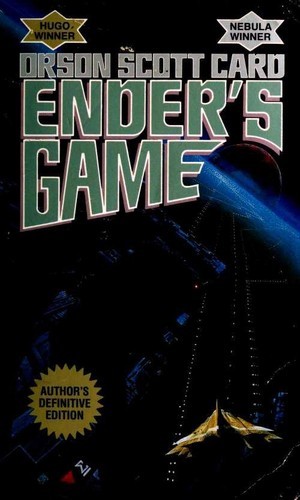
Ender's Game takes place in a future where Earth has barely survived two invasions by an insectoid alien species called the Formics.
Orson Scott Card · 1985 · 9h 0m
Full summary and key takeaways →The 12 questions
- 1.
The military administrators believe they're justified in what they do to Ender. Do you find that position defensible, monstrous, or somewhere more complicated?
- 2.
Ender's empathy and his capacity for destruction are presented as two sides of the same coin. Does that feel true to you, or like a paradox the novel asserts without fully earning?
- 3.
The novel is often read as a critique of military training and the instrumentalization of children. Is that the reading Card intended? Does it matter?
- 4.
Peter is genuinely dangerous; Valentine is genuinely compassionate. Ender is designed to contain both without being consumed by either. Does he succeed, by the end?
- 5.
The final revelation — widely known even before reading — changes how we see the last act. If you knew going in, how did that affect your experience? Does the novel work as well when the revelation isn't a surprise?
- 6.
Ender's Game is on military academy reading lists and has been cited by actual military strategists. What do you think they take from it that a civilian reader might not?
- 7.
The Formics are exterminated before anyone establishes whether genuine communication was possible. Who bears moral responsibility for that, and does the novel distribute it fairly?
- 8.
Valentine and Peter's political project on Earth (writing as Locke and Demosthenes) runs parallel to Ender's military training. Does that subplot feel organic to the novel's themes or like a separate book trying to share the same cover?
- 9.
Ender is six when the book starts and early teens by the end, but the voice and behavior often feel adult. Is that a flaw in the characterization or a deliberate reflection of what the training has done to him?
- 10.
The sequels (Speaker for the Dead, Xenocide) move dramatically toward empathy and away from warfare. Is that a natural continuation, or do they feel like a different writer's answer to the same problem?
- 11.
The adults in the book ultimately got what they wanted: humanity survived. Does the outcome retroactively justify their methods, even if we wouldn't endorse those methods prospectively?
- 12.
What obligation, if any, does humanity owe Ender after what was done to him? Does the novel answer that question or leave it open?
How to run the discussion
- Pick six to eight, not all of them. An hour of real discussion covers fewer questions than anyone expects, and racing the list is what makes a book club feel like homework.
- Open with what people noticed, not what they concluded. Asking for a verdict first hardens opinions before anyone has heard each other.
- Let the disagreement run. The questions below that split a room are the ones worth the time; the ones everyone answers the same way can be skipped.
- Ask the quiet person a specific question. A direct, narrow question is far easier to answer than an open invitation to contribute.
Themes worth steering toward
If the conversation stalls, these are the threads that usually restart it.
Common questions
What are good book club questions for Ender's Game?
Here are 12 book club questions for Ender's Game by Orson Scott Card, ordered to open easily and end somewhere worth arguing about. The strongest openers ask what each reader noticed rather than what they concluded, and the discussion usually turns on war and manipulation, childhood and agency, empathy and destruction.
How long should a book club discussion of Ender's Game last?
Most groups run 60 to 90 minutes of actual discussion. That is roughly six to eight questions, not all of them, so pick the ones that suit your group rather than working down the list in order.
What are the main themes in Ender's Game?
War and manipulation, Childhood and agency, Empathy and destruction, Leadership, Moral responsibility. Those are the threads most likely to divide a room, which makes them the useful places to steer a discussion that has gone quiet.
Picking the next one? See books like Ender's Game or questions for other book club picks.
