Science · Book club
Endure book club questions
Here are 12 book club questions for Endure by Alex Hutchinson, ordered to open easily and end somewhere worth arguing about. Copy them, print them, or bring them up one at a time.
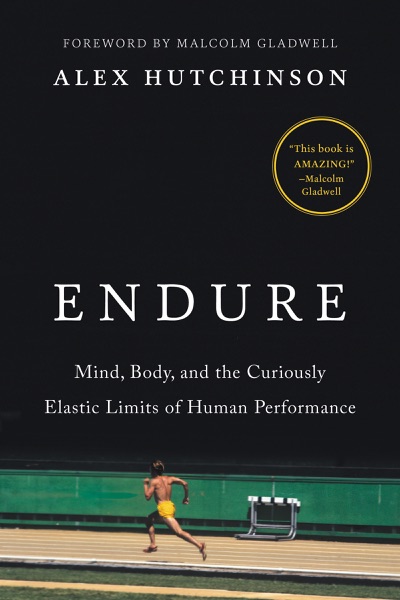
Endure is Alex Hutchinson's investigation into the science of limits — specifically, what actually stops a human being from going faster, farther, or longer.
Alex Hutchinson · 2018 · 6h 0m
Full summary and key takeaways →The 12 questions
- 1.
Hutchinson argues that fatigue is partly a brain prediction rather than a pure muscle signal. Has that idea changed how you think about moments when you have wanted to quit something?
- 2.
The Central Governor model is controversial among exercise scientists. What does the debate around it suggest about how scientific consensus forms — and when it is appropriate to act on contested evidence?
- 3.
Hutchinson draws connections between athletic endurance and endurance in other domains — work, pain, stress. Do you think those connections are genuinely illuminating, or does the athletic context limit how far they transfer?
- 4.
The Nike Breaking2 project was a commercial production as much as a scientific experiment. Does corporate sponsorship of athletic achievement change how you interpret the results?
- 5.
Several athletes in the book describe a relationship with pain that most people would find alarming. What is the difference between productive pain tolerance and harmful self-destruction?
- 6.
The chapter on pacing reveals that most people misjudge their effort distribution. Where in your life do you think you consistently mismanage pacing — starting too fast or too conservatively?
- 7.
Hutchinson describes research suggesting that belief is physiologically consequential. How do you square that with the risk of overconfidence leading people beyond genuinely safe limits?
- 8.
The book documents how endurance records have fallen over decades in ways once thought impossible. What does that suggest about how you should think about limits you currently believe are fixed?
- 9.
Music, heat, caffeine, and psychological priming all affect performance. Which of those feels like a genuine enhancement and which feels like cheating to you, and why?
- 10.
Hutchinson is himself a competitive runner. How does that affect how you read his assessment of the research? Does insider perspective help or bias his account?
- 11.
Kipchoge's Breaking2 attempt missed by twenty-five seconds in an unofficial event. A year later, in an unofficial attempt with a new format, he broke the barrier. What do you make of the distinction between official and unofficial records?
- 12.
What is the most useful thing you have learned from this book that you can apply in a specific upcoming challenge?
How to run the discussion
- Pick six to eight, not all of them. An hour of real discussion covers fewer questions than anyone expects, and racing the list is what makes a book club feel like homework.
- Open with what people noticed, not what they concluded. Asking for a verdict first hardens opinions before anyone has heard each other.
- Let the disagreement run. The questions below that split a room are the ones worth the time; the ones everyone answers the same way can be skipped.
- Ask the quiet person a specific question. A direct, narrow question is far easier to answer than an open invitation to contribute.
Themes worth steering toward
If the conversation stalls, these are the threads that usually restart it.
Common questions
What are good book club questions for Endure?
Here are 12 book club questions for Endure by Alex Hutchinson, ordered to open easily and end somewhere worth arguing about. The strongest openers ask what each reader noticed rather than what they concluded, and the discussion usually turns on endurance, performance, mind-body connection.
How long should a book club discussion of Endure last?
Most groups run 60 to 90 minutes of actual discussion. That is roughly six to eight questions, not all of them, so pick the ones that suit your group rather than working down the list in order.
What are the main themes in Endure?
Endurance, Performance, Mind-body connection, Fatigue, Athletic limits. Those are the threads most likely to divide a room, which makes them the useful places to steer a discussion that has gone quiet.
Picking the next one? See books like Endure or questions for other book club picks.
