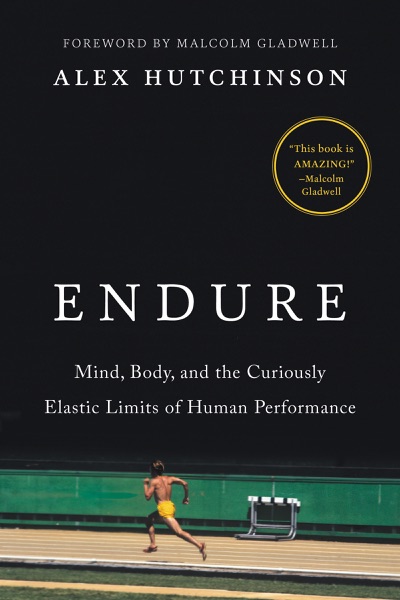
Endure by Alex Hutchinson is a 2018 science book about endurance, performance, mind-body connection. Fatigue is not a purely physiological signal. The brain generates sensations of exhaustion as a predictive safety mechanism, and those sensations can be recalibrated by belief, pacing strategy, and psychological state.
Summary
Endure is Alex Hutchinson's investigation into the science of limits — specifically, what actually stops a human being from going faster, farther, or longer. Hutchinson, a science journalist and former competitive runner, structures the book around a deceptively simple question: when you feel like you have nothing left, is that feeling accurate? His answer, drawn from research across exercise physiology, sports science, and neuroscience, is that fatigue is not purely a physical signal from the muscles. It is also, significantly, a prediction and a decision made by the brain.
The central figure is Tim Noakes, the South African exercise physiologist who proposed the Central Governor model — the idea that the brain acts as a regulator, generating sensations of fatigue before the body is actually at its limits, in order to preserve physiological safety margins. The model is controversial, and Hutchinson handles the scientific debate with care, presenting both the evidence for Noakes's framework and the legitimate objections. This is science journalism at its most honest: the conclusion is not a clean resolution but a useful set of tensions.
Hutchinson moves through the specific variables that shape endurance: pain tolerance, self-belief, heat, oxygen deprivation, hydration, nutrition, and the emerging research on brain stimulation and psychological priming. Along the way he profiles athletes who have pushed known limits and researchers who are trying to understand why. The chapter on pacing is particularly useful — most people's intuitions about how to manage effort over a long effort are wrong in predictable ways.
The book is structured around the 2017 Nike Breaking2 project, in which Eliud Kipchoge attempted to break the two-hour marathon barrier. That attempt failed by twenty-five seconds but served as the occasion for Hutchinson's most sustained meditation on what it means to approach a human limit. Endure is not a training guide, but it changes how you think about effort — whether in sport, work, or any domain where the difference between stopping and continuing is partly a matter of what you believe is possible.
Talk to Endure like its author wrote you back.
Get the ideas that fit your life — not generic summaries.
- Chat with the book
- Audiobook-style main ideas
- Adapts to your life and goals
- Helps you take action
Key takeaways
- 1.
Fatigue is not a purely physiological signal. The brain generates sensations of exhaustion as a predictive safety mechanism, and those sensations can be recalibrated by belief, pacing strategy, and psychological state.
- 2.
Tim Noakes's Central Governor model challenges the traditional view that muscles simply fail at a fixed threshold. The brain is an active regulator of performance, not just a passive receiver of distress signals.
- 3.
Pain tolerance is trainable, and elite endurance athletes tend to dissociate from pain rather than reduce it — they experience the same sensations but choose to continue anyway.
- 4.
Pacing is one of the most underestimated skills in endurance sport. The ability to accurately model future effort based on current state is a cognitive skill that can be developed with practice.
- 5.
Environmental factors like heat affect performance partly through physiological mechanisms and partly through their effect on perceived effort. Perceived effort, not actual physiological state, is what typically determines when people stop.
- 6.
Self-belief is not merely motivational — it has measurable physiological correlates. Athletes who believe they can maintain a given pace actually perform differently than those who doubt it.
- 7.
The research on pre-cooling, caffeine, music, and other performance interventions reveals how thin the line is between placebo and genuine performance enhancement.
- 8.
Human endurance limits have changed throughout history as expectations, training methods, and records have shifted. The limits themselves are partly social and cultural constructs.
Discussion questions
Use these on your own, with a book club, or as chat starters in Superbook. Book club version, ready to copy or print →
- 1.
Hutchinson argues that fatigue is partly a brain prediction rather than a pure muscle signal. Has that idea changed how you think about moments when you have wanted to quit something?
- 2.
The Central Governor model is controversial among exercise scientists. What does the debate around it suggest about how scientific consensus forms — and when it is appropriate to act on contested evidence?
- 3.
Hutchinson draws connections between athletic endurance and endurance in other domains — work, pain, stress. Do you think those connections are genuinely illuminating, or does the athletic context limit how far they transfer?
- 4.
The Nike Breaking2 project was a commercial production as much as a scientific experiment. Does corporate sponsorship of athletic achievement change how you interpret the results?
- 5.
Several athletes in the book describe a relationship with pain that most people would find alarming. What is the difference between productive pain tolerance and harmful self-destruction?
- 6.
The chapter on pacing reveals that most people misjudge their effort distribution. Where in your life do you think you consistently mismanage pacing — starting too fast or too conservatively?
- 7.
Hutchinson describes research suggesting that belief is physiologically consequential. How do you square that with the risk of overconfidence leading people beyond genuinely safe limits?
- 8.
The book documents how endurance records have fallen over decades in ways once thought impossible. What does that suggest about how you should think about limits you currently believe are fixed?
- 9.
Music, heat, caffeine, and psychological priming all affect performance. Which of those feels like a genuine enhancement and which feels like cheating to you, and why?
- 10.
Hutchinson is himself a competitive runner. How does that affect how you read his assessment of the research? Does insider perspective help or bias his account?
- 11.
Kipchoge's Breaking2 attempt missed by twenty-five seconds in an unofficial event. A year later, in an unofficial attempt with a new format, he broke the barrier. What do you make of the distinction between official and unofficial records?
- 12.
What is the most useful thing you have learned from this book that you can apply in a specific upcoming challenge?
Themes
Frequently asked questions
-
Is Endure relevant for non-athletes?
Yes, though the majority of examples come from competitive sport. The core argument — that perceived limits are partly constructed by the mind and can be shifted — applies broadly to work, creative projects, and any sustained effort. Hutchinson makes the transfer explicit in several chapters.
-
What is the Central Governor theory in plain terms?
The idea that the brain acts as a regulator of performance, generating feelings of fatigue before the body is actually at its limit, as a safety mechanism. Rather than muscles simply failing, the brain decides when to make further effort feel impossible in order to preserve physiological reserves.
-
How does Endure compare to Born to Run?
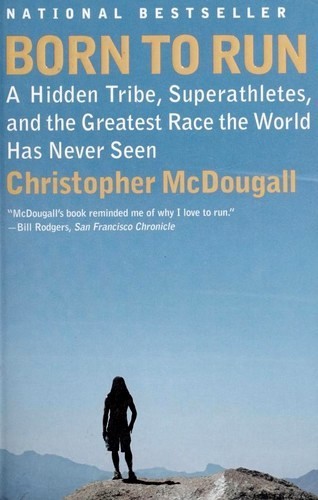
Born to Run is a narrative about ultrarunning culture and barefoot running; Endure is science journalism about the physiology and psychology of fatigue. They appeal to similar readers but have different registers — Born to Run is more story-driven, Endure is more analytical.
-
Does Hutchinson come to a definitive conclusion about the limits of human endurance?
No, and deliberately so. The book is honest that the science is not settled and that individual limits vary enormously. The more useful takeaway is a framework for thinking about what limits are and how they might be shifted, not a definitive answer about where they lie.
-
What is the most actionable idea in Endure?
The research on pacing and perceived effort suggests that training your sense of sustainable effort — learning to accurately judge what you can sustain over a given duration — is a trainable skill that most recreational athletes neglect in favor of raw fitness.