Mystery · Book club
Faceless Killers book club questions
Here are 12 book club questions for Faceless Killers by Henning Mankell, ordered to open easily and end somewhere worth arguing about. Copy them, print them, or bring them up one at a time.
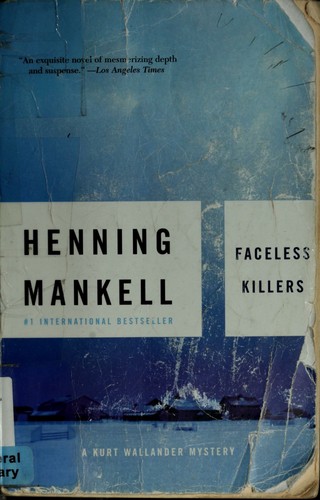
Faceless Killers is the first Kurt Wallander novel, published in Swedish in 1991 and translated to English in 1997.
Henning Mankell · 1991 · 6h 0m
Full summary and key takeaways →The 12 questions
- 1.
The dying woman says 'foreign' — possibly as a description, possibly as an accusation, possibly without intent. How does the novel trace what happens when an ambiguous statement becomes certain in the public mind?
- 2.
Wallander fails repeatedly in this investigation. How does Mankell make failure feel realistic rather than frustrating?
- 3.
The anti-immigrant vigilantism in the novel was published in 1991. How does it read now? Has the cultural context changed, or has it just relocated?
- 4.
Wallander's personal life is a wreck — the divorce, the drinking, the ruptured relationship with his daughter. Does knowing his private situation change how you evaluate his professional decisions?
- 5.
Compared to Kurt Wallander, a detective like Sherlock Holmes is essentially asocial by design. What does it mean for the genre that Mankell makes his detective ordinary and legible?
- 6.
The killer's identity is structured as a rebuke to the 'foreign' narrative. Did that feel earned by the investigation, or more like authorial argument?
- 7.
How does the Ystad setting — the landscape, the weather, the distance from Stockholm — shape the mood and meaning of the book?
- 8.
Mankell includes scenes of Wallander making basic procedural errors. Do you read this as realism, or as Mankell critiquing the Swedish police more broadly?
- 9.
The novel's ending provides a resolution to the murders but not to the social conditions that enabled the backlash. Was that the right choice?
- 10.
Wallander's father paints the same landscape over and over. What do you make of that detail in the context of a book about people unable to change their patterns?
- 11.
Faceless Killers is often credited with launching Nordic noir as a genre. What specifically about its approach do you think other crime writers borrowed?
- 12.
Who in the novel has the most power to prevent the vigilante violence, and who chooses not to use it?
How to run the discussion
- Pick six to eight, not all of them. An hour of real discussion covers fewer questions than anyone expects, and racing the list is what makes a book club feel like homework.
- Open with what people noticed, not what they concluded. Asking for a verdict first hardens opinions before anyone has heard each other.
- Let the disagreement run. The questions below that split a room are the ones worth the time; the ones everyone answers the same way can be skipped.
- Ask the quiet person a specific question. A direct, narrow question is far easier to answer than an open invitation to contribute.
Themes worth steering toward
If the conversation stalls, these are the threads that usually restart it.
Common questions
What are good book club questions for Faceless Killers?
Here are 12 book club questions for Faceless Killers by Henning Mankell, ordered to open easily and end somewhere worth arguing about. The strongest openers ask what each reader noticed rather than what they concluded, and the discussion usually turns on immigration and xenophobia, rural isolation, institutional decay.
How long should a book club discussion of Faceless Killers last?
Most groups run 60 to 90 minutes of actual discussion. That is roughly six to eight questions, not all of them, so pick the ones that suit your group rather than working down the list in order.
What are the main themes in Faceless Killers?
Immigration and xenophobia, Rural isolation, Institutional decay, Grief and solitude, Justice under pressure. Those are the threads most likely to divide a room, which makes them the useful places to steer a discussion that has gone quiet.
Picking the next one? See books like Faceless Killers or questions for other book club picks.
