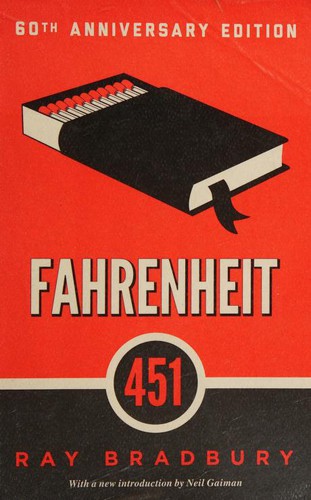
Talk to Fahrenheit 451 like its author wrote you back.
Get the ideas that fit your life — not generic summaries.
- Chat with the book
- Audiobook-style main ideas
- Adapts to your life and goals
- Helps you take action
What it argues
Guy Montag is a fireman — which in Bradbury's future means a person who starts fires rather than puts them out. Books are illegal and the job of firemen is to burn them. Montag is satisfied with his work until he meets his strange, questioning neighbor Clarisse, and until the machinery of his comfortable life begins to reveal its hollow interior: his wife anesthetized by wall-sized television screens, a society that has traded depth for velocity, and a government that discovered it was easier to ban thinking than to punish thinkers.
Fahrenheit 451 is less a novel about censorship than about distraction. Bradbury's most prescient concern was not governments burning books but citizens choosing not to read them — choosing the flickering screens, the earbuds, the entertainment that requires nothing. The firemen emerged, the novel explains, not from state crackdown but from popular demand. A society that finds complex thought uncomfortable will eventually produce institutions that remove the sources of discomfort.
What it gets right
- 1.
The most chilling detail in the novel is that the book-burning came from below, not above — citizens demanded relief from the discomfort of complexity long before the government institutionalized it.
- 2.
Mildred's wall-screens are the novel's most direct prophecy: immersive, interactive entertainment that substitutes for emotional connection and drains the capacity for reflection.
- 3.
Clarisse's function is to ask the kind of questions that make visible what Montag has normalized — she is not a character so much as a mirror.
What it covers
Who wrote it
Ray Bradbury (1920–2012) was an American author who wrote across science fiction, fantasy, horror, and literary fiction, producing some of the most widely read short fiction of the twentieth century. He is best known for Fahrenheit 451, The Martian Chronicles, and Something Wicked This Way Comes, and for short story collections including The Illustrated Man. Bradbury was a self-described romantic humanist who distrusted technology and celebrated imagination. He did not have a driver's license, never flew in an airplane, and wrote on a rented typewriter in a library basement. He received a National Medal of Arts in 2004.
