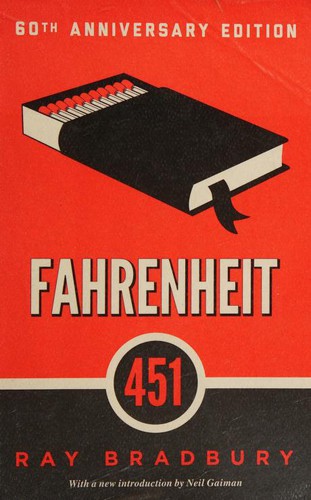
Talk to Fahrenheit 451 like its author wrote you back.
Get the ideas that fit your life — not generic summaries.
- Chat with the book
- Audiobook-style main ideas
- Adapts to your life and goals
- Helps you take action
Fahrenheit 451, in detail
Guy Montag is a fireman — which in Bradbury's future means a person who starts fires rather than puts them out. Books are illegal and the job of firemen is to burn them. Montag is satisfied with his work until he meets his strange, questioning neighbor Clarisse, and until the machinery of his comfortable life begins to reveal its hollow interior: his wife anesthetized by wall-sized television screens, a society that has traded depth for velocity, and a government that discovered it was easier to ban thinking than to punish thinkers.
Fahrenheit 451 is less a novel about censorship than about distraction. Bradbury's most prescient concern was not governments burning books but citizens choosing not to read them — choosing the flickering screens, the earbuds, the entertainment that requires nothing. The firemen emerged, the novel explains, not from state crackdown but from popular demand. A society that finds complex thought uncomfortable will eventually produce institutions that remove the sources of discomfort.
Bradbury's prose is incantatory and dense with imagery — deliberately at odds with the stripped and numbed language of the society he's depicting. The writing is sometimes overheated, reaching for profundity at moments where restraint would land harder. But at its best it produces passages that have lodged themselves in the language: the burning of books described with something close to ecstasy, the image of the Book People walking the railroad tracks, each person a living library.
The novel is short — closer to a novella — and reads in a few hours. Its brevity is appropriate; this is not a book that argues but one that evokes. Whether you find it profound or didactic probably depends on your tolerance for Bradbury's particular brand of romantic humanism. What is not in doubt is its cultural reach: it is one of the most widely read American novels of the twentieth century and its core anxiety feels more relevant now than when it was written.
The big ideas
- 1.
The most chilling detail in the novel is that the book-burning came from below, not above — citizens demanded relief from the discomfort of complexity long before the government institutionalized it.
- 2.
Mildred's wall-screens are the novel's most direct prophecy: immersive, interactive entertainment that substitutes for emotional connection and drains the capacity for reflection.
- 3.
Clarisse's function is to ask the kind of questions that make visible what Montag has normalized — she is not a character so much as a mirror.
