Philosophy · Book club
Fear and Trembling book club questions
Here are 11 book club questions for Fear and Trembling by Søren Kierkegaard, ordered to open easily and end somewhere worth arguing about. Copy them, print them, or bring them up one at a time.
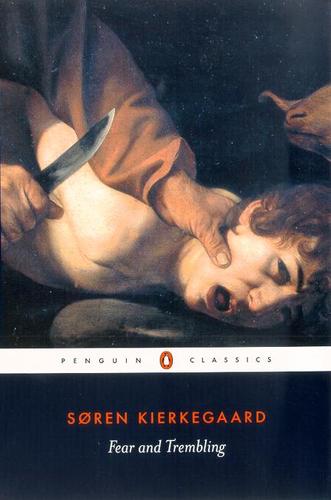
Fear and Trembling was published in 1843 under the pseudonym Johannes de Silentio, and it is Kierkegaard's most sustained meditation on the nature of faith through the lens of the story of Abraham and Isaac.
Søren Kierkegaard · 1843 · 3h 40m
Full summary and key takeaways →The 11 questions
- 1.
Kierkegaard presents Abraham as a hero of faith rather than a would-be murderer. Is that reading of the story compelling to you, or does it require too much from the concept of faith?
- 2.
The teleological suspension of the ethical means a higher duty can override ordinary moral obligations. Is that a dangerous principle or a necessary one?
- 3.
The knight of faith looks completely ordinary from the outside — he walks, eats, enjoys the world — but inside has made the double movement. Is that portrayal convincing?
- 4.
Kierkegaard says faith is a scandal to reason and ethics. Have you ever had a commitment or conviction that you could not rationally justify but that felt like the most authentic thing about you?
- 5.
The three stages — aesthetic, ethical, religious — form a hierarchy. Where do you see yourself in that framework, and does the hierarchy seem accurate?
- 6.
Fear and Trembling is written under a pseudonym (Johannes de Silentio) who claims not to understand faith but only to admire it from outside. Why might Kierkegaard have made that choice?
- 7.
The book argues that the individual's direct relationship to God is unmediated by community or institution. Is that individualism a feature of genuine faith or a distinctly modern distortion of religion?
- 8.
Kierkegaard wrote against Hegel's rationalization of religion. What do you think is at stake in that debate — does genuine religious faith require irrationality?
- 9.
The concept of the absurd here is different from Camus' — for Kierkegaard it is the ground of faith; for Camus it is the ground of revolt. What is the crucial difference?
- 10.
Abraham acts in absolute silence — he cannot explain himself to Sarah, to Isaac, or to anyone. What does that silence tell you about the kind of faith Kierkegaard is describing?
- 11.
If the teleological suspension of the ethical is a real possibility, how do you distinguish genuine faith from fanaticism or delusion?
How to run the discussion
- Pick six to eight, not all of them. An hour of real discussion covers fewer questions than anyone expects, and racing the list is what makes a book club feel like homework.
- Open with what people noticed, not what they concluded. Asking for a verdict first hardens opinions before anyone has heard each other.
- Let the disagreement run. The questions below that split a room are the ones worth the time; the ones everyone answers the same way can be skipped.
- Ask the quiet person a specific question. A direct, narrow question is far easier to answer than an open invitation to contribute.
Themes worth steering toward
If the conversation stalls, these are the threads that usually restart it.
Common questions
What are good book club questions for Fear and Trembling?
Here are 11 book club questions for Fear and Trembling by Søren Kierkegaard, ordered to open easily and end somewhere worth arguing about. The strongest openers ask what each reader noticed rather than what they concluded, and the discussion usually turns on faith, anxiety, sacrifice.
How long should a book club discussion of Fear and Trembling last?
Most groups run 60 to 90 minutes of actual discussion. That is roughly six to eight questions, not all of them, so pick the ones that suit your group rather than working down the list in order.
What are the main themes in Fear and Trembling?
Faith, Anxiety, Sacrifice, The individual, Ethics. Those are the threads most likely to divide a room, which makes them the useful places to steer a discussion that has gone quiet.
Picking the next one? See books like Fear and Trembling or questions for other book club picks.
