Science · Book club
Fermat's Enigma book club questions
Here are 12 book club questions for Fermat's Enigma by Simon Singh, ordered to open easily and end somewhere worth arguing about. Copy them, print them, or bring them up one at a time.
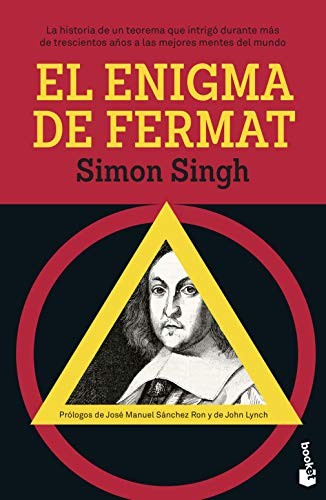
In 1637, Pierre de Fermat scrawled a note in the margin of a mathematics book claiming to have found a proof that no three positive integers can satisfy the equation a^n + b^n = c^n for any integer value of n greater than 2 — but that the margin was too narrow to contain it.
Simon Singh · 1997 · 6h 0m
Full summary and key takeaways →The 12 questions
- 1.
Wiles spent seven years in secret on a single problem. What does that level of obsession look like from the inside, and what does it say about how transformative work gets done?
- 2.
Singh describes mathematics as the pursuit of certain knowledge. How does that compare to how certainty works in other fields you know — science, law, history?
- 3.
Kummer's failed proof produced important mathematics anyway. What does that suggest about how we should evaluate intellectual work that doesn't reach its stated goal?
- 4.
Wiles had childhood memories of being fascinated by Fermat's problem. How much does early exposure to an unsolved problem shape the questions we spend our careers on?
- 5.
The proof of Fermat's Last Theorem has no known practical use. Is that a problem? How do you think about pure research versus applied research in terms of social value?
- 6.
Singh describes the mathematical community's reaction to Wiles's announcement: excitement, admiration, and then the discovery of the flaw. How do you think scientific communities should handle announced results before they're verified?
- 7.
The Taniyama-Shimura conjecture linked two apparently unrelated areas of mathematics. Is there an equivalent moment in another field you know where two unrelated things turned out to be secretly the same?
- 8.
What does it mean to say a mathematical proof is beautiful? Is that aesthetic judgment reliable, or is it just what hard ideas feel like when they finally click?
- 9.
Wiles worked alone. Much modern science involves large collaborative teams. What does each approach enable that the other can't?
- 10.
Singh says mathematical certainty is different from empirical certainty. Do you agree? What would it take to be as certain about a historical claim as a mathematical one?
- 11.
How did Singh's storytelling change how you relate to a field — mathematics — that can feel cold or abstract?
- 12.
Fermat probably didn't have a valid proof. What do you make of the marginal note that started everything — mistake, teasing, or something else?
How to run the discussion
- Pick six to eight, not all of them. An hour of real discussion covers fewer questions than anyone expects, and racing the list is what makes a book club feel like homework.
- Open with what people noticed, not what they concluded. Asking for a verdict first hardens opinions before anyone has heard each other.
- Let the disagreement run. The questions below that split a room are the ones worth the time; the ones everyone answers the same way can be skipped.
- Ask the quiet person a specific question. A direct, narrow question is far easier to answer than an open invitation to contribute.
Themes worth steering toward
If the conversation stalls, these are the threads that usually restart it.
Common questions
What are good book club questions for Fermat's Enigma?
Here are 12 book club questions for Fermat's Enigma by Simon Singh, ordered to open easily and end somewhere worth arguing about. The strongest openers ask what each reader noticed rather than what they concluded, and the discussion usually turns on mathematics, obsession, history of science.
How long should a book club discussion of Fermat's Enigma last?
Most groups run 60 to 90 minutes of actual discussion. That is roughly six to eight questions, not all of them, so pick the ones that suit your group rather than working down the list in order.
What are the main themes in Fermat's Enigma?
Mathematics, Obsession, History of science, Proof, Number theory. Those are the threads most likely to divide a room, which makes them the useful places to steer a discussion that has gone quiet.
Picking the next one? See books like Fermat's Enigma or questions for other book club picks.
