Short stories · Book club
Ficciones book club questions
Here are 12 book club questions for Ficciones by Jorge Luis Borges, ordered to open easily and end somewhere worth arguing about. Copy them, print them, or bring them up one at a time.
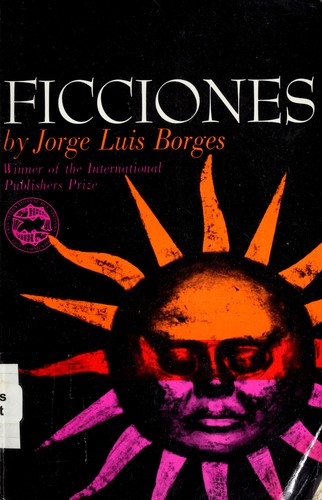
Ficciones collects seventeen short stories and fictions by the Argentine writer Jorge Luis Borges, first published in two parts in 1941 and 1944.
Jorge Luis Borges · 1944 · 4h 20m
Full summary and key takeaways →The 12 questions
- 1.
Pierre Menard writes Don Quixote word-for-word without copying it — and Borges argues the result is a different book. Do you find this convincing? What does it imply about authorship and reading?
- 2.
The Library of Babel contains every possible book and is therefore theoretically omniscient. Does that make it useful or useless? What does Borges's answer suggest about information and meaning?
- 3.
Borges's narrators are frequently unreliable in ways that are impossible to detect — the invented citations look exactly like real ones. Does this make reading Borges frustrating or pleasurable?
- 4.
In The Garden of Forking Paths, the garden is a novel and a theory of time simultaneously. Is the double meaning illuminating or just clever?
- 5.
Many of Borges's stories end with a kind of philosophical vertigo rather than a conventional resolution. Does this feel like a limitation of the form or its whole point?
- 6.
Tlön, Uqbar, Orbis Tertius describes a fictional world whose idealist philosophy gradually colonizes reality. Does this feel more like a political parable or a statement about how fiction works?
- 7.
Compare a Borges story to a work by Kafka, who had similar preoccupations. What does Borges do that Kafka doesn't, and vice versa?
- 8.
The stories are very short — some under five pages. Does brevity feel like economy or like withholding? Are there stories you wished were longer?
- 9.
Borges is often described as a writer for writers rather than for general readers. Do you think that's fair? What would a general reader be missing?
- 10.
The erudition in Ficciones is largely invented but feels authoritative. How does that affect your experience of reading — do you feel tricked, or is the trick part of the pleasure?
- 11.
Which story in the collection stayed with you most, and what specifically in it produced that effect?
- 12.
Borges was famously conservative politically and wrote at a time of political turbulence in Argentina. Do you read any political content in these stories, or is the abstraction a form of evasion?
How to run the discussion
- Pick six to eight, not all of them. An hour of real discussion covers fewer questions than anyone expects, and racing the list is what makes a book club feel like homework.
- Open with what people noticed, not what they concluded. Asking for a verdict first hardens opinions before anyone has heard each other.
- Let the disagreement run. The questions below that split a room are the ones worth the time; the ones everyone answers the same way can be skipped.
- Ask the quiet person a specific question. A direct, narrow question is far easier to answer than an open invitation to contribute.
Themes worth steering toward
If the conversation stalls, these are the threads that usually restart it.
Common questions
What are good book club questions for Ficciones?
Here are 12 book club questions for Ficciones by Jorge Luis Borges, ordered to open easily and end somewhere worth arguing about. The strongest openers ask what each reader noticed rather than what they concluded, and the discussion usually turns on infinity and the labyrinth, memory and identity, fiction and reality.
How long should a book club discussion of Ficciones last?
Most groups run 60 to 90 minutes of actual discussion. That is roughly six to eight questions, not all of them, so pick the ones that suit your group rather than working down the list in order.
What are the main themes in Ficciones?
Infinity and the labyrinth, Memory and identity, Fiction and reality, Time and causality, Erudition as play. Those are the threads most likely to divide a room, which makes them the useful places to steer a discussion that has gone quiet.
Picking the next one? See books like Ficciones or questions for other book club picks.
