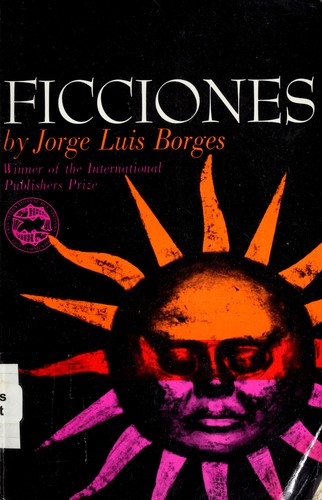
Ficciones by Jorge Luis Borges is a 1944 short stories book about infinity and the labyrinth, memory and identity, fiction and reality. Borges uses the format of the scholarly essay — footnotes, citations, invented authorities — to make philosophical arguments that conventional narrative cannot contain.
Summary
Ficciones collects seventeen short stories and fictions by the Argentine writer Jorge Luis Borges, first published in two parts in 1941 and 1944. They are among the most influential pieces of short fiction of the twentieth century, though calling them "stories" understates what they are: philosophical thought experiments dressed as tales, essays that pretend to be reviews of nonexistent books, detective stories that dismantle their own genre conventions. Borges operates at the intersection of literature and philosophy, and the stories are best read as both simultaneously.
The central obsessions are repeated across the collection: infinite libraries, labyrinths, mirrors, time loops, identity that dissolves under scrutiny, the book as both container and trap. "The Garden of Forking Paths" is a spy story and a meditation on parallel time. "The Library of Babel" describes a universe-library containing every possible book and the theological and existential crisis that would follow. "Tlön, Uqbar, Orbis Tertius" imagines an idealist philosophy so coherent it begins to replace reality. "Pierre Menard, Author of the Quixote" argues, by implication, that authorship and reading are inextricable and that the same text can mean entirely different things written by different people.
Borges's style is spare, precise, and erudite in a way that is simultaneously daunting and welcoming: the erudition is frequently invented, footnotes lead nowhere, sources are fabricated, and the authority of the scholarly voice is deployed to say things scholarship cannot. This is the work's central formal joke — it dresses in the clothing of the essay and the monograph to smuggle in ideas that conventional narrative cannot contain.
The stories are short, many under ten pages, and can be read in any order. But the collection accumulates — the themes build on each other, and a reader who returns after finishing finds each story changed by what came after it. Ficciones is one of the few collections that can genuinely claim to have transformed literature: postmodernism, magical realism, and much of literary metafiction descends from it.
Talk to Ficciones like its author wrote you back.
Get the ideas that fit your life — not generic summaries.
- Chat with the book
- Audiobook-style main ideas
- Adapts to your life and goals
- Helps you take action
Key takeaways
- 1.
Borges uses the format of the scholarly essay — footnotes, citations, invented authorities — to make philosophical arguments that conventional narrative cannot contain.
- 2.
The Library of Babel is Borges's foundational image: an infinite system that contains everything and therefore means nothing, which is both a statement about libraries and about consciousness.
- 3.
Pierre Menard enacts a theory of reading: that a text does not have a fixed meaning but changes with every reader and every historical context, even when the words are identical.
- 4.
The Garden of Forking Paths is Borges's most accessible introduction to his central preoccupation: time as branching rather than linear, in which every decision generates an alternate reality.
- 5.
Borges's invented sources and fabricated footnotes are not just tricks — they are an argument that the line between fiction and scholarship is maintained by convention rather than ontology.
- 6.
The labyrinth is Borges's ruling metaphor: a structure that promises a center but may have none, which is his description of both narrative and existence.
- 7.
Ficciones established what became known as magical realism and Latin American postmodernism by treating the impossible not as fantasy but as a logical extension of existing systems.
- 8.
Many of the stories are also detective stories with their solutions withheld or dissolved — Borges uses the genre's promise of rational resolution to demonstrate that resolution is a convention rather than a fact.
Discussion questions
Use these on your own, with a book club, or as chat starters in Superbook. Book club version, ready to copy or print →
- 1.
Pierre Menard writes Don Quixote word-for-word without copying it — and Borges argues the result is a different book. Do you find this convincing? What does it imply about authorship and reading?
- 2.
The Library of Babel contains every possible book and is therefore theoretically omniscient. Does that make it useful or useless? What does Borges's answer suggest about information and meaning?
- 3.
Borges's narrators are frequently unreliable in ways that are impossible to detect — the invented citations look exactly like real ones. Does this make reading Borges frustrating or pleasurable?
- 4.
In The Garden of Forking Paths, the garden is a novel and a theory of time simultaneously. Is the double meaning illuminating or just clever?
- 5.
Many of Borges's stories end with a kind of philosophical vertigo rather than a conventional resolution. Does this feel like a limitation of the form or its whole point?
- 6.
Tlön, Uqbar, Orbis Tertius describes a fictional world whose idealist philosophy gradually colonizes reality. Does this feel more like a political parable or a statement about how fiction works?
- 7.
Compare a Borges story to a work by Kafka, who had similar preoccupations. What does Borges do that Kafka doesn't, and vice versa?
- 8.
The stories are very short — some under five pages. Does brevity feel like economy or like withholding? Are there stories you wished were longer?
- 9.
Borges is often described as a writer for writers rather than for general readers. Do you think that's fair? What would a general reader be missing?
- 10.
The erudition in Ficciones is largely invented but feels authoritative. How does that affect your experience of reading — do you feel tricked, or is the trick part of the pleasure?
- 11.
Which story in the collection stayed with you most, and what specifically in it produced that effect?
- 12.
Borges was famously conservative politically and wrote at a time of political turbulence in Argentina. Do you read any political content in these stories, or is the abstraction a form of evasion?
Themes
Frequently asked questions
-
Is Ficciones worth reading?
Yes, without qualification. It is one of the most influential short story collections of the twentieth century, and individual stories like The Library of Babel and The Garden of Forking Paths remain genuinely astonishing even after their ideas have been absorbed into mainstream literary culture. Short stories, easy to pick up and put down.
-
Is Ficciones hard to read?
The prose is spare and accessible; the ideas are sometimes difficult. Borges writes with the clarity of an essayist but the compression of a poet, and the philosophical payloads of individual stories can take time to unpack. They reward re-reading significantly more than most short fiction.
-
What is Ficciones about, without spoilers?
It is a collection of philosophical fictions disguised as stories, essays, and reviews of nonexistent books. The central preoccupations are infinity, labyrinths, time, identity, and the nature of fiction itself. There are detective stories, spy stories, and metaphysical parables — sometimes all three in the same piece.
-
Do I need to read the stories in order?
No. Each is self-contained. That said, the collection accumulates thematically, and re-reading the opening stories after finishing has the effect Borges seems to have intended — the second reading is a different experience from the first.
-
Who shouldn't read Ficciones?
Readers who need emotional connection and character development. The stories are almost entirely intellectual — Borges's people are barely people at all, more like positions in an argument. If you want plot, character, and feeling, this is the wrong book.