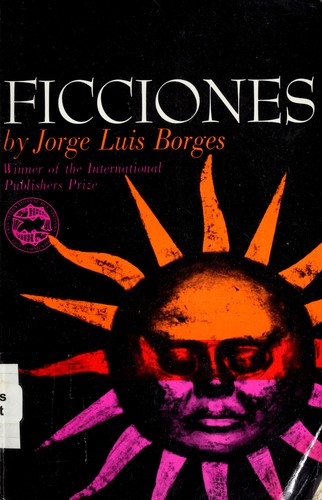
Talk to Ficciones like its author wrote you back.
Get the ideas that fit your life — not generic summaries.
- Chat with the book
- Audiobook-style main ideas
- Adapts to your life and goals
- Helps you take action
What it argues
Ficciones collects seventeen short stories and fictions by the Argentine writer Jorge Luis Borges, first published in two parts in 1941 and 1944. They are among the most influential pieces of short fiction of the twentieth century, though calling them "stories" understates what they are: philosophical thought experiments dressed as tales, essays that pretend to be reviews of nonexistent books, detective stories that dismantle their own genre conventions. Borges operates at the intersection of literature and philosophy, and the stories are best read as both simultaneously.
The central obsessions are repeated across the collection: infinite libraries, labyrinths, mirrors, time loops, identity that dissolves under scrutiny, the book as both container and trap. "The Garden of Forking Paths" is a spy story and a meditation on parallel time. "The Library of Babel" describes a universe-library containing every possible book and the theological and existential crisis that would follow. "Tlön, Uqbar, Orbis Tertius" imagines an idealist philosophy so coherent it begins to replace reality. "Pierre Menard, Author of the Quixote" argues, by implication, that authorship and reading are inextricable and that the same text can mean entirely different things written by different people.
What it gets right
- 1.
Borges uses the format of the scholarly essay — footnotes, citations, invented authorities — to make philosophical arguments that conventional narrative cannot contain.
- 2.
The Library of Babel is Borges's foundational image: an infinite system that contains everything and therefore means nothing, which is both a statement about libraries and about consciousness.
- 3.
Pierre Menard enacts a theory of reading: that a text does not have a fixed meaning but changes with every reader and every historical context, even when the words are identical.
What it covers
Who wrote it
Jorge Luis Borges (1899–1986) was an Argentine short story writer, essayist, and poet widely regarded as one of the most influential literary figures of the twentieth century. Born in Buenos Aires and educated partly in Geneva and Spain, he returned to Argentina and worked for decades as a librarian and later as director of the National Public Library. He was repeatedly shortlisted for the Nobel Prize in Literature but never won it. His major collections — Ficciones (1944) and El Aleph (1949) — transformed the short story form and established the intellectual and stylistic vocabulary of Latin American magical realism and postmodern fiction.
