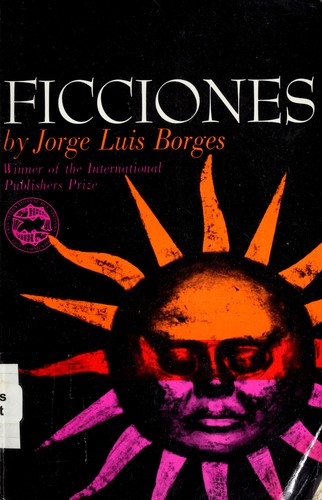
Talk to Ficciones like its author wrote you back.
Get the ideas that fit your life — not generic summaries.
- Chat with the book
- Audiobook-style main ideas
- Adapts to your life and goals
- Helps you take action
Ficciones, in detail
Ficciones collects seventeen short stories and fictions by the Argentine writer Jorge Luis Borges, first published in two parts in 1941 and 1944. They are among the most influential pieces of short fiction of the twentieth century, though calling them "stories" understates what they are: philosophical thought experiments dressed as tales, essays that pretend to be reviews of nonexistent books, detective stories that dismantle their own genre conventions. Borges operates at the intersection of literature and philosophy, and the stories are best read as both simultaneously.
The central obsessions are repeated across the collection: infinite libraries, labyrinths, mirrors, time loops, identity that dissolves under scrutiny, the book as both container and trap. "The Garden of Forking Paths" is a spy story and a meditation on parallel time. "The Library of Babel" describes a universe-library containing every possible book and the theological and existential crisis that would follow. "Tlön, Uqbar, Orbis Tertius" imagines an idealist philosophy so coherent it begins to replace reality. "Pierre Menard, Author of the Quixote" argues, by implication, that authorship and reading are inextricable and that the same text can mean entirely different things written by different people.
Borges's style is spare, precise, and erudite in a way that is simultaneously daunting and welcoming: the erudition is frequently invented, footnotes lead nowhere, sources are fabricated, and the authority of the scholarly voice is deployed to say things scholarship cannot. This is the work's central formal joke — it dresses in the clothing of the essay and the monograph to smuggle in ideas that conventional narrative cannot contain.
The stories are short, many under ten pages, and can be read in any order. But the collection accumulates — the themes build on each other, and a reader who returns after finishing finds each story changed by what came after it. Ficciones is one of the few collections that can genuinely claim to have transformed literature: postmodernism, magical realism, and much of literary metafiction descends from it.
The big ideas
- 1.
Borges uses the format of the scholarly essay — footnotes, citations, invented authorities — to make philosophical arguments that conventional narrative cannot contain.
- 2.
The Library of Babel is Borges's foundational image: an infinite system that contains everything and therefore means nothing, which is both a statement about libraries and about consciousness.
- 3.
Pierre Menard enacts a theory of reading: that a text does not have a fixed meaning but changes with every reader and every historical context, even when the words are identical.
