Business · Book club
Financial Shenanigans book club questions
Here are 12 book club questions for Financial Shenanigans by Howard M. Schilit, ordered to open easily and end somewhere worth arguing about. Copy them, print them, or bring them up one at a time.
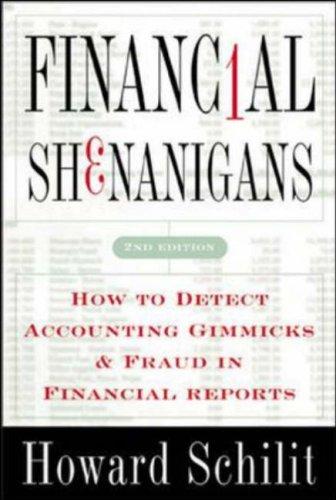
Financial Shenanigans is Howard Schilit's guide to the tricks companies use to make their financial results look better than they are — and how a careful reader of financial statements can spot them before they explode.
Howard M. Schilit · 1993 · 4h 20m
Full summary and key takeaways →The 12 questions
- 1.
Schilit argues that cash flow from operations is harder to fake than earnings. Have you ever compared these two numbers for a company you own or are considering?
- 2.
Many of the frauds in the book were caught only after years of manipulation. What does that say about the reliability of auditing and analyst coverage for individual investors?
- 3.
Which shenanigan category surprised you most — and why might it be so common?
- 4.
The companies in the book often had enthusiastic analyst recommendations right before fraud became apparent. What does that suggest about how to use analyst ratings?
- 5.
How much accounting literacy do you think individual investors need to protect themselves? Is there a minimum below which they shouldn't be buying individual stocks?
- 6.
Schilit's work suggests that management integrity matters enormously. How do you currently evaluate management quality when considering an investment?
- 7.
The book covers cases where auditors missed or tolerated manipulation. Does knowing this change how much weight you give to clean audit opinions?
- 8.
What would need to be different about your investment process to actually implement the red flag checks Schilit describes?
- 9.
He shows that manipulation often starts small — a little reserve release here, a questionable capitalization there — before becoming systemic. What structural pressures drive that escalation?
- 10.
How do you think about the line between aggressive but legal accounting and fraud? Does the book change where you'd draw that line?
- 11.
If you manage any investments — retirement accounts, brokerage accounts — what changes would you make to your analysis process after reading this?
- 12.
Schilit's firm was paid to find accounting fraud. What incentives does that create, and do they affect how you weight his conclusions?
How to run the discussion
- Pick six to eight, not all of them. An hour of real discussion covers fewer questions than anyone expects, and racing the list is what makes a book club feel like homework.
- Open with what people noticed, not what they concluded. Asking for a verdict first hardens opinions before anyone has heard each other.
- Let the disagreement run. The questions below that split a room are the ones worth the time; the ones everyone answers the same way can be skipped.
- Ask the quiet person a specific question. A direct, narrow question is far easier to answer than an open invitation to contribute.
Themes worth steering toward
If the conversation stalls, these are the threads that usually restart it.
Common questions
What are good book club questions for Financial Shenanigans?
Here are 12 book club questions for Financial Shenanigans by Howard M. Schilit, ordered to open easily and end somewhere worth arguing about. The strongest openers ask what each reader noticed rather than what they concluded, and the discussion usually turns on accounting fraud, financial analysis, earnings manipulation.
How long should a book club discussion of Financial Shenanigans last?
Most groups run 60 to 90 minutes of actual discussion. That is roughly six to eight questions, not all of them, so pick the ones that suit your group rather than working down the list in order.
What are the main themes in Financial Shenanigans?
Accounting fraud, Financial analysis, Earnings manipulation, Investing, Corporate governance. Those are the threads most likely to divide a room, which makes them the useful places to steer a discussion that has gone quiet.
Picking the next one? See books like Financial Shenanigans or questions for other book club picks.
