Memoir · Book club
Finding Ultra book club questions
Here are 12 book club questions for Finding Ultra by Rich Roll, ordered to open easily and end somewhere worth arguing about. Copy them, print them, or bring them up one at a time.
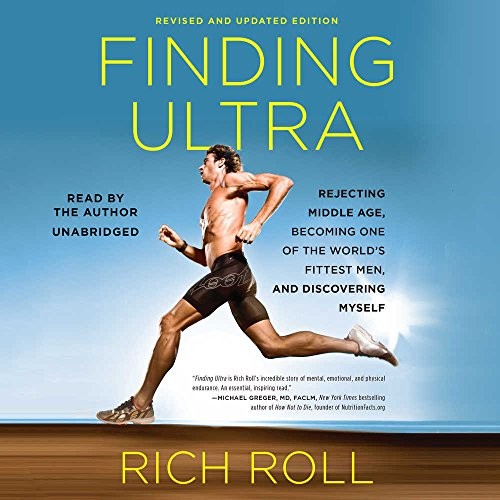
Finding Ultra is Rich Roll's memoir of going from overweight, alcoholic attorney at age forty to competing in the Ultraman World Championship — a three-day, 320-mile endurance race — on a fully plant-based diet.
Rich Roll · 2012 · 6h 20m
Full summary and key takeaways →The 12 questions
- 1.
Roll's athletic transformation was possible partly because of his addictive personality redirected toward a healthy goal. Does that suggest something about the relationship between extreme personality traits and peak performance?
- 2.
He attributes his performance partly to his plant-based diet but acknowledges he can't isolate variables. How much credit do you think the diet deserves versus other factors?
- 3.
The memoir begins with Roll stopping halfway up a staircase at forty. What's the equivalent moment in your own life that you look back on as a turning point?
- 4.
He is honest that extreme endurance training can shade into compulsion. Where do you think the line is between healthy dedication and unhealthy obsession in athletic pursuits?
- 5.
Roll's wife Julie is central to his dietary transformation and his daily life. How does having a partner who shares your values affect the sustainability of major lifestyle changes?
- 6.
The book argues that plant-based eating can support extreme athletic performance. Does personal anecdote like Roll's change your view on what athletes need to eat?
- 7.
He went from collegiate swimmer to practicing alcoholic to elite ultraendurance athlete in midlife. What does that trajectory suggest about the role of identity in health and performance?
- 8.
Sobriety is the foundation on which everything else in the book is built. How does the addiction recovery frame change the meaning of the athletic achievement?
- 9.
Roll left a lucrative legal career to pursue this transformation. How much material sacrifice is a realistic precondition for the kind of reinvention he describes?
- 10.
The Ultraman race takes place in remote Hawaii over multiple days. What makes extreme endurance events appealing to people who have already conquered ordinary fitness goals?
- 11.
If you could apply one thing from Roll's approach to reinvention to a goal in your own life, what would it be?
- 12.
The book has been criticized for making its transformation seem more accessible than it is. Is the story inspirational, or does it inadvertently set an unrealistic bar?
How to run the discussion
- Pick six to eight, not all of them. An hour of real discussion covers fewer questions than anyone expects, and racing the list is what makes a book club feel like homework.
- Open with what people noticed, not what they concluded. Asking for a verdict first hardens opinions before anyone has heard each other.
- Let the disagreement run. The questions below that split a room are the ones worth the time; the ones everyone answers the same way can be skipped.
- Ask the quiet person a specific question. A direct, narrow question is far easier to answer than an open invitation to contribute.
Themes worth steering toward
If the conversation stalls, these are the threads that usually restart it.
Common questions
What are good book club questions for Finding Ultra?
Here are 12 book club questions for Finding Ultra by Rich Roll, ordered to open easily and end somewhere worth arguing about. The strongest openers ask what each reader noticed rather than what they concluded, and the discussion usually turns on ultraendurance, addiction recovery, plant-based diet.
How long should a book club discussion of Finding Ultra last?
Most groups run 60 to 90 minutes of actual discussion. That is roughly six to eight questions, not all of them, so pick the ones that suit your group rather than working down the list in order.
What are the main themes in Finding Ultra?
Ultraendurance, Addiction recovery, Plant-based diet, Athletic transformation, Midlife reinvention. Those are the threads most likely to divide a room, which makes them the useful places to steer a discussion that has gone quiet.
Picking the next one? See books like Finding Ultra or questions for other book club picks.
