Psychology · Book club
Flourish: A Visionary New Understanding of Happiness and Well-being book club questions
Here are 11 book club questions for Flourish: A Visionary New Understanding of Happiness and Well-being by Martin E. P. Seligman, ordered to open easily and end somewhere worth arguing about. Copy them, print them, or bring them up one at a time.
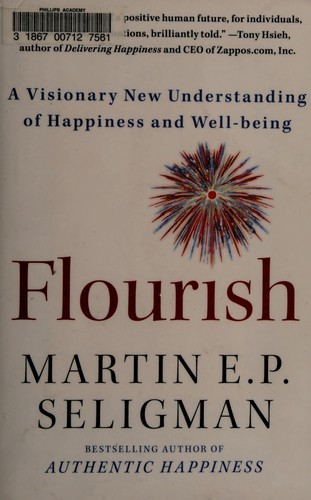
Martin Seligman founded the positive psychology movement and published Authentic Happiness in 2002.
Martin E. P. Seligman · 2011 · 5h 0m
Full summary and key takeaways →The 11 questions
- 1.
The PERMA model proposes five separate components of well-being. Which of the five is currently most alive in your own life, and which is most absent?
- 2.
Seligman distinguishes flourishing from happiness. Does that distinction resonate with you? Is there something you value that positive emotion alone does not capture?
- 3.
He argues that accomplishment is valued for its own sake, not as a means to feeling good. Can you identify a goal you are pursuing that is not primarily about how it will make you feel?
- 4.
The positive psychology movement has been criticized for being primarily applicable to already-privileged people. How do you evaluate that critique?
- 5.
Seligman describes the Comprehensive Soldier Fitness program as an application of positive psychology principles to the military at scale. What is your reaction to psychological well-being programs in military contexts?
- 6.
He argues that well-being should be a goal of schools alongside academic achievement. What would that look like in practice, and what would be the tradeoffs?
- 7.
Flourish was written partly to revise Authentic Happiness. What does the revision itself suggest about how Seligman thinks about his own work?
- 8.
Learned helplessness — the generalization of uncontrollability to situations where control is actually possible — is the foundation of the book's clinical framework. Have you experienced or observed this pattern?
- 9.
PERMA gives relationships their own category, separate from positive emotion. What relationships in your life contribute most to your sense of well-being, and what makes them different from others?
- 10.
Meaning, in this framework, comes from belonging to and serving something beyond the individual self. What serves that function in your life?
- 11.
Seligman has been prominent in arguing that positive psychology should influence policy. What policies would look different if flourishing were a primary goal?
How to run the discussion
- Pick six to eight, not all of them. An hour of real discussion covers fewer questions than anyone expects, and racing the list is what makes a book club feel like homework.
- Open with what people noticed, not what they concluded. Asking for a verdict first hardens opinions before anyone has heard each other.
- Let the disagreement run. The questions below that split a room are the ones worth the time; the ones everyone answers the same way can be skipped.
- Ask the quiet person a specific question. A direct, narrow question is far easier to answer than an open invitation to contribute.
Themes worth steering toward
If the conversation stalls, these are the threads that usually restart it.
Common questions
What are good book club questions for Flourish: A Visionary New Understanding of Happiness and Well-being?
Here are 11 book club questions for Flourish: A Visionary New Understanding of Happiness and Well-being by Martin E. P. Seligman, ordered to open easily and end somewhere worth arguing about. The strongest openers ask what each reader noticed rather than what they concluded, and the discussion usually turns on well-being, positive psychology, meaning.
How long should a book club discussion of Flourish: A Visionary New Understanding of Happiness and Well-being last?
Most groups run 60 to 90 minutes of actual discussion. That is roughly six to eight questions, not all of them, so pick the ones that suit your group rather than working down the list in order.
What are the main themes in Flourish: A Visionary New Understanding of Happiness and Well-being?
Well-being, Positive psychology, Meaning, Engagement, Relationships. Those are the threads most likely to divide a room, which makes them the useful places to steer a discussion that has gone quiet.
Picking the next one? See books like Flourish: A Visionary New Understanding of Happiness and Well-being or questions for other book club picks.
