Psychology · Book club
Flow: The Psychology of Optimal Experience book club questions
Here are 12 book club questions for Flow: The Psychology of Optimal Experience by Mihaly Csikszentmihalyi, ordered to open easily and end somewhere worth arguing about. Copy them, print them, or bring them up one at a time.
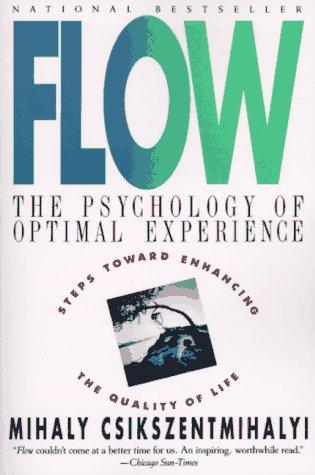
Flow is Csikszentmihalyi's landmark study of optimal experience — those moments when people are so deeply absorbed in an activity that time warps, self-consciousness disappears, and effort feels effortless.
Mihaly Csikszentmihalyi · 1990 · 6h 0m
Full summary and key takeaways →The 12 questions
- 1.
When did you last experience flow — complete absorption where time seemed to stop? What were the conditions that made it possible?
- 2.
Csikszentmihalyi's data shows people feel better during work than during leisure, yet prefer leisure. Does that match your own experience? What explains the gap?
- 3.
Think of an activity that used to produce flow and no longer does. What changed — did the challenge drop, the skill increase, or something else?
- 4.
Where in your daily life is the challenge-skill balance most misaligned right now — too easy, or too hard?
- 5.
The book argues you can find flow in almost any activity by raising the personal complexity of your attention. What's an activity you dismiss as boring that you could reengineer?
- 6.
Csikszentmihalyi distinguishes pleasure (sensory satisfaction) from enjoyment (flow-based growth). Which do you pursue more? Which do you think you need more of?
- 7.
What's the most recent piece of feedback you got on important work? How long after the work did it arrive? Would faster feedback change your engagement?
- 8.
He argues that passive entertainment produces less happiness than active challenge. How much of your free time is genuinely active versus genuinely passive?
- 9.
What would it mean to build your daily schedule around the conditions for flow rather than around obligations and convenience?
- 10.
Csikszentmihalyi says a unified life purpose creates the most sustained flow. What purpose, if you committed to it seriously, would unify most of your current goals?
- 11.
Think of someone in your life who seems consistently engaged and energized by their work. What do you notice about how they structure their days?
- 12.
The book was published in 1990. Which of its insights feel more urgent now, given smartphones and infinite content, than they did then?
How to run the discussion
- Pick six to eight, not all of them. An hour of real discussion covers fewer questions than anyone expects, and racing the list is what makes a book club feel like homework.
- Open with what people noticed, not what they concluded. Asking for a verdict first hardens opinions before anyone has heard each other.
- Let the disagreement run. The questions below that split a room are the ones worth the time; the ones everyone answers the same way can be skipped.
- Ask the quiet person a specific question. A direct, narrow question is far easier to answer than an open invitation to contribute.
Themes worth steering toward
If the conversation stalls, these are the threads that usually restart it.
Common questions
What are good book club questions for Flow: The Psychology of Optimal Experience?
Here are 12 book club questions for Flow: The Psychology of Optimal Experience by Mihaly Csikszentmihalyi, ordered to open easily and end somewhere worth arguing about. The strongest openers ask what each reader noticed rather than what they concluded, and the discussion usually turns on flow state, happiness, focus.
How long should a book club discussion of Flow: The Psychology of Optimal Experience last?
Most groups run 60 to 90 minutes of actual discussion. That is roughly six to eight questions, not all of them, so pick the ones that suit your group rather than working down the list in order.
What are the main themes in Flow: The Psychology of Optimal Experience?
Flow state, Happiness, Focus, Intrinsic motivation, Mastery. Those are the threads most likely to divide a room, which makes them the useful places to steer a discussion that has gone quiet.
Picking the next one? See books like Flow: The Psychology of Optimal Experience or questions for other book club picks.
