Business · Book club
Founders at Work: Stories of Startups' Early Days book club questions
Here are 12 book club questions for Founders at Work: Stories of Startups' Early Days by Jessica Livingston, ordered to open easily and end somewhere worth arguing about. Copy them, print them, or bring them up one at a time.
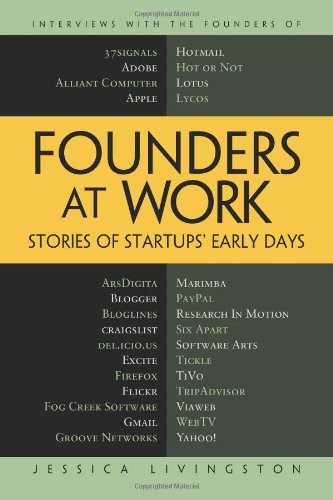
Founders at Work is Jessica Livingston's collection of interviews with the founders of some of the most influential technology companies of the late twentieth and early twenty-first centuries.
Jessica Livingston · 2007 · 8h 45m
Full summary and key takeaways →The 12 questions
- 1.
Livingston conducts all the interviews herself with consistent questions. What do you think that consistency surfaces that a more edited oral history would miss?
- 2.
Which founder's story in the book surprised you most, and why?
- 3.
The companies described are mostly from the 1980s to early 2000s. How different do you think the early days of those companies would look if they were founded today?
- 4.
Nearly every founder describes a period when they could have quit and it would have seemed reasonable. What seems to separate founders who persist from those who stop?
- 5.
Several founders describe not realizing they were doing something historically significant until much later. What does that suggest about how you know when what you're building matters?
- 6.
The book covers technical founders almost exclusively. What experiences from early days do you think founders without technical backgrounds might describe differently?
- 7.
The founding team dynamic — co-founders, early employees, first investors — comes up repeatedly. What does the book suggest about who you want around you in the earliest days?
- 8.
Many founders describe luck as a factor: being early to a platform, meeting the right investor at the right time. How much of what these founders accomplished was skill versus luck versus timing?
- 9.
The founders are almost uniformly self-critical about mistakes in retrospect. Which mistake type — product, team, strategy, fundraising — appears most often as the thing they'd change?
- 10.
Livingston co-founded Y Combinator. Do you think that background shapes which founders she chose to interview or how she conducted the conversations?
- 11.
The book ends with early 2000s companies. Which companies founded since then would you most want to see interviewed in the same format?
- 12.
If you read this book as someone who has never started a company, what does it tell you about what you're probably underestimating?
How to run the discussion
- Pick six to eight, not all of them. An hour of real discussion covers fewer questions than anyone expects, and racing the list is what makes a book club feel like homework.
- Open with what people noticed, not what they concluded. Asking for a verdict first hardens opinions before anyone has heard each other.
- Let the disagreement run. The questions below that split a room are the ones worth the time; the ones everyone answers the same way can be skipped.
- Ask the quiet person a specific question. A direct, narrow question is far easier to answer than an open invitation to contribute.
Themes worth steering toward
If the conversation stalls, these are the threads that usually restart it.
Common questions
What are good book club questions for Founders at Work: Stories of Startups' Early Days?
Here are 12 book club questions for Founders at Work: Stories of Startups' Early Days by Jessica Livingston, ordered to open easily and end somewhere worth arguing about. The strongest openers ask what each reader noticed rather than what they concluded, and the discussion usually turns on entrepreneurship, founder stories, startups.
How long should a book club discussion of Founders at Work: Stories of Startups' Early Days last?
Most groups run 60 to 90 minutes of actual discussion. That is roughly six to eight questions, not all of them, so pick the ones that suit your group rather than working down the list in order.
What are the main themes in Founders at Work: Stories of Startups' Early Days?
Entrepreneurship, Founder stories, Startups, Technology history, Persistence. Those are the threads most likely to divide a room, which makes them the useful places to steer a discussion that has gone quiet.
Picking the next one? See books like Founders at Work: Stories of Startups' Early Days or questions for other book club picks.
