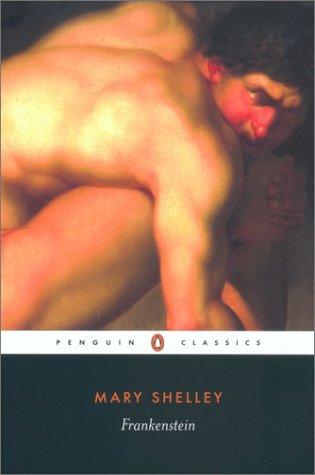
Frankenstein by Mary Shelley is a 1818 literary fiction book about creation and responsibility, alienation and loneliness, ambition and its costs. Victor's crime is not creating the creature but abandoning it — the novel's moral weight falls on the refusal of responsibility, not the act of creation itself.
Summary
Victor Frankenstein, a young Swiss scientist obsessed with the secrets of life, creates a living being from assembled human parts and then immediately abandons it in horror at what he has made. The creature — educated, sensitive, capable of love and of violence — wanders the world alone, trying to understand its own existence and seeking only acknowledgment from its creator. When Victor refuses, the creature's loneliness hardens into something darker.
Mary Shelley wrote the novel when she was eighteen, during the famous summer at the Villa Diodati near Geneva when Lord Byron proposed a ghost story competition. The novel that emerged from that occasion became a founding text of science fiction, Gothic horror, and the philosophy of technology — a book so generative that "Frankenstein" became shorthand for the consequences of unchecked ambition. But the shorthand has badly distorted the actual novel: Frankenstein is not a story about a monster. It is a story about a man who refuses to take responsibility for what he creates, told in large part from the perspective of the thing he abandoned.
The creature is one of the most interesting characters in nineteenth-century fiction. He teaches himself to read by secretly observing a family through a crack in a wall; he reads Milton's Paradise Lost and identifies both with Adam and with Satan; he writes letters more eloquent than his creator's. His argument to Victor — that he became a monster because Victor made him one through abandonment, not because of the nature of his creation — is the philosophical core of the book, and it is not refuted. The novel gives the creature's case real weight.
Shelley was writing in the aftermath of the French Revolution, the Romantic movement, and the early Industrial age, and the novel holds all of those contexts at once. It is read as a feminist text (the absent, failed mother; creation without women; the punishment of male ambition), as an early biotechnology fable, as a class allegory, and as a straight Gothic horror. None of these readings exhausts it. The prose is direct and readable; the structure — multiple narrators, stories within stories — is surprisingly sophisticated for an eighteen-year-old's first novel. It has lasted because it asks questions that have only gotten harder to answer.
Talk to Frankenstein like its author wrote you back.
Get the ideas that fit your life — not generic summaries.
- Chat with the book
- Audiobook-style main ideas
- Adapts to your life and goals
- Helps you take action
Key takeaways
- 1.
Victor's crime is not creating the creature but abandoning it — the novel's moral weight falls on the refusal of responsibility, not the act of creation itself.
- 2.
The creature's perspective is more sympathetically rendered than Victor's; Shelley makes the reader identify with the abandoned creation more than with the ambitious creator.
- 3.
The creature is not born monstrous — he is made monstrous by loneliness and rejection, which is Shelley's explicit argument about nature versus nurture.
- 4.
The novel anticipates nearly every major ethics debate in biotechnology and artificial intelligence: what do we owe the things we create?
- 5.
Shelley was nineteen when the novel was published, and wrote it in the shadow of her own abandoned childhood and her mother Mary Wollstonecraft's death.
- 6.
The creature reads Milton's Paradise Lost and cannot decide if he is Adam or Satan — the novel deliberately places his situation in the tradition of the Fall.
- 7.
Victor's pursuit of the creature to the Arctic, and the creature's pursuit of Victor, is the most structurally beautiful part of the novel: creator and creation chasing each other to the end of the world.
- 8.
The frame narrative — told to a polar explorer who is himself dangerously obsessed with discovery — embeds Victor's warning within a story that enacts its theme.
Discussion questions
Use these on your own, with a book club, or as chat starters in Superbook. Book club version, ready to copy or print →
- 1.
Victor abandons the creature immediately after creating him. At what point, if any, did he have a genuine obligation to the creature, and when did he forfeit it?
- 2.
The creature is articulate, educated, and morally serious. Is his violence justified, explicable, or both? Does the novel take a position?
- 3.
Victor refuses the creature's request to create a female companion. Was he right? What does the novel seem to think?
- 4.
The creature reads Paradise Lost and identifies with both Adam and Satan. Which identification does the novel endorse? Which seems more accurate to his situation?
- 5.
The novel is framed by Walton's letters to his sister — an explorer who is also dangerously ambitious. What does the framing suggest about whether Victor's story has any effect on those who hear it?
- 6.
Mary Shelley lost her mother at birth, her children, and eventually Shelley himself. How much of the novel is a meditation on abandonment, and how much does that context illuminate the creature's situation?
- 7.
The creature explicitly says he was made into what he became by rejection. Is that a complete account of his violence? What does the novel leave unexplained?
- 8.
Compared to The Picture of Dorian Gray, which also deals with creation and the consequences for the creator, which novel holds the creator more responsible?
- 9.
If Frankenstein is the original biotechnology parable, what would a Frankenstein written today — about gene editing, artificial intelligence, or social media — look like?
- 10.
Victor claims he is warning Walton against his own ambition. Does Victor actually understand his own failure, or is he still rationalizing?
- 11.
The creature asks for a companion, not freedom. What does that reveal about his deepest needs, and what does it say about loneliness as the novel's real subject?
- 12.
The ending — the creature's speech over Victor's body — is the creature's final self-presentation. Is it honest? Is it what the novel has been building toward?
Themes
Frequently asked questions
-
Is Frankenstein worth reading?
Yes, especially if you approach it as a philosophical novel rather than a horror story. The creature is one of the most articulate and sympathetically rendered characters in nineteenth-century fiction, and the ethical questions the novel raises — about creation, responsibility, and what we owe to what we bring into existence — are more urgent now than when Shelley wrote it.
-
Is the creature the monster in Frankenstein?
The novel argues no. The creature is made violent by abandonment and rejection; Victor is the one who creates and then refuses responsibility. The cultural shorthand 'Frankenstein's monster' inverts the novel's moral — the monster is Victor, not the creature.
-
Is Frankenstein hard to read?
No. Shelley's prose is direct and accessible, less archaic than most nineteenth-century novels. The multiple narrators (Walton, Victor, the creature) require some attention, but the structure is clear and the novel reads quickly at around 75,000 words.
-
How does the novel compare to the films?
Almost all film adaptations (including the famous 1931 James Whale version with Boris Karloff) make the creature mute, animalistic, and straightforwardly monstrous. The novel's creature is the opposite — eloquent, philosophical, and capable of moral reasoning. Reading the novel after watching the films tends to be a significant surprise.
-
Why is Frankenstein still relevant?
Every major biotechnology and artificial intelligence debate recapitulates Shelley's central questions: what are the ethical limits of creation, and what do creators owe to what they have made? The novel's answers are still useful.
-
Who shouldn't read this book?
Readers expecting Gothic horror in the modern sense — jump scares, visceral dread. The horror in Frankenstein is philosophical and emotional, not atmospheric or visceral. It is a slow, melancholy book, not a frightening one.