Literary fiction · Book club
Frankenstein book club questions
Here are 12 book club questions for Frankenstein by Mary Shelley, ordered to open easily and end somewhere worth arguing about. Copy them, print them, or bring them up one at a time.
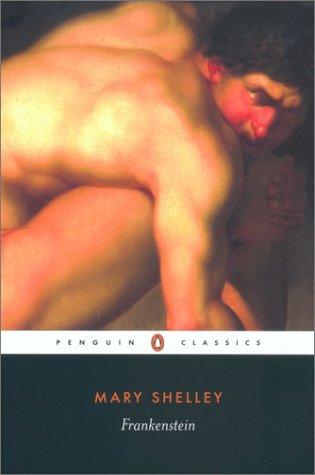
Victor Frankenstein, a young Swiss scientist obsessed with the secrets of life, creates a living being from assembled human parts and then immediately abandons it in horror at what he has made.
Mary Shelley · 1818 · 5h 0m
Full summary and key takeaways →The 12 questions
- 1.
Victor abandons the creature immediately after creating him. At what point, if any, did he have a genuine obligation to the creature, and when did he forfeit it?
- 2.
The creature is articulate, educated, and morally serious. Is his violence justified, explicable, or both? Does the novel take a position?
- 3.
Victor refuses the creature's request to create a female companion. Was he right? What does the novel seem to think?
- 4.
The creature reads Paradise Lost and identifies with both Adam and Satan. Which identification does the novel endorse? Which seems more accurate to his situation?
- 5.
The novel is framed by Walton's letters to his sister — an explorer who is also dangerously ambitious. What does the framing suggest about whether Victor's story has any effect on those who hear it?
- 6.
Mary Shelley lost her mother at birth, her children, and eventually Shelley himself. How much of the novel is a meditation on abandonment, and how much does that context illuminate the creature's situation?
- 7.
The creature explicitly says he was made into what he became by rejection. Is that a complete account of his violence? What does the novel leave unexplained?
- 8.
Compared to The Picture of Dorian Gray, which also deals with creation and the consequences for the creator, which novel holds the creator more responsible?
- 9.
If Frankenstein is the original biotechnology parable, what would a Frankenstein written today — about gene editing, artificial intelligence, or social media — look like?
- 10.
Victor claims he is warning Walton against his own ambition. Does Victor actually understand his own failure, or is he still rationalizing?
- 11.
The creature asks for a companion, not freedom. What does that reveal about his deepest needs, and what does it say about loneliness as the novel's real subject?
- 12.
The ending — the creature's speech over Victor's body — is the creature's final self-presentation. Is it honest? Is it what the novel has been building toward?
How to run the discussion
- Pick six to eight, not all of them. An hour of real discussion covers fewer questions than anyone expects, and racing the list is what makes a book club feel like homework.
- Open with what people noticed, not what they concluded. Asking for a verdict first hardens opinions before anyone has heard each other.
- Let the disagreement run. The questions below that split a room are the ones worth the time; the ones everyone answers the same way can be skipped.
- Ask the quiet person a specific question. A direct, narrow question is far easier to answer than an open invitation to contribute.
Themes worth steering toward
If the conversation stalls, these are the threads that usually restart it.
Common questions
What are good book club questions for Frankenstein?
Here are 12 book club questions for Frankenstein by Mary Shelley, ordered to open easily and end somewhere worth arguing about. The strongest openers ask what each reader noticed rather than what they concluded, and the discussion usually turns on creation and responsibility, alienation and loneliness, ambition and its costs.
How long should a book club discussion of Frankenstein last?
Most groups run 60 to 90 minutes of actual discussion. That is roughly six to eight questions, not all of them, so pick the ones that suit your group rather than working down the list in order.
What are the main themes in Frankenstein?
Creation and responsibility, Alienation and loneliness, Ambition and its costs, Nature vs. nurture, The ethics of science. Those are the threads most likely to divide a room, which makes them the useful places to steer a discussion that has gone quiet.
Picking the next one? See books like Frankenstein or questions for other book club picks.
