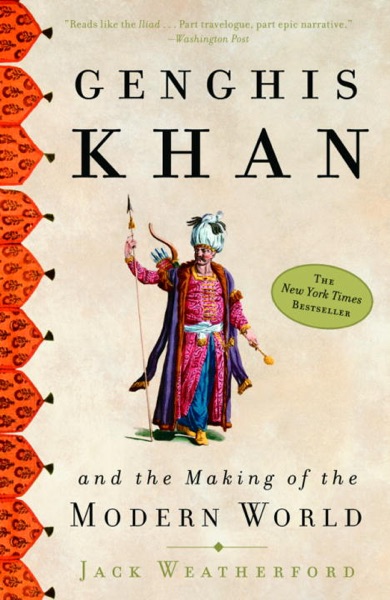
Talk to Genghis Khan and the Making of the Modern World like its author wrote you back.
Get the ideas that fit your life — not generic summaries.
- Chat with the book
- Audiobook-style main ideas
- Adapts to your life and goals
- Helps you take action
What it argues
Jack Weatherford's argument is that Genghis Khan has been badly misread by history. The West received its image of the Mongols through the pen of their enemies — Persian, Chinese, and European chroniclers who described the empire as a wave of savage destruction. Weatherford, an anthropologist who spent years in Mongolia, sets out to recover what the historical record actually shows: that the Mongol Empire created the largest contiguous land empire in history, and in doing so, accelerated trade, law, communication, and cultural exchange across Eurasia in ways that shaped the modern world.
The first part of the book covers Temujin's rise from a kidnapped child and abandoned clan survivor to supreme leader of the Mongol steppe confederation. Weatherford emphasizes the institutional innovations: promotion based on merit rather than birth, religious tolerance across Christian, Buddhist, Muslim, and shamanist subjects, a written legal code, and diplomatic immunity for ambassadors long before those norms existed elsewhere. Genghis Khan was illiterate but systematic. He recruited skilled specialists — engineers, administrators, translators — from conquered populations and put them to work.
What it gets right
- 1.
Genghis Khan built the largest contiguous land empire in history through military innovation, institutional design, and a merit-based leadership structure that defied birth-order aristocracy.
- 2.
Religious and ethnic tolerance was official Mongol policy — subjects of any faith could practice freely, a pragmatic stance that made governing a vast polyglot empire possible.
- 3.
The Mongols created the Pax Mongolica, a period of relative peace and open trade routes that enabled unprecedented cultural and material exchange across Eurasia.
What it covers
Who wrote it
Jack Weatherford is an American anthropologist and emeritus professor at Macalester College in Minnesota. He spent years conducting fieldwork in Mongolia and is regarded as one of the leading Western scholars of Mongol history. His other books include Indian Givers, a study of Native American contributions to the world, and The Secret History of the Mongol Queens. Weatherford was awarded the Order of the Polar Star by the Mongolian government for his contributions to Mongol history and cultural understanding. He writes at the intersection of anthropology and narrative history.
