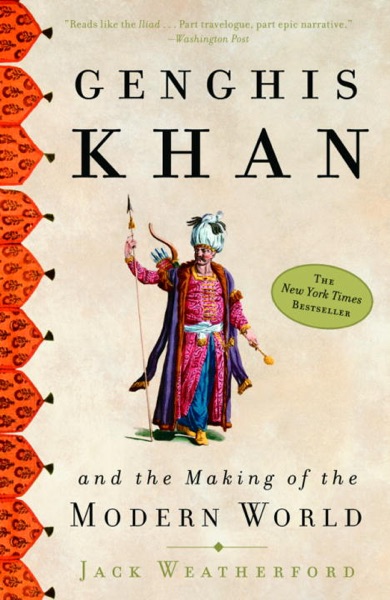
Talk to Genghis Khan and the Making of the Modern World like its author wrote you back.
Get the ideas that fit your life — not generic summaries.
- Chat with the book
- Audiobook-style main ideas
- Adapts to your life and goals
- Helps you take action
Genghis Khan and the Making of the Modern World, in detail
Jack Weatherford's argument is that Genghis Khan has been badly misread by history. The West received its image of the Mongols through the pen of their enemies — Persian, Chinese, and European chroniclers who described the empire as a wave of savage destruction. Weatherford, an anthropologist who spent years in Mongolia, sets out to recover what the historical record actually shows: that the Mongol Empire created the largest contiguous land empire in history, and in doing so, accelerated trade, law, communication, and cultural exchange across Eurasia in ways that shaped the modern world.
The first part of the book covers Temujin's rise from a kidnapped child and abandoned clan survivor to supreme leader of the Mongol steppe confederation. Weatherford emphasizes the institutional innovations: promotion based on merit rather than birth, religious tolerance across Christian, Buddhist, Muslim, and shamanist subjects, a written legal code, and diplomatic immunity for ambassadors long before those norms existed elsewhere. Genghis Khan was illiterate but systematic. He recruited skilled specialists — engineers, administrators, translators — from conquered populations and put them to work.
The middle section follows the empire's expansion under Genghis and his successors, including the conquest of China, Persia, and Eastern Europe. Weatherford does not minimize the violence — the destruction of cities like Samarkand and Nishapur was catastrophic — but he contextualizes it against the established norms of warfare at the time and argues that the Mongols were often more calculated than purely savage, offering surrender terms and sparing those who submitted. The Pax Mongolica that followed the conquests enabled the first true Eurasian trading network, the movement of plague, paper money, pasta, gunpowder, and printing from one end of the continent to the other.
The final chapters trace Mongol influence on the Renaissance, the plague's demographic catastrophe, and the reason why Genghis Khan's role in world history was systematically written out. The revisionist case is largely persuasive, though Weatherford's enthusiasm for his subject occasionally tips into advocacy. The book is best read as a corrective to received Western narratives rather than a balanced final word.
The big ideas
- 1.
Genghis Khan built the largest contiguous land empire in history through military innovation, institutional design, and a merit-based leadership structure that defied birth-order aristocracy.
- 2.
Religious and ethnic tolerance was official Mongol policy — subjects of any faith could practice freely, a pragmatic stance that made governing a vast polyglot empire possible.
- 3.
The Mongols created the Pax Mongolica, a period of relative peace and open trade routes that enabled unprecedented cultural and material exchange across Eurasia.
