Classics · Book club
Germinal book club questions
Here are 12 book club questions for Germinal by Émile Zola, ordered to open easily and end somewhere worth arguing about. Copy them, print them, or bring them up one at a time.
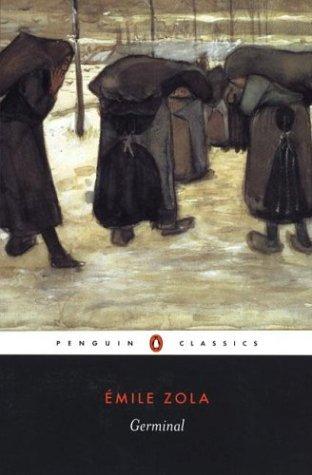
Germinal is the thirteenth novel in Zola's Rougon-Macquart series, and the one most readers consider his masterpiece.
Émile Zola · 1885 · 11h 45m
Full summary and key takeaways →The 12 questions
- 1.
Zola spent time in actual mining communities to research this novel. How does that documentary quality affect the reading experience — does it feel like fiction or something closer to journalism?
- 2.
The strike fails, at considerable cost. Does the novel present this as inevitable, preventable, or simply as what happened — and does it make any argument about what could have been done differently?
- 3.
Étienne is a sympathetic protagonist early in the novel and becomes more complicated as he acquires ideological conviction. At what point did your reading of him shift, and why?
- 4.
Zola gives the mine owners some psychological depth — they're not simple villains. Does this complexity strengthen or weaken the novel's political argument?
- 5.
The novel's naturalist framework suggests that heredity and environment largely determine what characters do. How much agency do you think any character actually has — is anyone's fate genuinely chosen?
- 6.
The violence during the strike is disturbing partly because it's enacted by people we've come to understand. Does Zola handle this violence fairly, or does he use it to undercut sympathy for the strikers?
- 7.
The community is also shown engaging in casual brutality in its daily life — toward animals, toward women, toward outsiders. Is Zola documenting this or endorsing it? What is he arguing with it?
- 8.
Germinal is often described as the great labor novel. Do you think it's a book for or about the working class, and does the distinction matter?
- 9.
The mine's flooding and collapse late in the novel is one of the most technically precise disaster sequences in nineteenth-century fiction. What does the mine's physical destruction add to the novel's argument?
- 10.
Compare the political visions offered by the various radical characters in the novel — Étienne's socialism, Souvarine's anarchism, Rasseneur's reformism. Which position does the novel itself seem to find most compelling, or does it withhold judgment?
- 11.
The ending has been read as both despairing and hopeful. Which reading do you favor — and is that a choice the novel leaves genuinely open or is one reading clearly intended?
- 12.
Zola was criticized in some quarters for making the working class look brutal. Do you think that criticism is fair, or does the novel's treatment of all classes equally absorb that objection?
How to run the discussion
- Pick six to eight, not all of them. An hour of real discussion covers fewer questions than anyone expects, and racing the list is what makes a book club feel like homework.
- Open with what people noticed, not what they concluded. Asking for a verdict first hardens opinions before anyone has heard each other.
- Let the disagreement run. The questions below that split a room are the ones worth the time; the ones everyone answers the same way can be skipped.
- Ask the quiet person a specific question. A direct, narrow question is far easier to answer than an open invitation to contribute.
Themes worth steering toward
If the conversation stalls, these are the threads that usually restart it.
Common questions
What are good book club questions for Germinal?
Here are 12 book club questions for Germinal by Émile Zola, ordered to open easily and end somewhere worth arguing about. The strongest openers ask what each reader noticed rather than what they concluded, and the discussion usually turns on class war, labor and survival, collective action.
How long should a book club discussion of Germinal last?
Most groups run 60 to 90 minutes of actual discussion. That is roughly six to eight questions, not all of them, so pick the ones that suit your group rather than working down the list in order.
What are the main themes in Germinal?
Class war, Labor and survival, Collective action, Heredity and determinism, Underground and above. Those are the threads most likely to divide a room, which makes them the useful places to steer a discussion that has gone quiet.
Picking the next one? See books like Germinal or questions for other book club picks.
