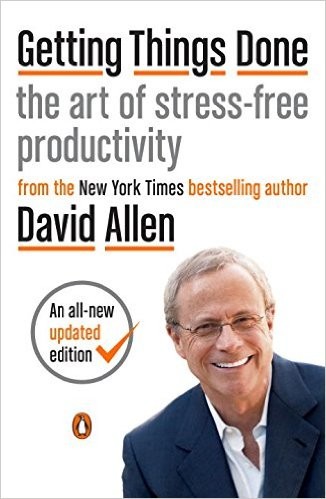
Talk to Getting Things Done like its author wrote you back.
Get the ideas that fit your life — not generic summaries.
- Chat with the book
- Audiobook-style main ideas
- Adapts to your life and goals
- Helps you take action
Getting Things Done, in detail
Getting Things Done is David Allen's argument that the main source of stress in modern knowledge work isn't the volume of tasks — it's having commitments that live only in your head. When your brain is trying to remember everything it also needs to do, it can't focus on what it's actually doing. The fix Allen proposes is deceptively simple: get everything out of your head and into a trusted external system. From that moment on, your mind is free to think rather than to track.
The core of the GTD method is a five-step workflow: capture, clarify, organize, reflect, and engage. Capture means collecting every open loop — every task, idea, and commitment — into inboxes you process regularly. Clarify means deciding, for each item, what it actually is and what, if anything, you need to do about it. The two-minute rule applies here: if an action takes less than two minutes, do it immediately. Organize means sorting everything into the right lists — a next actions list, a projects list, a waiting-for list, a someday-maybe list. Reflect means reviewing your system weekly so it stays current and trustworthy. Engage means choosing what to work on with full attention, because the system has already done the triage.
Allen's central claim is that the weekly review is the hinge the whole system swings on. Without it, lists go stale, the system stops being trusted, and the brain reverts to trying to hold everything again. The review is also where you step back from individual tasks and ask whether your projects are still aligned with your goals. Allen organizes this kind of altitude review across five levels: individual actions, current projects, areas of responsibility, multi-year goals, and long-term purpose. Most people, he argues, spend almost all their time at the lowest altitude.
GTD is denser with mechanics than most productivity books, and that's both its strength and its limitation. Readers who want a philosophy will find the system somewhat neutral about values — Allen doesn't tell you what to work on, only how to work on it reliably. The book is also dated in places: it was written for paper-based systems and pre-smartphone inboxes, and while the second edition (2015) updated the language, some examples still feel anachronistic. None of that undermines the core insight. The feeling Allen describes — a clear mind, a trusted list, full presence on the current task — remains one of the most useful ideas in the productivity literature.
The big ideas
- 1.
The mind is for having ideas, not for holding them. Every open loop you store mentally degrades your ability to focus on the task in front of you.
- 2.
The five-step workflow — capture, clarify, organize, reflect, engage — gives every incoming commitment a defined path so nothing slips through and nothing clutters your attention.
- 3.
The two-minute rule: if an action takes less than two minutes, do it immediately rather than adding it to a list. The overhead of tracking it costs more than doing it.
