Literary fiction · Book club
Gilead book club questions
Here are 12 book club questions for Gilead by Marilynne Robinson, ordered to open easily and end somewhere worth arguing about. Copy them, print them, or bring them up one at a time.
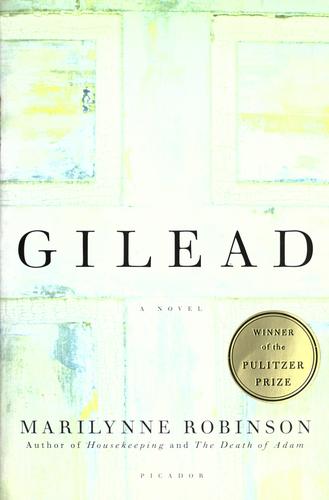
Gilead is written as a long letter from John Ames, a 76-year-old Congregationalist minister in Iowa, to his seven-year-old son — a letter the boy will not read until he is grown and his father is long dead.
Marilynne Robinson · 2004 · 5h 0m
Full summary and key takeaways →The 12 questions
- 1.
Ames knows what Christian forgiveness requires of him with Jack. He knows and can't fully do it. Is that a failure or an honest acknowledgment of the limits of anyone's spiritual resources?
- 2.
The novel is full of light — Robinson returns to the same images of sunlight and radiance. Do you read this as purely aesthetic, or is she making a theological argument through imagery?
- 3.
Would this novel work for a reader who has no sympathy for or interest in Protestant Christianity? What does it require you to bring to it?
- 4.
Ames worries, near the end, that he has been too comfortable, too sheltered, too provincial. Is that a genuine self-critique or a kind of false modesty?
- 5.
Jack Boughton's backstory involves a young woman he wronged and abandoned. How does that backstory affect your reading of Ames's difficulty forgiving him — does it feel justified?
- 6.
The letter is addressed to a seven-year-old who will read it as an adult. How does that temporal gap shape what Ames chooses to tell him?
- 7.
The previous generation of the Ames family was deeply political — the grandfather fought with John Brown. The present Ames is not. How does the novel think about that transition from activist faith to contemplative faith?
- 8.
Lila, Ames's wife, is a major presence in Gilead but her inner life is largely opaque. Robinson wrote Lila's story as a separate novel. Does that feel like a gap in this book?
- 9.
The novel won the Pulitzer in 2005. Does it feel of its moment in any way, or does it seem deliberately outside historical time?
- 10.
Ames says 'this is my attempt to make you a witness of my life' — but the life he describes is largely internal and theological. What kind of witness does he actually succeed in making?
- 11.
Compared to other novels about dying — The Year of Magical Thinking, When Breath Becomes Air — where does Gilead land in terms of honesty about mortality?
- 12.
The town of Gilead itself is described as almost empty, declining. What does Ames's deep attachment to a dying place say about him?
How to run the discussion
- Pick six to eight, not all of them. An hour of real discussion covers fewer questions than anyone expects, and racing the list is what makes a book club feel like homework.
- Open with what people noticed, not what they concluded. Asking for a verdict first hardens opinions before anyone has heard each other.
- Let the disagreement run. The questions below that split a room are the ones worth the time; the ones everyone answers the same way can be skipped.
- Ask the quiet person a specific question. A direct, narrow question is far easier to answer than an open invitation to contribute.
Themes worth steering toward
If the conversation stalls, these are the threads that usually restart it.
Common questions
What are good book club questions for Gilead?
Here are 12 book club questions for Gilead by Marilynne Robinson, ordered to open easily and end somewhere worth arguing about. The strongest openers ask what each reader noticed rather than what they concluded, and the discussion usually turns on faith and doubt, mortality, forgiveness.
How long should a book club discussion of Gilead last?
Most groups run 60 to 90 minutes of actual discussion. That is roughly six to eight questions, not all of them, so pick the ones that suit your group rather than working down the list in order.
What are the main themes in Gilead?
Faith and doubt, Mortality, Forgiveness, Fatherhood, Grace. Those are the threads most likely to divide a room, which makes them the useful places to steer a discussion that has gone quiet.
Picking the next one? See books like Gilead or questions for other book club picks.
