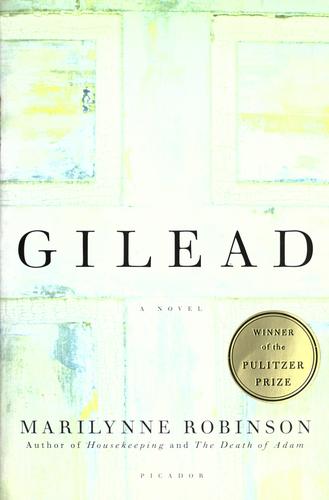
Gilead by Marilynne Robinson is a 2004 literary fiction book about faith and doubt, mortality, forgiveness. The novel treats Christian theology not as background color but as live intellectual matter — Ames's engagement with Calvinist ideas about grace and predestination is specific, earnest, and strange.
Summary
Gilead is written as a long letter from John Ames, a 76-year-old Congregationalist minister in Iowa, to his seven-year-old son — a letter the boy will not read until he is grown and his father is long dead. Ames is dying of a heart condition. He has lived in the same small town his whole life. He married late, lost a first wife in childbirth decades ago, and has found late-life happiness with a second wife and the son he never expected to have. The letter is his attempt to leave the boy something of himself: his memories, his theology, his love.
What the novel is actually about is harder to summarize cleanly. It circles around questions of grace, forgiveness, and moral complexity without resolving them into doctrine. The theological texture is specific and serious — Robinson knows Calvinist theology and treats it as genuinely interesting rather than as quaint background. The appearance of John Ames Boughton, the prodigal son of Ames's oldest friend, creates the only real external tension in the book: Ames mistrusts him, fears him as a threat to his wife and son, and struggles to reconcile his theological commitments to forgiveness with his human jealousy and suspicion.
Robinson's prose is the book's singular achievement. The sentences are long, meditative, and full of light — she describes physical reality (the way sunlight hits water, the smell of a town, the look of an old man's hands) with an attention that functions almost as theology in itself, as if paying close attention to the world were a form of prayer. The novel won the 2005 Pulitzer Prize and is considered one of the finest American novels of its era precisely because it takes religious interiority seriously in a literary culture that often doesn't know what to do with faith.
This is not a novel with a conventional plot, and readers who need narrative tension to stay engaged will struggle. It's almost entirely interior: an old man's mind moving through memory, doubt, affection, and wonder. Readers who find that rewarding — who are willing to sit with a dying man's voice and follow where it leads — often find Gilead transformative. It's the kind of book people read in a particular emotional moment and find they can't shake.
Talk to Gilead like its author wrote you back.
Get the ideas that fit your life — not generic summaries.
- Chat with the book
- Audiobook-style main ideas
- Adapts to your life and goals
- Helps you take action
Key takeaways
- 1.
The novel treats Christian theology not as background color but as live intellectual matter — Ames's engagement with Calvinist ideas about grace and predestination is specific, earnest, and strange.
- 2.
The letter form gives the prose a particular character: Ames is always conscious of a future reader who won't know him, which shapes what he chooses to say and what he leaves out.
- 3.
Forgiveness in Gilead isn't easy or automatic — Ames knows what the theology requires and finds himself unable to fully provide it, which is one of the novel's most honest tensions.
- 4.
The relationship between fathers and sons runs in multiple directions: Ames to his own father, to the town's older generation, to young Jack Boughton, and finally to his own child.
- 5.
Robinson's physical descriptions function as a form of gratitude — the practice of noticing the world closely is presented as itself a spiritual act.
- 6.
The novel is in some ways about the experience of late happiness: Ames got almost nothing he expected from life, and then, very late, got something he didn't expect and can barely believe.
- 7.
Jack Boughton is the novel's moral complexity made human — the person Ames cannot quite forgive and cannot explain his inability to forgive.
- 8.
The letter form means the whole novel is posthumous — Ames is writing to a future he won't see, which gives even mundane passages an elegiac weight.
Discussion questions
Use these on your own, with a book club, or as chat starters in Superbook. Book club version, ready to copy or print →
- 1.
Ames knows what Christian forgiveness requires of him with Jack. He knows and can't fully do it. Is that a failure or an honest acknowledgment of the limits of anyone's spiritual resources?
- 2.
The novel is full of light — Robinson returns to the same images of sunlight and radiance. Do you read this as purely aesthetic, or is she making a theological argument through imagery?
- 3.
Would this novel work for a reader who has no sympathy for or interest in Protestant Christianity? What does it require you to bring to it?
- 4.
Ames worries, near the end, that he has been too comfortable, too sheltered, too provincial. Is that a genuine self-critique or a kind of false modesty?
- 5.
Jack Boughton's backstory involves a young woman he wronged and abandoned. How does that backstory affect your reading of Ames's difficulty forgiving him — does it feel justified?
- 6.
The letter is addressed to a seven-year-old who will read it as an adult. How does that temporal gap shape what Ames chooses to tell him?
- 7.
The previous generation of the Ames family was deeply political — the grandfather fought with John Brown. The present Ames is not. How does the novel think about that transition from activist faith to contemplative faith?
- 8.
Lila, Ames's wife, is a major presence in Gilead but her inner life is largely opaque. Robinson wrote Lila's story as a separate novel. Does that feel like a gap in this book?
- 9.
The novel won the Pulitzer in 2005. Does it feel of its moment in any way, or does it seem deliberately outside historical time?
- 10.
Ames says 'this is my attempt to make you a witness of my life' — but the life he describes is largely internal and theological. What kind of witness does he actually succeed in making?
- 11.
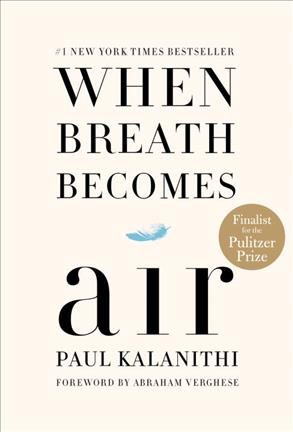
Compared to other novels about dying — The Year of Magical Thinking, When Breath Becomes Air — where does Gilead land in terms of honesty about mortality?
- 12.
The town of Gilead itself is described as almost empty, declining. What does Ames's deep attachment to a dying place say about him?
Themes
Frequently asked questions
-
Is Gilead worth reading?
Yes — it's one of the most genuinely beautiful American novels of the past thirty years, and it takes its subject matter (faith, mortality, forgiveness) with a seriousness that feels rare. The caveat is that it requires patience and some tolerance for theological reflection. If you approach it expecting narrative action you'll be disappointed.
-
Is Gilead hard to read?
It's not difficult in the way experimental fiction is difficult — the prose is clear and the voice is consistent. But it demands a particular kind of slow reading. It rewards rereading sentences, sitting with the imagery, letting the voice settle. Readers who push through it quickly often miss what makes it extraordinary.
-
What is Gilead about, without spoilers?
A dying old man writing a long letter to his young son. The letter is full of memories, theology, affection, and worry about a difficult figure from his past. More than anything, it's about what one person can leave behind for someone they won't be there to know.
-
Do I need to be religious to appreciate Gilead?
Not exactly, but the novel asks you to take religious experience seriously as experience — not to hold it at arm's length or treat it as charming naivety. Readers who find all religious interiority inherently suspect will have a harder time than readers who are curious about it, even from the outside.
-
Who shouldn't read Gilead?
Anyone who needs plot momentum and external conflict to stay engaged. The novel is almost entirely interior, and its single external tension (Jack Boughton's arrival) resolves quietly rather than dramatically. It's also, unmistakably, a novel soaked in Protestant Christianity — readers who actively dislike that frame will find it difficult.