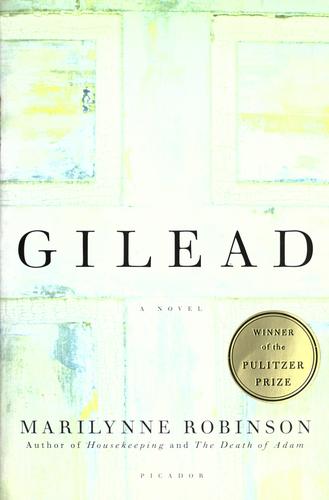
Talk to Gilead like its author wrote you back.
Get the ideas that fit your life — not generic summaries.
- Chat with the book
- Audiobook-style main ideas
- Adapts to your life and goals
- Helps you take action
What it argues
Gilead is written as a long letter from John Ames, a 76-year-old Congregationalist minister in Iowa, to his seven-year-old son — a letter the boy will not read until he is grown and his father is long dead. Ames is dying of a heart condition. He has lived in the same small town his whole life. He married late, lost a first wife in childbirth decades ago, and has found late-life happiness with a second wife and the son he never expected to have. The letter is his attempt to leave the boy something of himself: his memories, his theology, his love.
What the novel is actually about is harder to summarize cleanly. It circles around questions of grace, forgiveness, and moral complexity without resolving them into doctrine. The theological texture is specific and serious — Robinson knows Calvinist theology and treats it as genuinely interesting rather than as quaint background. The appearance of John Ames Boughton, the prodigal son of Ames's oldest friend, creates the only real external tension in the book: Ames mistrusts him, fears him as a threat to his wife and son, and struggles to reconcile his theological commitments to forgiveness with his human jealousy and suspicion.
What it gets right
- 1.
The novel treats Christian theology not as background color but as live intellectual matter — Ames's engagement with Calvinist ideas about grace and predestination is specific, earnest, and strange.
- 2.
The letter form gives the prose a particular character: Ames is always conscious of a future reader who won't know him, which shapes what he chooses to say and what he leaves out.
- 3.
Forgiveness in Gilead isn't easy or automatic — Ames knows what the theology requires and finds himself unable to fully provide it, which is one of the novel's most honest tensions.
What it covers
Who wrote it
Marilynne Robinson is an American novelist and essayist whose fiction is set primarily in Iowa and whose work engages seriously with Protestant theology, American history, and moral philosophy. She is the author of four novels — Housekeeping, Gilead, Home, and Lila — and several collections of essays including The Death of Adam and Absence of Mind. Gilead won the 2005 Pulitzer Prize for Fiction and the National Book Critics Circle Award. She taught writing at the Iowa Writers' Workshop for many years and is widely regarded as one of the finest prose stylists writing in English.
