Religion & Spirituality · Book club
God in Search of Man: A Philosophy of Judaism book club questions
Here are 12 book club questions for God in Search of Man: A Philosophy of Judaism by Abraham Joshua Heschel, ordered to open easily and end somewhere worth arguing about. Copy them, print them, or bring them up one at a time.
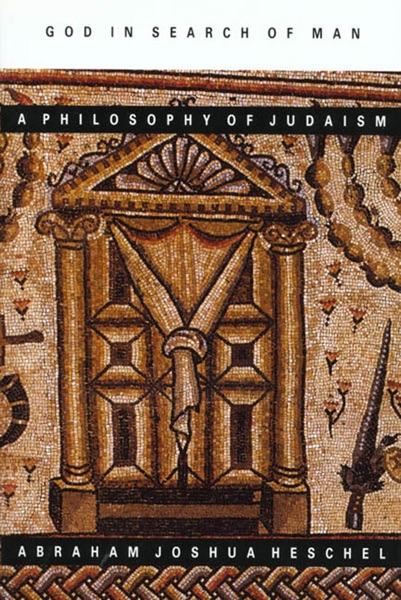
God in Search of Man is Abraham Joshua Heschel's systematic philosophy of Judaism, published in 1955 as the companion to Man Is Not Alone.
Abraham Joshua Heschel · 1955 · 9h 15m
Full summary and key takeaways →The 12 questions
- 1.
Heschel argues that radical amazement is the prerequisite for religion. When was the last time you felt genuinely astonished by something — not impressed, but struck by the strangeness of existence?
- 2.
The title reverses the usual framing: it's God in search of man, not man in search of God. What difference does that reversal make to how you think about religious practice?
- 3.
Heschel distinguishes between the words of scripture and the event of revelation. Is that distinction stable? Can you have one without the other?
- 4.
He argues that observance matters not as obedience but because practice shapes attention. Can you think of practices in your own life — religious or otherwise — where that has actually been your experience?
- 5.
The book diagnoses modern irreligion as less a matter of reasoned disbelief than a failure of wonder. Do you find that more or less convincing than standard arguments for atheism?
- 6.
God's pathos — the idea that God is genuinely affected by human suffering and action — distinguishes Heschel from both traditional Thomistic theology and deist frameworks. What do you make of that concept?
- 7.
Prayer as Heschel describes it — not petition but a practice of standing in a particular quality of awareness — sounds almost indistinguishable from meditation. What, if anything, is different?
- 8.
Heschel was writing partly against religious behaviorism — the idea that performing ritual is sufficient regardless of inner state. Do you know people who have found the opposite problem, where inner states substitute for practice?
- 9.
The book is both a philosophy of Judaism and an implicit critique of liberal modernity. What is Heschel's critique, and how much of it do you accept?
- 10.
Heschel's career included active engagement in civil rights and opposition to the Vietnam War. How does that engagement square with a philosophy centered on wonder and prayer?
- 11.
The three parts of the book — God, Revelation, Response — represent an order. Could you take the third without the first two, or does Heschel think the foundation is necessary for the practice to work?
- 12.
Heschel says that the individual is not the center of the religious life — the divine concern for humanity is. How does that decentering of the self compare to secular psychological frameworks of wellbeing?
How to run the discussion
- Pick six to eight, not all of them. An hour of real discussion covers fewer questions than anyone expects, and racing the list is what makes a book club feel like homework.
- Open with what people noticed, not what they concluded. Asking for a verdict first hardens opinions before anyone has heard each other.
- Let the disagreement run. The questions below that split a room are the ones worth the time; the ones everyone answers the same way can be skipped.
- Ask the quiet person a specific question. A direct, narrow question is far easier to answer than an open invitation to contribute.
Themes worth steering toward
If the conversation stalls, these are the threads that usually restart it.
Common questions
What are good book club questions for God in Search of Man: A Philosophy of Judaism?
Here are 12 book club questions for God in Search of Man: A Philosophy of Judaism by Abraham Joshua Heschel, ordered to open easily and end somewhere worth arguing about. The strongest openers ask what each reader noticed rather than what they concluded, and the discussion usually turns on religious philosophy, revelation, wonder.
How long should a book club discussion of God in Search of Man: A Philosophy of Judaism last?
Most groups run 60 to 90 minutes of actual discussion. That is roughly six to eight questions, not all of them, so pick the ones that suit your group rather than working down the list in order.
What are the main themes in God in Search of Man: A Philosophy of Judaism?
Religious philosophy, Revelation, Wonder, Prayer, Torah. Those are the threads most likely to divide a room, which makes them the useful places to steer a discussion that has gone quiet.
Picking the next one? See books like God in Search of Man: A Philosophy of Judaism or questions for other book club picks.
