Business · Book club
Good Authority book club questions
Here are 11 book club questions for Good Authority by Jonathan Raymond, ordered to open easily and end somewhere worth arguing about. Copy them, print them, or bring them up one at a time.
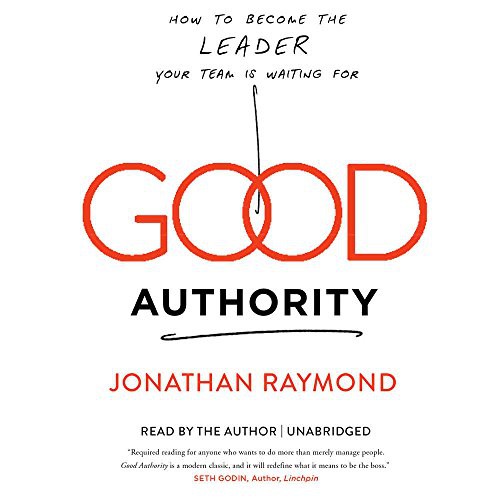
Good Authority is Jonathan Raymond's argument that the real job of a manager is not to produce results directly but to use the work as a vehicle for people's personal and professional development.
Jonathan Raymond · 2016 · 3h 45m
Full summary and key takeaways →The 11 questions
- 1.
Raymond says most managers avoid the middle accountability conversations. What makes those conversations feel riskier than either tolerating the problem or escalating to termination?
- 2.
Think of a time when someone held you accountable in a way that genuinely helped you grow. What made it effective?
- 3.
Raymond frames feedback in terms of patterns rather than incidents. For a current direct report or colleague, what pattern would you name if you were being genuinely honest?
- 4.
The Employee Lifecycle framework sorts people into orientation, accountability, and advancement/exit stages. Where would you place each person on your team right now?
- 5.
Raymond argues that avoiding a difficult conversation is not kindness but deprivation. Do you agree? Where does that logic have limits?
- 6.
What is the earliest sign that a direct report is struggling that you typically notice — and how quickly do you act on it?
- 7.
Good authority requires caring about someone's growth. How do you build that genuine care for people whose work frustrates you?
- 8.
Raymond says the manager's job is to use work as a vehicle for development. How does that framing change what you would prioritize in your role?
- 9.
What cultural or organizational pressures make the middle accountability conversations harder in your specific context?
- 10.
Raymond's model focuses almost entirely on the manager-direct-report relationship. What does it miss about team dynamics, peer accountability, or upward influence?
- 11.
If you had followed Raymond's approach earlier in a difficult employee situation you've faced, what would have been different?
How to run the discussion
- Pick six to eight, not all of them. An hour of real discussion covers fewer questions than anyone expects, and racing the list is what makes a book club feel like homework.
- Open with what people noticed, not what they concluded. Asking for a verdict first hardens opinions before anyone has heard each other.
- Let the disagreement run. The questions below that split a room are the ones worth the time; the ones everyone answers the same way can be skipped.
- Ask the quiet person a specific question. A direct, narrow question is far easier to answer than an open invitation to contribute.
Themes worth steering toward
If the conversation stalls, these are the threads that usually restart it.
Common questions
What are good book club questions for Good Authority?
Here are 11 book club questions for Good Authority by Jonathan Raymond, ordered to open easily and end somewhere worth arguing about. The strongest openers ask what each reader noticed rather than what they concluded, and the discussion usually turns on management, accountability, employee development.
How long should a book club discussion of Good Authority last?
Most groups run 60 to 90 minutes of actual discussion. That is roughly six to eight questions, not all of them, so pick the ones that suit your group rather than working down the list in order.
What are the main themes in Good Authority?
Management, Accountability, Employee development, Feedback culture, Leadership. Those are the threads most likely to divide a room, which makes them the useful places to steer a discussion that has gone quiet.
Picking the next one? See books like Good Authority or questions for other book club picks.
