Memoir · Book club
Helter Skelter: The True Story of the Manson Murders book club questions
Here are 12 book club questions for Helter Skelter: The True Story of the Manson Murders by Vincent Bugliosi and Curt Gentry, ordered to open easily and end somewhere worth arguing about. Copy them, print them, or bring them up one at a time.
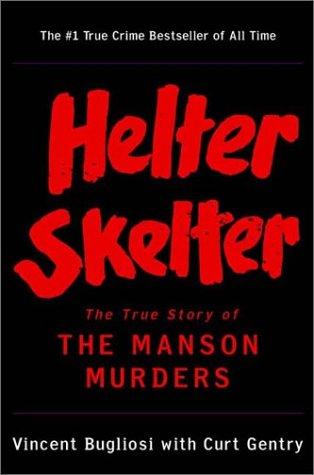
Helter Skelter is the account of the Tate-LaBianca murders of August 1969 written by Vincent Bugliosi, the Los Angeles deputy district attorney who prosecuted Charles Manson, with journalist Curt Gentry.
Vincent Bugliosi and Curt Gentry · 1974 · 15h 0m
Full summary and key takeaways →The 12 questions
- 1.
Bugliosi is both author and prosecutor. How does his role inside the investigation shape what details he includes and what he glosses over?
- 2.
The Helter Skelter race war motive was Bugliosi's trial argument, not something Manson himself consistently confirmed. Should a prosecution theory be the lens through which a historical event is understood?
- 3.
The Manson Family members came largely from middle-class backgrounds. What does that suggest about the specific conditions — social, psychological, historical — that made them vulnerable to Manson's influence?
- 4.
Manson had a documented history of petty crime and institutionalization. At what point, if any, should the system have intervened differently?
- 5.
The murders occurred in the specific context of 1969 Los Angeles — the end of the Summer of Love, the disintegration of the counterculture. How much does that context explain, and how much are you rationalizing retrospectively?
- 6.
Bugliosi secured convictions with heavy reliance on accomplice testimony from Family members who received immunity. How do you weigh the justice of that outcome against the means?
- 7.
The female defendants' behavior during trial — the shaved heads, the singing, the laughter — was designed to demonstrate loyalty to Manson. What does it say about institutional power that it ultimately failed to destabilize the trial?
- 8.
Susan Atkins, Patricia Krenwinkel, and Leslie Van Houten spent decades in prison. At what point, if ever, does rehabilitation change the calculus of continued incarceration?
- 9.
How much of the Manson case's enduring cultural hold is about fear of random violence, fear of cults, fear of the sixties, or something else entirely?
- 10.
The book was written by the prosecutor who won the case. Is there a version of this story that would look significantly different if told from another vantage point?
- 11.
Manson became a cultural symbol that outlasted the legal case. What does our continued fascination say about us?
- 12.
If the murders had happened in 2024 instead of 1969, what would be different about how the investigation was conducted, how the trial unfolded, and how the story was told?
How to run the discussion
- Pick six to eight, not all of them. An hour of real discussion covers fewer questions than anyone expects, and racing the list is what makes a book club feel like homework.
- Open with what people noticed, not what they concluded. Asking for a verdict first hardens opinions before anyone has heard each other.
- Let the disagreement run. The questions below that split a room are the ones worth the time; the ones everyone answers the same way can be skipped.
- Ask the quiet person a specific question. A direct, narrow question is far easier to answer than an open invitation to contribute.
Themes worth steering toward
If the conversation stalls, these are the threads that usually restart it.
Common questions
What are good book club questions for Helter Skelter: The True Story of the Manson Murders?
Here are 12 book club questions for Helter Skelter: The True Story of the Manson Murders by Vincent Bugliosi and Curt Gentry, ordered to open easily and end somewhere worth arguing about. The strongest openers ask what each reader noticed rather than what they concluded, and the discussion usually turns on cult psychology, violence, criminal justice.
How long should a book club discussion of Helter Skelter: The True Story of the Manson Murders last?
Most groups run 60 to 90 minutes of actual discussion. That is roughly six to eight questions, not all of them, so pick the ones that suit your group rather than working down the list in order.
What are the main themes in Helter Skelter: The True Story of the Manson Murders?
Cult psychology, Violence, Criminal justice, Counterculture, Manipulation. Those are the threads most likely to divide a room, which makes them the useful places to steer a discussion that has gone quiet.
Picking the next one? See books like Helter Skelter: The True Story of the Manson Murders or questions for other book club picks.
