Business · Book club
High Output Management book club questions
Here are 12 book club questions for High Output Management by Andrew S. Grove, ordered to open easily and end somewhere worth arguing about. Copy them, print them, or bring them up one at a time.
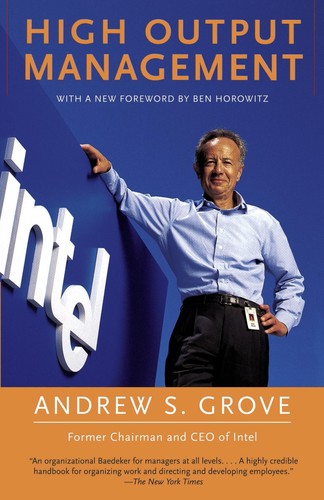
High Output Management is Andrew Grove's manual for how managers at any level should think about their work.
Andrew S. Grove · 1983 · 4h 45m
Full summary and key takeaways →The 12 questions
- 1.
Grove argues a manager's output is their team's output. How does that change how you evaluate your own performance week to week?
- 2.
What are the highest-leverage activities in your current role? Are you spending time on them, or are lower-leverage tasks crowding them out?
- 3.
Think of a one-on-one meeting you run regularly. Whose agenda is it really? What would change if the direct report owned it?
- 4.
Grove says underperformance is either a skill problem or a motivation problem. Think of someone you manage or have managed — which was it, and did you respond to the right cause?
- 5.
Where in your organization do decisions get made higher up the hierarchy than the knowledge that should inform them? What would it take to move those decisions down?
- 6.
Grove applies manufacturing logic to knowledge work: identify the limiting step, build around it. What is the limiting step in the most important process your team runs?
- 7.
How do you decide when a decision needs more people involved versus when adding people slows things down without improving the outcome?
- 8.
The book distinguishes task-relevant maturity from general seniority. Can you think of a senior person on your team who is effectively a beginner at something important right now? How are you managing that?
- 9.
Grove is direct about the manager's role in setting culture: what you tolerate defines your standards. What behaviors are you currently tolerating that you would rather not be?
- 10.
If you audited your last two weeks of work, what percentage of your time went to activities that genuinely multiplied your team's output? What would have to change to increase that?
- 11.
Grove wrote this in 1983 at Intel. Which ideas have aged best? Which feel most dated given remote work, distributed teams, or AI-assisted work?
- 12.
If you had to identify one person in your organization who is operating as Grove describes a high-output manager — what specifically are they doing differently from everyone else?
How to run the discussion
- Pick six to eight, not all of them. An hour of real discussion covers fewer questions than anyone expects, and racing the list is what makes a book club feel like homework.
- Open with what people noticed, not what they concluded. Asking for a verdict first hardens opinions before anyone has heard each other.
- Let the disagreement run. The questions below that split a room are the ones worth the time; the ones everyone answers the same way can be skipped.
- Ask the quiet person a specific question. A direct, narrow question is far easier to answer than an open invitation to contribute.
Themes worth steering toward
If the conversation stalls, these are the threads that usually restart it.
Common questions
What are good book club questions for High Output Management?
Here are 12 book club questions for High Output Management by Andrew S. Grove, ordered to open easily and end somewhere worth arguing about. The strongest openers ask what each reader noticed rather than what they concluded, and the discussion usually turns on management, productivity, decision-making.
How long should a book club discussion of High Output Management last?
Most groups run 60 to 90 minutes of actual discussion. That is roughly six to eight questions, not all of them, so pick the ones that suit your group rather than working down the list in order.
What are the main themes in High Output Management?
Management, Productivity, Decision-making, Leadership, Organizational systems. Those are the threads most likely to divide a room, which makes them the useful places to steer a discussion that has gone quiet.
Picking the next one? See books like High Output Management or questions for other book club picks.
