Business · Book club
Hit Men: Power Brokers and Fast Money Inside the Music Business book club questions
Here are 12 book club questions for Hit Men: Power Brokers and Fast Money Inside the Music Business by Fredric Dannen, ordered to open easily and end somewhere worth arguing about. Copy them, print them, or bring them up one at a time.
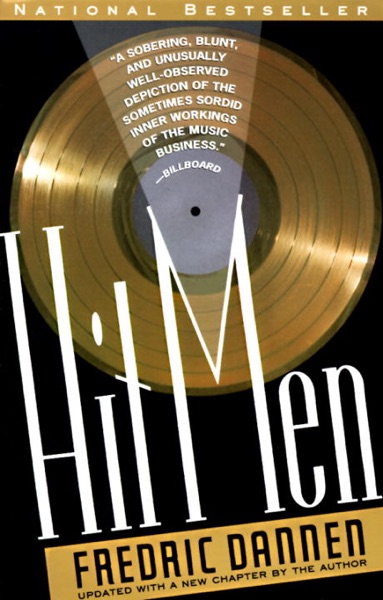
Hit Men is Fredric Dannen's investigative account of the major record labels from the 1950s through the late 1980s, with particular focus on the network of independent promoters who controlled radio airplay through a system of payments that amounted to a legalized — and sometimes illegal — form of payola.
Fredric Dannen · 1990 · 7h 45m
Full summary and key takeaways →The 12 questions
- 1.
The payola system described in the book was conducted with enough ambiguity that most participants could plausibly deny explicit wrongdoing. How does that kind of deniability function in industries you're familiar with?
- 2.
Dannen portrays Walter Yetnikoff as simultaneously one of the most effective executives in music history and a figure whose behavior caused enormous harm. How do you evaluate legacies that combine genuine achievement with serious misconduct?
- 3.
The record labels knew what their promotional spending was funding. What institutional pressures make it rational for companies to sustain systems they know are corrupt?
- 4.
Independent radio promoters served as intermediaries precisely because they provided legal distance between the labels and the payments. Where else do you see that kind of structured distance from accountability?
- 5.
The book was published in 1990 before the internet, Napster, or streaming. Which parts of the dynamic it describes — the concentration of distribution power, the extraction of artist value — survived the digital transition?
- 6.
Artist contracts that made recoupment nearly impossible were standard practice. What kept artists from collectively refusing those terms, and what finally did change the balance of power?
- 7.
How much of the music industry's corruption reflects something specific to that industry, and how much is a predictable consequence of any business built on gatekeeping scarce distribution?
- 8.
Dannen had extensive access to major industry figures who knew he was writing a critical book. What does that willingness to participate tell you about how power in that industry was exercised and perceived?
- 9.
The book focuses on corporate executives and promoters, not on artists. What would the story look like told primarily from the perspective of the artists who were being promoted or ignored?
- 10.
The promotional system ultimately collapsed under legal and regulatory pressure. What was it about that specific moment in the 1980s that made reform possible?
- 11.
Mo Ostin at Warner is presented more favorably than most other executives in the book, as someone who genuinely cared about artists. Does the existence of outliers change how you evaluate a corrupt system?
- 12.
What parallels do you see between the radio payola system and how algorithmic playlist placement and recommendation systems work in the streaming era?
How to run the discussion
- Pick six to eight, not all of them. An hour of real discussion covers fewer questions than anyone expects, and racing the list is what makes a book club feel like homework.
- Open with what people noticed, not what they concluded. Asking for a verdict first hardens opinions before anyone has heard each other.
- Let the disagreement run. The questions below that split a room are the ones worth the time; the ones everyone answers the same way can be skipped.
- Ask the quiet person a specific question. A direct, narrow question is far easier to answer than an open invitation to contribute.
Themes worth steering toward
If the conversation stalls, these are the threads that usually restart it.
Common questions
What are good book club questions for Hit Men: Power Brokers and Fast Money Inside the Music Business?
Here are 12 book club questions for Hit Men: Power Brokers and Fast Money Inside the Music Business by Fredric Dannen, ordered to open easily and end somewhere worth arguing about. The strongest openers ask what each reader noticed rather than what they concluded, and the discussion usually turns on music industry, corruption and payola, corporate power.
How long should a book club discussion of Hit Men: Power Brokers and Fast Money Inside the Music Business last?
Most groups run 60 to 90 minutes of actual discussion. That is roughly six to eight questions, not all of them, so pick the ones that suit your group rather than working down the list in order.
What are the main themes in Hit Men: Power Brokers and Fast Money Inside the Music Business?
Music industry, Corruption and payola, Corporate power, Industry economics, Organized crime. Those are the threads most likely to divide a room, which makes them the useful places to steer a discussion that has gone quiet.
Picking the next one? See books like Hit Men: Power Brokers and Fast Money Inside the Music Business or questions for other book club picks.
