Psychology · Book club
Hold Me Tight: Seven Conversations for a Lifetime of Love book club questions
Here are 12 book club questions for Hold Me Tight: Seven Conversations for a Lifetime of Love by Sue Johnson, ordered to open easily and end somewhere worth arguing about. Copy them, print them, or bring them up one at a time.
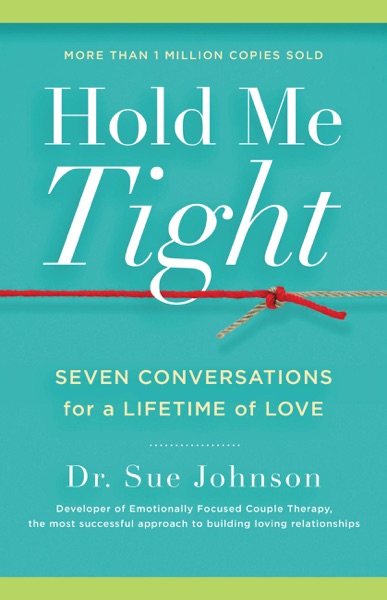
Hold Me Tight is Sue Johnson's accessible introduction to Emotionally Focused Therapy (EFT), a model of couples therapy she developed over decades of clinical practice and research.
Sue Johnson · 2008 · 5h 20m
Full summary and key takeaways →The 12 questions
- 1.
Johnson argues that most couple conflicts are really about attachment security — the underlying question of whether you are accessible and responsive to your partner. Does this match your experience of relationship arguments?
- 2.
The demand-withdraw cycle — where one partner pursues and the other distances — is one of the most common patterns Johnson describes. Which role have you played, and what do you think drives your position in that cycle?
- 3.
Johnson says attachment needs are healthy and adaptive, not signs of emotional weakness. How comfortable are you with expressing attachment needs directly? What makes it hard?
- 4.
The EFT framework focuses on emotional bonding rather than communication skills or conflict resolution techniques. Do you think better emotional attunement or better communication would make more difference in a relationship you care about?
- 5.
What would it mean for a partner to be A.R.E. — Accessible, Responsive, and Engaged — in your relationship? Are there moments when you feel this strongly, and others when you don't?
- 6.
Johnson argues that sex in long-term relationships is more about emotional safety than physical desire. Does this framing match your experience, or does it feel incomplete?
- 7.
The book draws heavily on clinical examples from Johnson's therapy practice. How much does reading other couples' conflicts help you see patterns in your own, and what are the limits of that approach?
- 8.
Hold Me Tight was written primarily for heterosexual couples. Does the attachment framework it offers seem equally applicable to same-sex relationships and to other relationship structures?
- 9.
Johnson argues that secure attachment in adulthood is not determined by childhood attachment history — it can be built and rebuilt. How convincing do you find this claim?
- 10.
What is the relationship between the kind of emotional attunement Johnson describes in romantic relationships and what you experienced in your family of origin?
- 11.
Johnson says relationship repair after rupture can actually strengthen the bond if done genuinely. Have you experienced this? What made the repair effective?
- 12.
The book is partly a popular account of decades of EFT research. How much does the empirical backing change how you evaluate the practical advice compared to self-help books without that foundation?
How to run the discussion
- Pick six to eight, not all of them. An hour of real discussion covers fewer questions than anyone expects, and racing the list is what makes a book club feel like homework.
- Open with what people noticed, not what they concluded. Asking for a verdict first hardens opinions before anyone has heard each other.
- Let the disagreement run. The questions below that split a room are the ones worth the time; the ones everyone answers the same way can be skipped.
- Ask the quiet person a specific question. A direct, narrow question is far easier to answer than an open invitation to contribute.
Themes worth steering toward
If the conversation stalls, these are the threads that usually restart it.
Common questions
What are good book club questions for Hold Me Tight: Seven Conversations for a Lifetime of Love?
Here are 12 book club questions for Hold Me Tight: Seven Conversations for a Lifetime of Love by Sue Johnson, ordered to open easily and end somewhere worth arguing about. The strongest openers ask what each reader noticed rather than what they concluded, and the discussion usually turns on attachment, relationships, emotional bonding.
How long should a book club discussion of Hold Me Tight: Seven Conversations for a Lifetime of Love last?
Most groups run 60 to 90 minutes of actual discussion. That is roughly six to eight questions, not all of them, so pick the ones that suit your group rather than working down the list in order.
What are the main themes in Hold Me Tight: Seven Conversations for a Lifetime of Love?
Attachment, Relationships, Emotional bonding, Communication, Couples therapy. Those are the threads most likely to divide a room, which makes them the useful places to steer a discussion that has gone quiet.
Picking the next one? See books like Hold Me Tight: Seven Conversations for a Lifetime of Love or questions for other book club picks.
