Psychology · Book club
How Emotions Are Made: The Secret Life of the Brain book club questions
Here are 11 book club questions for How Emotions Are Made: The Secret Life of the Brain by Lisa Feldman Barrett, ordered to open easily and end somewhere worth arguing about. Copy them, print them, or bring them up one at a time.
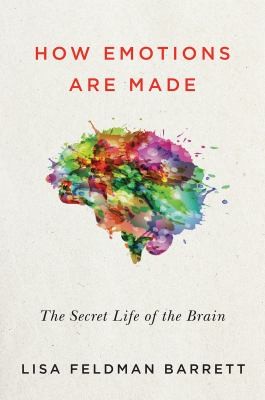
Lisa Feldman Barrett is a neuroscientist and psychologist at Northeastern University who has spent thirty years studying emotion, and her conclusion challenges the most widely held view of what emotions are.
Lisa Feldman Barrett · 2017 · 5h 20m
Full summary and key takeaways →The 11 questions
- 1.
Barrett argues that emotions are not detected but constructed. Does that claim feel right to you based on your own experience of emotional states, or does it feel like philosophical sleight of hand?
- 2.
The same bodily arousal can be constructed as excitement or anxiety. Can you think of a case where reinterpreting the meaning of your arousal changed how you experienced and responded to a situation?
- 3.
Emotional granularity — having a richer emotional vocabulary — is associated with better regulation. How would you describe the richness of your emotional concepts? Are there states you experience but struggle to name?
- 4.
Barrett challenges the triune brain and the amygdala-as-emotion-center narrative. How deeply embedded is that narrative in how you and the people around you talk about emotion?
- 5.
She argues that cultural learning shapes emotional construction. What emotions does your own cultural background make most legible, and which does it make harder to experience or express?
- 6.
The prediction machine model means the brain is always generating models based on past experience. What implications does that have for how early experience shapes emotional life?
- 7.
If emotions are constructed using available concepts, then teaching children richer emotional vocabulary is a form of emotional development. What do you think that would look like in practice?
- 8.
Barrett's view has implications for therapy: changing the concepts available to someone could change how they construct their emotional experience. Does that match your understanding of how therapy works?
- 9.
She discusses how emotions are social phenomena — they are constructed with reference to social context and cultural norms. What emotions do you think are most heavily shaped by your social context?
- 10.
The book challenges several widely held beliefs about emotion. Which of those challenges was most surprising or difficult for you to accept?
- 11.
Barrett argues that there is no universal facial expression of emotion that all cultures share. If true, what does that mean for how we interpret others' emotional states?
How to run the discussion
- Pick six to eight, not all of them. An hour of real discussion covers fewer questions than anyone expects, and racing the list is what makes a book club feel like homework.
- Open with what people noticed, not what they concluded. Asking for a verdict first hardens opinions before anyone has heard each other.
- Let the disagreement run. The questions below that split a room are the ones worth the time; the ones everyone answers the same way can be skipped.
- Ask the quiet person a specific question. A direct, narrow question is far easier to answer than an open invitation to contribute.
Themes worth steering toward
If the conversation stalls, these are the threads that usually restart it.
Common questions
What are good book club questions for How Emotions Are Made: The Secret Life of the Brain?
Here are 11 book club questions for How Emotions Are Made: The Secret Life of the Brain by Lisa Feldman Barrett, ordered to open easily and end somewhere worth arguing about. The strongest openers ask what each reader noticed rather than what they concluded, and the discussion usually turns on emotions, neuroscience, perception.
How long should a book club discussion of How Emotions Are Made: The Secret Life of the Brain last?
Most groups run 60 to 90 minutes of actual discussion. That is roughly six to eight questions, not all of them, so pick the ones that suit your group rather than working down the list in order.
What are the main themes in How Emotions Are Made: The Secret Life of the Brain?
Emotions, Neuroscience, Perception, Constructed reality, Brain science. Those are the threads most likely to divide a room, which makes them the useful places to steer a discussion that has gone quiet.
Picking the next one? See books like How Emotions Are Made: The Secret Life of the Brain or questions for other book club picks.
