Science · Book club
How to Avoid a Climate Disaster book club questions
Here are 12 book club questions for How to Avoid a Climate Disaster by Bill Gates, ordered to open easily and end somewhere worth arguing about. Copy them, print them, or bring them up one at a time.
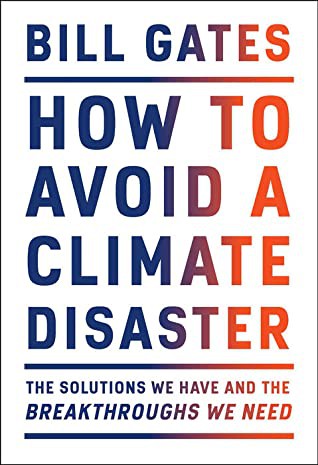
How to Avoid a Climate Disaster is Bill Gates's attempt to explain the scale of the climate problem and outline what it would actually take to reach zero greenhouse gas emissions by 2050.
Bill Gates · 2021 · 5h 0m
Full summary and key takeaways →The 12 questions
- 1.
Gates argues the problem is solvable with technology and policy, not behavior change. Do you find that framing reassuring or evasive?
- 2.
Which sector's decarbonization challenge did you find most surprising — electricity, agriculture, manufacturing, or something else?
- 3.
The Green Premium concept focuses attention on cost gaps. What are the limits of using cost as the primary metric for evaluating clean energy transitions?
- 4.
Gates is relatively positive about nuclear energy. Has reading the book changed your view of nuclear's role, or do you remain skeptical? Why?
- 5.
The book emphasizes rich-country responsibility for technology development while acknowledging that emissions growth is primarily driven by middle-income countries. How do you think about that distributional question?
- 6.
What is the relationship between individual consumer choices and systemic change? Does Gates get the balance right?
- 7.
Gates is himself a major investor in several technologies he recommends in the book. Does that conflict of interest affect how you read his recommendations?
- 8.
Adaptation versus mitigation: the book discusses both, but most public attention goes to mitigation. Should we be putting more resources into helping vulnerable populations adapt to what's already coming?
- 9.
What did you know about carbon emissions from cement and steel before reading this? Does it change how you think about infrastructure spending?
- 10.
Gates says government R&D funding is essential for breakthrough technologies. What does the history of the internet, GPS, or mRNA vaccines tell us about that claim?
- 11.
If you could redirect one category of investment based on this book — away from an overhyped solution and toward an underfunded one — what would it be?
- 12.
Is the book optimistic or pessimistic? What evidence in your daily life supports or contradicts Gates's overall frame?
How to run the discussion
- Pick six to eight, not all of them. An hour of real discussion covers fewer questions than anyone expects, and racing the list is what makes a book club feel like homework.
- Open with what people noticed, not what they concluded. Asking for a verdict first hardens opinions before anyone has heard each other.
- Let the disagreement run. The questions below that split a room are the ones worth the time; the ones everyone answers the same way can be skipped.
- Ask the quiet person a specific question. A direct, narrow question is far easier to answer than an open invitation to contribute.
Themes worth steering toward
If the conversation stalls, these are the threads that usually restart it.
Common questions
What are good book club questions for How to Avoid a Climate Disaster?
Here are 12 book club questions for How to Avoid a Climate Disaster by Bill Gates, ordered to open easily and end somewhere worth arguing about. The strongest openers ask what each reader noticed rather than what they concluded, and the discussion usually turns on climate change, technology and innovation, energy systems.
How long should a book club discussion of How to Avoid a Climate Disaster last?
Most groups run 60 to 90 minutes of actual discussion. That is roughly six to eight questions, not all of them, so pick the ones that suit your group rather than working down the list in order.
What are the main themes in How to Avoid a Climate Disaster?
Climate change, Technology and innovation, Energy systems, Policy, Decarbonization. Those are the threads most likely to divide a room, which makes them the useful places to steer a discussion that has gone quiet.
Picking the next one? See books like How to Avoid a Climate Disaster or questions for other book club picks.
