Science · Book club
How to Change Your Mind book club questions
Here are 12 book club questions for How to Change Your Mind by Michael Pollan, ordered to open easily and end somewhere worth arguing about. Copy them, print them, or bring them up one at a time.
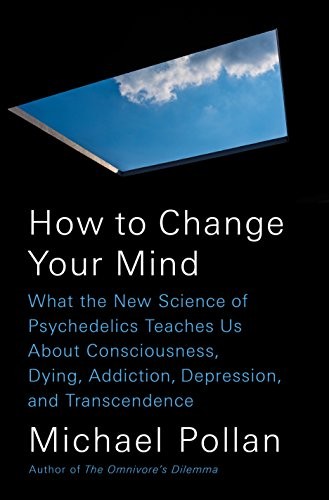
Michael Pollan came to psychedelics late in life, as a skeptic.
Michael Pollan · 2018 · 9h 0m
Full summary and key takeaways →The 12 questions
- 1.
Pollan argues that the shutdown of psychedelic research was politically rather than scientifically driven. What would the state of psychiatric treatment look like if that research had continued uninterrupted?
- 2.
The mystical experience correlates with therapeutic outcomes in the clinical trials. What do you make of the fact that a subjective, hard-to-quantify experience is a measurable predictor of medical results?
- 3.
Pollan describes the default mode network as the neural substrate of the ego. How does understanding the ego as a brain structure — rather than as a fixed identity — change how you think about the self?
- 4.
The book presents psychedelics as potentially useful tools for mental health while acknowledging significant risks in unsupported settings. Where do you draw the line between personal freedom and public health concern in how these substances are regulated?
- 5.
Pollan came to the subject as a skeptic and left convinced the research merited attention. What would it take for you to update your own priors on a topic this culturally loaded?
- 6.
The clinical trials require significant preparation, a trained guide, and careful follow-up. How much of the result do you think comes from those conditions versus the drug itself?
- 7.
What's the difference between a mystical experience induced by a drug and one that arises from years of meditation practice? Does the origin change the value?
- 8.
The research on psilocybin for addiction — particularly smoking cessation, where results have been exceptionally strong — suggests the drug can interrupt entrenched behaviors. How does that work mechanistically, and what does it suggest about addiction?
- 9.
Pollan interviews elderly psychedelic researchers who describe the 1960s research as genuinely promising science destroyed by cultural panic. How do you evaluate scientific consensus when it forms around a politically charged subject?
- 10.
The dose, set, and setting model for psychedelic therapy is very different from how most pharmaceuticals are administered. What does that difference imply about how we think about drug treatment generally?
- 11.
Pollan's own experiences were profound and disorienting. What does it mean for a science journalist to put himself in the story in this way?
- 12.
How does reading about the neuroscience of ego dissolution change how you think about the self in everyday life — not in extreme altered states, but in ordinary consciousness?
How to run the discussion
- Pick six to eight, not all of them. An hour of real discussion covers fewer questions than anyone expects, and racing the list is what makes a book club feel like homework.
- Open with what people noticed, not what they concluded. Asking for a verdict first hardens opinions before anyone has heard each other.
- Let the disagreement run. The questions below that split a room are the ones worth the time; the ones everyone answers the same way can be skipped.
- Ask the quiet person a specific question. A direct, narrow question is far easier to answer than an open invitation to contribute.
Themes worth steering toward
If the conversation stalls, these are the threads that usually restart it.
Common questions
What are good book club questions for How to Change Your Mind?
Here are 12 book club questions for How to Change Your Mind by Michael Pollan, ordered to open easily and end somewhere worth arguing about. The strongest openers ask what each reader noticed rather than what they concluded, and the discussion usually turns on psychedelics, consciousness, neuroscience.
How long should a book club discussion of How to Change Your Mind last?
Most groups run 60 to 90 minutes of actual discussion. That is roughly six to eight questions, not all of them, so pick the ones that suit your group rather than working down the list in order.
What are the main themes in How to Change Your Mind?
Psychedelics, Consciousness, Neuroscience, Mental health, Spirituality. Those are the threads most likely to divide a room, which makes them the useful places to steer a discussion that has gone quiet.
Picking the next one? See books like How to Change Your Mind or questions for other book club picks.
