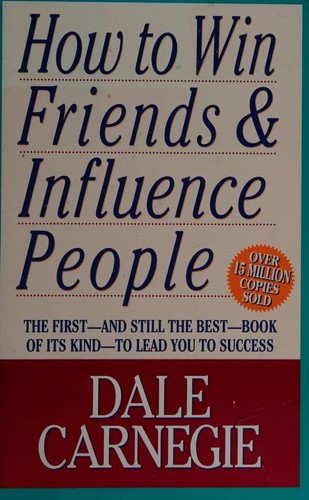
Talk to How to Win Friends and Influence People like its author wrote you back.
Get the ideas that fit your life — not generic summaries.
- Chat with the book
- Audiobook-style main ideas
- Adapts to your life and goals
- Helps you take action
What it argues
How to Win Friends and Influence People is Dale Carnegie's 1936 guide to dealing with people effectively. The central premise is simple and slightly uncomfortable: most people want to feel important, understood, and appreciated, and the person who consistently delivers that experience will get further in work and life than the person who is merely competent. Carnegie built the book from stories — of Lincoln, Roosevelt, businesspeople, salespeople, and ordinary men and women — and the accumulated weight of those stories makes his case feel less like theory and more like observed reality.
The book is organized around principles rather than tactics. The early sections focus on not criticizing, condemning, or complaining — Carnegie argues that criticism triggers defensiveness and almost never changes behavior in the direction you want. Instead, he makes the case for genuine appreciation and curiosity about other people. He is careful to distinguish flattery, which he dismisses as hollow and detectable, from honest recognition of real qualities. The distinction matters: Carnegie's method only works if it comes from actual interest in the other person, not from a manipulative script.
What it gets right
- 1.
Criticism triggers defensiveness and rarely changes behavior. Carnegie argues the more effective path is to understand what someone wants and appeal to that directly.
- 2.
Genuine appreciation is the single most reliable way to make someone feel valued. Flattery differs from appreciation because flattery is empty; appreciation refers to something real.
- 3.
The only way to get the best of an argument is to avoid it. Winning a debate by logic while making the other person feel humiliated produces no useful outcome.
What it covers
Who wrote it
Dale Carnegie (1888–1955) was an American writer, lecturer, and developer of courses in self-improvement, salesmanship, and public speaking. He founded the Dale Carnegie Institute and taught at the YMCA in New York before his courses became nationally recognized. His second major book, How to Stop Worrying and Start Living, appeared in 1948. Carnegie's techniques drew on years of training salespeople and public speakers, and How to Win Friends and Influence People has sold more than 30 million copies since 1936, making it one of the bestselling nonfiction books in history.
