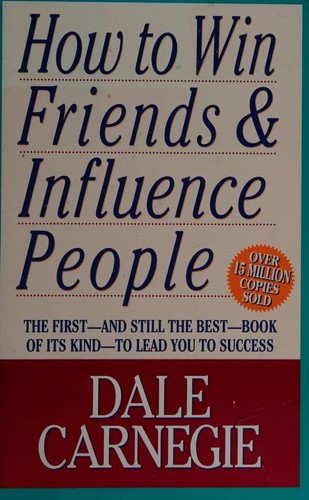
Talk to How to Win Friends and Influence People like its author wrote you back.
Get the ideas that fit your life — not generic summaries.
- Chat with the book
- Audiobook-style main ideas
- Adapts to your life and goals
- Helps you take action
How to Win Friends and Influence People, in detail
How to Win Friends and Influence People is Dale Carnegie's 1936 guide to dealing with people effectively. The central premise is simple and slightly uncomfortable: most people want to feel important, understood, and appreciated, and the person who consistently delivers that experience will get further in work and life than the person who is merely competent. Carnegie built the book from stories — of Lincoln, Roosevelt, businesspeople, salespeople, and ordinary men and women — and the accumulated weight of those stories makes his case feel less like theory and more like observed reality.
The book is organized around principles rather than tactics. The early sections focus on not criticizing, condemning, or complaining — Carnegie argues that criticism triggers defensiveness and almost never changes behavior in the direction you want. Instead, he makes the case for genuine appreciation and curiosity about other people. He is careful to distinguish flattery, which he dismisses as hollow and detectable, from honest recognition of real qualities. The distinction matters: Carnegie's method only works if it comes from actual interest in the other person, not from a manipulative script.
The middle sections deal with winning people over to your point of view. Carnegie's techniques here include letting the other person talk, asking rather than telling, framing things in terms of what the other person wants, and never arguing a person into a corner where they have to defend their ego to save face. Much of this holds up well; some of it reads as dated salesmanship. Carnegie had a background in training salespeople and the influence is visible. The reader has to do some work to separate the durable ideas about human psychology from the era-specific glad-handing.
What makes the book worth reading in its ninth decade is the underlying model of other people: that almost everyone is primarily occupied with their own concerns, desires, and self-image, and that the fastest way to get something done with them is to understand that and work with it rather than against it. Carnegie does not pretend this is purely altruistic. He is frank that these skills are useful for getting things. But he also argues, convincingly, that the habits of attention and appreciation he recommends will make you a better person to be around, which is its own kind of reward.
The big ideas
- 1.
Criticism triggers defensiveness and rarely changes behavior. Carnegie argues the more effective path is to understand what someone wants and appeal to that directly.
- 2.
Genuine appreciation is the single most reliable way to make someone feel valued. Flattery differs from appreciation because flattery is empty; appreciation refers to something real.
- 3.
The only way to get the best of an argument is to avoid it. Winning a debate by logic while making the other person feel humiliated produces no useful outcome.
