Biography · Book club
How to book club questions
Here are 11 book club questions for How to by Michael Bierut, ordered to open easily and end somewhere worth arguing about. Copy them, print them, or bring them up one at a time.
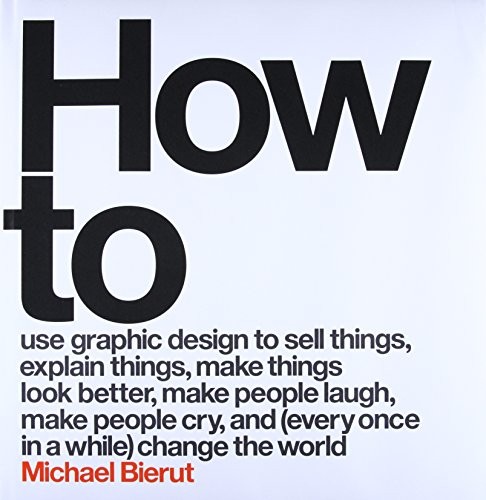
How to is Michael Bierut's account of thirty-five years of practice as a graphic designer at Pentagram, the world's largest independent design firm.
Michael Bierut · 2015 · 3h 30m
Full summary and key takeaways →The 11 questions
- 1.
Bierut argues that caring about the content of a commission produces better form. Can you think of examples from other fields where genuine engagement with subject matter improves the work?
- 2.
The Clinton logo chapter shows a designer watching their work enter a context they can't control. What is the designer's responsibility in that situation?
- 3.
How do you feel about constraint in your own work? Is it something you seek, something you tolerate, or something that still feels like a restriction?
- 4.
Bierut spent his entire career at Pentagram. What is the relationship between long institutional continuity and creative development?
- 5.
He describes projects that failed or were compromised by client decisions. How do you handle that kind of outcome without losing the appetite to invest fully in the next project?
- 6.
The book covers thirty-five years. Does the work you find most interesting come from the early, middle, or late chapters, and what does that suggest?
- 7.
Bierut's voice is confident but not defensive when he discusses mistakes. What does that combination require, and is it common in professional creative culture?
- 8.
The book is organized around projects rather than principles. What would a version organized around principles look like, and would it be less or more useful?
- 9.
Design work is judged aesthetically and functionally. Which of these judgments do you find more reliable, and do they ever come apart?
- 10.
Is there a meaningful difference between graphic design and other kinds of visual communication — photography, illustration, art direction? Does Bierut's account clarify or blur that?
- 11.
What kind of professional experience do you think is most effectively transmitted by a book like this, and what can only be learned by doing the work?
How to run the discussion
- Pick six to eight, not all of them. An hour of real discussion covers fewer questions than anyone expects, and racing the list is what makes a book club feel like homework.
- Open with what people noticed, not what they concluded. Asking for a verdict first hardens opinions before anyone has heard each other.
- Let the disagreement run. The questions below that split a room are the ones worth the time; the ones everyone answers the same way can be skipped.
- Ask the quiet person a specific question. A direct, narrow question is far easier to answer than an open invitation to contribute.
Themes worth steering toward
If the conversation stalls, these are the threads that usually restart it.
Common questions
What are good book club questions for How to?
Here are 11 book club questions for How to by Michael Bierut, ordered to open easily and end somewhere worth arguing about. The strongest openers ask what each reader noticed rather than what they concluded, and the discussion usually turns on graphic design, creative process, client work.
How long should a book club discussion of How to last?
Most groups run 60 to 90 minutes of actual discussion. That is roughly six to eight questions, not all of them, so pick the ones that suit your group rather than working down the list in order.
What are the main themes in How to?
Graphic design, Creative process, Client work, Design thinking, Professional practice. Those are the threads most likely to divide a room, which makes them the useful places to steer a discussion that has gone quiet.
Picking the next one? See books like How to or questions for other book club picks.
