Philosophy · Book club
I and Thou book club questions
Here are 12 book club questions for I and Thou by Martin Buber, ordered to open easily and end somewhere worth arguing about. Copy them, print them, or bring them up one at a time.
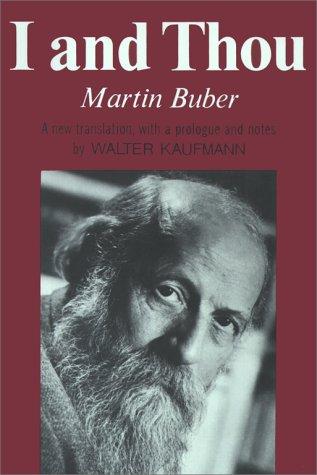
I and Thou is Martin Buber's central philosophical work, first published in German in 1923.
Martin Buber · 1923 · 3h 0m
Full summary and key takeaways →The 12 questions
- 1.
Think of a recent conversation where you felt genuinely encountered by another person. What distinguished that from most conversations? What conditions made it possible?
- 2.
Buber says we inevitably reduce Thous to Its over time. Is that always a failure, or is there a way to move between the modes intentionally?
- 3.
What relationships in your life are primarily I-It right now — functional, instrumental, without real presence? What would it mean to shift even one of them toward I-Thou?
- 4.
Buber includes non-human relationships — with trees, animals, works of art — in the I-Thou framework. Do you find that extension convincing, or does it dilute the concept?
- 5.
The third part of the book argues that all genuine encounter opens toward God. Do you need to accept that move to find the rest of the book useful?
- 6.
Buber says modern institutions tend to replace genuine meeting with organization. Where do you see I-It relations masquerading as community in your own life?
- 7.
The 'between' is Buber's name for what arises in genuine encounter that belongs to neither party. Have you experienced something that that word captures?
- 8.
How does Buber's framework change how you think about digital communication — platforms designed to make connection efficient and scalable?
- 9.
Buber's prose is deliberately difficult. Do you think the style serves the argument, or does it create unnecessary mystification?
- 10.
Rogers adapted Buber's ideas in developing person-centered therapy. If a therapist's job is to offer I-Thou encounter, what does that demand of them professionally and personally?
- 11.
Buber distinguishes genuine dialogue from 'technical dialogue' (exchanging information) and 'monologue disguised as dialogue' (talking at each other). Which of these three describes most of the conversations you have at work?
- 12.
Does the idea that the relation partly constitutes the person ring true to your experience? In what ways are you different depending on who you're with?
How to run the discussion
- Pick six to eight, not all of them. An hour of real discussion covers fewer questions than anyone expects, and racing the list is what makes a book club feel like homework.
- Open with what people noticed, not what they concluded. Asking for a verdict first hardens opinions before anyone has heard each other.
- Let the disagreement run. The questions below that split a room are the ones worth the time; the ones everyone answers the same way can be skipped.
- Ask the quiet person a specific question. A direct, narrow question is far easier to answer than an open invitation to contribute.
Themes worth steering toward
If the conversation stalls, these are the threads that usually restart it.
Common questions
What are good book club questions for I and Thou?
Here are 12 book club questions for I and Thou by Martin Buber, ordered to open easily and end somewhere worth arguing about. The strongest openers ask what each reader noticed rather than what they concluded, and the discussion usually turns on relationality, dialogue, presence.
How long should a book club discussion of I and Thou last?
Most groups run 60 to 90 minutes of actual discussion. That is roughly six to eight questions, not all of them, so pick the ones that suit your group rather than working down the list in order.
What are the main themes in I and Thou?
Relationality, Dialogue, Presence, Encounter, Sacred. Those are the threads most likely to divide a room, which makes them the useful places to steer a discussion that has gone quiet.
Picking the next one? See books like I and Thou or questions for other book club picks.
