Memoir · Book club
I Know Why the Caged Bird Sings book club questions
Here are 12 book club questions for I Know Why the Caged Bird Sings by Maya Angelou, ordered to open easily and end somewhere worth arguing about. Copy them, print them, or bring them up one at a time.
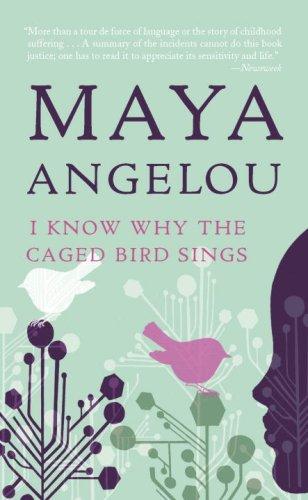
Maya Angelou's first volume of autobiography covers her childhood and adolescence in Stamps, Arkansas and San Francisco during the 1930s and 1940s, ending with the birth of her son at age sixteen.
Maya Angelou · 1969 · 5h 20m
Full summary and key takeaways →The 12 questions
- 1.
Angelou's silence after the rape is explained by a specific logic she had as a child. How does the adult narrator handle that logic — does she judge the child she was?
- 2.
Mrs. Bertha Flowers gives Angelou books and tells her that written words come alive only when spoken aloud. What does this suggest about the relationship between reading and voice?
- 3.
How does Angelou render the daily texture of segregation? What techniques does she use to make structural racism felt rather than just documented?
- 4.
Momma's pride and self-protective strategies represent one generation's response to racism. How does Angelou's generation differ in its responses?
- 5.
The book was controversial and frequently banned when it was published. What about it do you think provoked that reaction, and does the provocation still feel alive today?
- 6.
Angelou ends the book not at a point of resolution but at a beginning. What does it mean to structure an autobiography as an opening rather than a conclusion?
- 7.
Bailey, Angelou's brother, is a recurring presence. What does the sibling relationship add to the narrative?
- 8.
The book has a noticeably lyrical, literary style. Does the style feel appropriate to the material, or does it sometimes create a tension with the rawness of what is being described?
- 9.
How does Angelou treat the white characters in the book? Are any of them rendered with full humanity, and what does the book do with the ones who are not?
- 10.
The title comes from Paul Laurence Dunbar's poem 'Sympathy.' How does that poem's image of the caged bird applying to Angelou's experience?
- 11.
At sixteen, Angelou is living independently, is pregnant, and has already done more living than most people do in decades. How does the memoir prepare you for that endpoint?
- 12.
This is the first of seven volumes of autobiography Angelou eventually published. Does the book feel complete on its own, or does it compel you toward the next volume?
How to run the discussion
- Pick six to eight, not all of them. An hour of real discussion covers fewer questions than anyone expects, and racing the list is what makes a book club feel like homework.
- Open with what people noticed, not what they concluded. Asking for a verdict first hardens opinions before anyone has heard each other.
- Let the disagreement run. The questions below that split a room are the ones worth the time; the ones everyone answers the same way can be skipped.
- Ask the quiet person a specific question. A direct, narrow question is far easier to answer than an open invitation to contribute.
Themes worth steering toward
If the conversation stalls, these are the threads that usually restart it.
Common questions
What are good book club questions for I Know Why the Caged Bird Sings?
Here are 12 book club questions for I Know Why the Caged Bird Sings by Maya Angelou, ordered to open easily and end somewhere worth arguing about. The strongest openers ask what each reader noticed rather than what they concluded, and the discussion usually turns on racism, identity, resilience.
How long should a book club discussion of I Know Why the Caged Bird Sings last?
Most groups run 60 to 90 minutes of actual discussion. That is roughly six to eight questions, not all of them, so pick the ones that suit your group rather than working down the list in order.
What are the main themes in I Know Why the Caged Bird Sings?
Racism, Identity, Resilience, Coming of age, Language. Those are the threads most likely to divide a room, which makes them the useful places to steer a discussion that has gone quiet.
Picking the next one? See books like I Know Why the Caged Bird Sings or questions for other book club picks.
