Memoir · Book club
In Cold Blood book club questions
Here are 11 book club questions for In Cold Blood by Truman Capote, ordered to open easily and end somewhere worth arguing about. Copy them, print them, or bring them up one at a time.
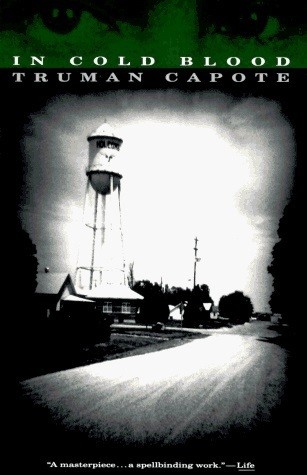
Truman Capote's account of the 1959 murders of the Clutter family in Holcomb, Kansas — and of the investigation, capture, trial, and execution of the killers Perry Smith and Richard Hickock — is the founding document of the true crime genre and one of the most admired works of American nonfiction of the twentieth century.
Truman Capote · 1966 · 7h 20m
Full summary and key takeaways →The 11 questions
- 1.
Capote calls the book a 'nonfiction novel.' What does that label claim, and what does it obscure? Is it an honest description?
- 2.
He clearly sympathized with Perry Smith. Does that sympathy make the book better or less trustworthy as journalism?
- 3.
The Clutter family is rendered as virtuous and admirable. Does this idealization affect how you read the murders?
- 4.
The book implicitly critiques capital punishment but does not argue against it directly. Is that restraint admirable or evasive?
- 5.
Dick Hickock is given less psychological depth than Perry Smith. Is this a flaw in the book, or does the disparity tell you something true about Capote's interests?
- 6.
Capote spent six years on the book and maintained relationships with both killers during that period. What are the ethical obligations of a journalist to their subjects?
- 7.
The final scene at the Clutter grave is deliberately elegiac. Does it feel earned, or does it impose a resolution that the events do not justify?
- 8.
The book has been accused of inventing dialogue and distorting events for dramatic effect. If this is true, does it matter?
- 9.
What does the book say about rural America in the late 1950s? Is that portrait sympathetic, critical, or simply observational?
- 10.
In Cold Blood created the true crime genre. What aspects of the book do you see in contemporary true crime podcasts, documentaries, or books? What has been lost?
- 11.
How does Capote's prose style — his sentence rhythms, his descriptions of landscape, his handling of time — contribute to the book's power?
How to run the discussion
- Pick six to eight, not all of them. An hour of real discussion covers fewer questions than anyone expects, and racing the list is what makes a book club feel like homework.
- Open with what people noticed, not what they concluded. Asking for a verdict first hardens opinions before anyone has heard each other.
- Let the disagreement run. The questions below that split a room are the ones worth the time; the ones everyone answers the same way can be skipped.
- Ask the quiet person a specific question. A direct, narrow question is far easier to answer than an open invitation to contribute.
Themes worth steering toward
If the conversation stalls, these are the threads that usually restart it.
Common questions
What are good book club questions for In Cold Blood?
Here are 11 book club questions for In Cold Blood by Truman Capote, ordered to open easily and end somewhere worth arguing about. The strongest openers ask what each reader noticed rather than what they concluded, and the discussion usually turns on violence, true crime, justice.
How long should a book club discussion of In Cold Blood last?
Most groups run 60 to 90 minutes of actual discussion. That is roughly six to eight questions, not all of them, so pick the ones that suit your group rather than working down the list in order.
What are the main themes in In Cold Blood?
Violence, True crime, Justice, American heartland, Empathy. Those are the threads most likely to divide a room, which makes them the useful places to steer a discussion that has gone quiet.
Picking the next one? See books like In Cold Blood or questions for other book club picks.
