Philosophy · Book club
In the Blink of an Eye book club questions
Here are 11 book club questions for In the Blink of an Eye by Walter Murch, ordered to open easily and end somewhere worth arguing about. Copy them, print them, or bring them up one at a time.
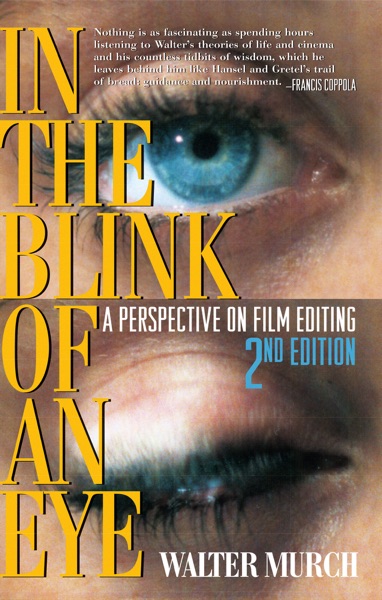
In the Blink of an Eye is Walter Murch's extended meditation on film editing — what it is, why it works, and what an editor is actually doing when they cut from one image to another.
Walter Murch · 1995 · 3h 15m
Full summary and key takeaways →The 11 questions
- 1.
Murch argues emotion is the primary criterion for a cut. Think of a scene from a film where a cut felt wrong to you — was it an emotional problem or a technical one?
- 2.
The blink metaphor suggests editing aligns with natural cognitive rhythms. Does learning that change how you experience cuts in a film you love?
- 3.
Murch says digital editing enables endless iteration — but that this is not always an improvement. Does unlimited choice reliably produce better work in fields you know well?
- 4.
The hierarchy of editing criteria places spatial continuity last. What happens in films where it is placed first?
- 5.
Murch describes editing as creating a continuous present for the viewer. What other arts create that same quality of sustained present-tense experience?
- 6.
He argues that leaving things unshown preserves space for the viewer's imagination. Where in films you admire do you notice this restraint, and where do you notice its absence?
- 7.
How much of film editing — or any craft — do you think is learnable from principles, and how much requires years of accumulated sensory intuition?
- 8.
Murch's criteria apply cleanly to fiction film. Do you think they map to documentary, essay film, or experimental work?
- 9.
The book was written in 1995 and revised in 2001. What aspects of the argument feel more or less true given how much editing practice and consumption has changed since?
- 10.
Murch suggests that overexplaining destroys something in a film. What's the equivalent in writing, music, or design?
- 11.
He spent his career in collaboration — with Coppola, Nichols, Minghella. How much of what he describes as craft is actually something emergent from long creative partnerships?
How to run the discussion
- Pick six to eight, not all of them. An hour of real discussion covers fewer questions than anyone expects, and racing the list is what makes a book club feel like homework.
- Open with what people noticed, not what they concluded. Asking for a verdict first hardens opinions before anyone has heard each other.
- Let the disagreement run. The questions below that split a room are the ones worth the time; the ones everyone answers the same way can be skipped.
- Ask the quiet person a specific question. A direct, narrow question is far easier to answer than an open invitation to contribute.
Themes worth steering toward
If the conversation stalls, these are the threads that usually restart it.
Common questions
What are good book club questions for In the Blink of an Eye?
Here are 11 book club questions for In the Blink of an Eye by Walter Murch, ordered to open easily and end somewhere worth arguing about. The strongest openers ask what each reader noticed rather than what they concluded, and the discussion usually turns on film editing, craft and intuition, visual storytelling.
How long should a book club discussion of In the Blink of an Eye last?
Most groups run 60 to 90 minutes of actual discussion. That is roughly six to eight questions, not all of them, so pick the ones that suit your group rather than working down the list in order.
What are the main themes in In the Blink of an Eye?
Film editing, Craft and intuition, Visual storytelling, Consciousness and perception, Collaboration. Those are the threads most likely to divide a room, which makes them the useful places to steer a discussion that has gone quiet.
Picking the next one? See books like In the Blink of an Eye or questions for other book club picks.
