Health · Book club
In the Realm of Hungry Ghosts book club questions
Here are 12 book club questions for In the Realm of Hungry Ghosts by Gabor Maté, ordered to open easily and end somewhere worth arguing about. Copy them, print them, or bring them up one at a time.
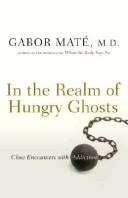
In the Realm of Hungry Ghosts is Gabor Maté's book about addiction, written while he was working as a physician in Vancouver's Downtown Eastside, one of North America's most concentrated pockets of poverty, drug use, and homelessness.
Gabor Maté · 2008 · 7h 15m
Full summary and key takeaways →The 12 questions
- 1.
Maté argues that addiction is a response to pain rather than a character flaw. Does that framing change how you think about someone you know who struggles with addiction or compulsive behavior?
- 2.
The book presents addiction as existing on a spectrum, with Maté's own classical music habit as one end. Where on that spectrum do you see yourself, honestly?
- 3.
The neuroscience Maté describes shows that early childhood environments shape addiction vulnerability. Does knowing that change what you think society owes people with addiction?
- 4.
Maté's patients in the Downtown Eastside have histories of extreme trauma and deprivation. How much of your response to reading those case studies was compassion, and how much was distance?
- 5.
The book advocates for harm reduction over criminalization. What does your own reaction to that policy position reveal about your underlying theory of addiction?
- 6.
Maté draws a line from secure attachment in childhood to robust self-regulation in adulthood. What does that suggest about what good early childhood policy would look like?
- 7.
The title comes from a Buddhist concept of insatiable craving. Does that framing — spiritual rather than purely medical — change how you think about addiction?
- 8.
Maté implicates himself throughout. Does the personal confession strengthen his argument, or does it make the book feel more like therapy than science?
- 9.
What's the most socially acceptable addiction in your own environment? Why does it get a pass when other forms of compulsive self-soothing don't?
- 10.
The book argues that punitive drug policy causes more harm than addiction itself. Is that a claim you're willing to follow to its policy implications, and what would those be?
- 11.
Maté describes patients with severe addictions whose inner lives are recognizable and sympathetic. What does it take for a reader to actually be changed by encounters with people very different from themselves?
- 12.
Recovery in Maté's framework means addressing underlying pain, not just achieving sobriety. What would genuine support for that kind of recovery require from healthcare systems?
How to run the discussion
- Pick six to eight, not all of them. An hour of real discussion covers fewer questions than anyone expects, and racing the list is what makes a book club feel like homework.
- Open with what people noticed, not what they concluded. Asking for a verdict first hardens opinions before anyone has heard each other.
- Let the disagreement run. The questions below that split a room are the ones worth the time; the ones everyone answers the same way can be skipped.
- Ask the quiet person a specific question. A direct, narrow question is far easier to answer than an open invitation to contribute.
Themes worth steering toward
If the conversation stalls, these are the threads that usually restart it.
Common questions
What are good book club questions for In the Realm of Hungry Ghosts?
Here are 12 book club questions for In the Realm of Hungry Ghosts by Gabor Maté, ordered to open easily and end somewhere worth arguing about. The strongest openers ask what each reader noticed rather than what they concluded, and the discussion usually turns on addiction, trauma, compassion.
How long should a book club discussion of In the Realm of Hungry Ghosts last?
Most groups run 60 to 90 minutes of actual discussion. That is roughly six to eight questions, not all of them, so pick the ones that suit your group rather than working down the list in order.
What are the main themes in In the Realm of Hungry Ghosts?
Addiction, Trauma, Compassion, Neuroscience, Social policy. Those are the threads most likely to divide a room, which makes them the useful places to steer a discussion that has gone quiet.
Picking the next one? See books like In the Realm of Hungry Ghosts or questions for other book club picks.
