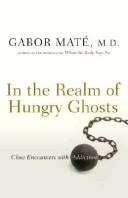
In the Realm of Hungry Ghosts by Gabor Maté is a 2008 health book about addiction, trauma, compassion. Addiction is a response to pain, not primarily a choice or a character defect. The neuroscience shows that addiction involves the same brain circuits responsible for attachment, emotional regulation, and stress response.
Summary
In the Realm of Hungry Ghosts is Gabor Maté's book about addiction, written while he was working as a physician in Vancouver's Downtown Eastside, one of North America's most concentrated pockets of poverty, drug use, and homelessness. The title is a Buddhist concept — the realm of beings consumed by insatiable hunger — and Maté uses it to describe not just his patients' relationship to substances but the nature of addiction itself. His central argument is that addiction is not a moral failure or a disease in the narrow biomedical sense, but a response to pain, rooted in developmental deficits that are themselves rooted in trauma and adverse early experience.
The book interweaves three threads. The first is clinical: case studies from Maté's patients, mostly people with severe addictions to heroin, cocaine, and alcohol, whose biographies are marked by childhood neglect, abuse, and deprivation. The second is scientific: a dense but accessible tour of the neuroscience of addiction, covering dopamine, the opioid system, stress circuits, and how early experience shapes the brain's reward architecture in ways that make certain people far more vulnerable to addiction than others. The third is personal: Maté's own compulsive classical music purchasing, which he uses to argue that addiction exists on a spectrum and that anyone who uses something to avoid pain is somewhere on that continuum.
The most important scientific contribution is the developmental model. Maté draws on research showing that the brain systems involved in addiction — reward, self-regulation, impulse control — are shaped by early attachment relationships. Children who experience secure, attuned caregiving develop more robust regulation systems. Children who experience chronic stress, neglect, or trauma develop systems that are more prone to seeking external chemical relief. This is not destiny but probability, and it shifts moral judgment into compassion.
Maté is also a policy critic. He argues that punitive drug laws, by criminalizing addiction rather than treating it as a health issue, make everything worse — for addicted individuals, for communities, and for public health. The Vancouver model of harm reduction, which he supported, represents a different theory of what society owes people in extreme distress. Whether or not readers agree with all his policy conclusions, the case studies in the book make it difficult to see addiction as simply a matter of weak character.
Talk to In the Realm of Hungry Ghosts like its author wrote you back.
Get the ideas that fit your life — not generic summaries.
- Chat with the book
- Audiobook-style main ideas
- Adapts to your life and goals
- Helps you take action
Key takeaways
- 1.
Addiction is a response to pain, not primarily a choice or a character defect. The neuroscience shows that addiction involves the same brain circuits responsible for attachment, emotional regulation, and stress response.
- 2.
Adverse childhood experiences — neglect, abuse, loss, household instability — are among the strongest predictors of adult addiction. The ACE studies Maté cites show dose-response relationships between childhood trauma and later substance problems.
- 3.
The dopamine and opioid systems that substances hijack are the same systems involved in social bonding and emotional comfort. Addicts are often seeking, through chemicals, what they could not reliably get from people.
- 4.
Early childhood environments shape the brain's reward architecture in ways that create differential vulnerability to addiction. This is not an excuse but an explanation that changes how compassion and intervention should work.
- 5.
Maté's own compulsive behaviors — classical music purchasing, workaholism — appear throughout as evidence that addiction exists on a spectrum. The question is not whether someone is addicted but to what and at what cost.
- 6.
Harm reduction approaches — providing clean needles, supervised injection, medication-assisted treatment — are more effective at reducing addiction's costs than punishment-based approaches. Criminalization adds suffering without reducing addiction.
- 7.
Recovery requires addressing the underlying pain and developmental deficits, not just achieving abstinence. Abstinence without addressing the root causes frequently leads to relapse or substitution of one compulsion for another.
- 8.
Society's tendency to view addiction with contempt and the addicted with disgust is itself a form of denial — a way of separating 'us' from 'them' that prevents honest examination of the conditions that produce addiction.
Discussion questions
Use these on your own, with a book club, or as chat starters in Superbook. Book club version, ready to copy or print →
- 1.
Maté argues that addiction is a response to pain rather than a character flaw. Does that framing change how you think about someone you know who struggles with addiction or compulsive behavior?
- 2.
The book presents addiction as existing on a spectrum, with Maté's own classical music habit as one end. Where on that spectrum do you see yourself, honestly?
- 3.
The neuroscience Maté describes shows that early childhood environments shape addiction vulnerability. Does knowing that change what you think society owes people with addiction?
- 4.
Maté's patients in the Downtown Eastside have histories of extreme trauma and deprivation. How much of your response to reading those case studies was compassion, and how much was distance?
- 5.
The book advocates for harm reduction over criminalization. What does your own reaction to that policy position reveal about your underlying theory of addiction?
- 6.
Maté draws a line from secure attachment in childhood to robust self-regulation in adulthood. What does that suggest about what good early childhood policy would look like?
- 7.
The title comes from a Buddhist concept of insatiable craving. Does that framing — spiritual rather than purely medical — change how you think about addiction?
- 8.
Maté implicates himself throughout. Does the personal confession strengthen his argument, or does it make the book feel more like therapy than science?
- 9.
What's the most socially acceptable addiction in your own environment? Why does it get a pass when other forms of compulsive self-soothing don't?
- 10.
The book argues that punitive drug policy causes more harm than addiction itself. Is that a claim you're willing to follow to its policy implications, and what would those be?
- 11.
Maté describes patients with severe addictions whose inner lives are recognizable and sympathetic. What does it take for a reader to actually be changed by encounters with people very different from themselves?
- 12.
Recovery in Maté's framework means addressing underlying pain, not just achieving sobriety. What would genuine support for that kind of recovery require from healthcare systems?
Themes
Frequently asked questions
-
What is In the Realm of Hungry Ghosts about?
It argues that addiction is rooted in developmental trauma and the brain systems that govern attachment and emotional regulation. Maté draws on his clinical work in Vancouver's drug-using community, neuroscience research, and his own compulsive behaviors to make the case.
-
Is In the Realm of Hungry Ghosts worth reading if I don't have addiction in my life?
Yes. The book's most useful contribution is not its policy arguments but its description of how early experience shapes the brain and behavior. The chapter on the neuroscience of addiction is one of the clearest lay explanations available. The case studies are also simply compelling as human stories.
-
How does Maté's view of addiction differ from mainstream medicine?
Most clinical frameworks treat addiction as a brain disease or a behavioral disorder. Maté emphasizes the developmental roots — how adverse childhood experience shapes the neural architecture that addiction later exploits. He also takes a harder policy position, advocating harm reduction over criminalization.
-
Is the book depressing?
The case studies are often harrowing. But the tone is not despairing — Maté consistently extends the kind of compassion to his patients that the system does not, and the book argues for change rather than resignation. Readers expecting a clinical catalog will find something more philosophically engaged.
-
How long does it take to read?
Around 400 pages, roughly seven hours at average reading pace. The book alternates between dense neuroscience and narrative case studies, which makes it more readable than the page count suggests.