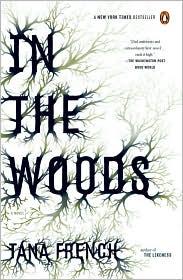
In the Woods by Tana French is a 2007 mystery book about memory and trauma, identity and self-deception, childhood and loss. French leaves the central cold case — the missing children — genuinely unresolved. This is a formal statement about the nature of memory and trauma, not a loose end.
Summary
Dublin detective Rob Ryan is called to investigate a child's murder at an archaeological dig in Knocknaree — the same woods where, twenty years earlier, two of his childhood friends vanished without a trace and Rob was found clinging to a tree, bloodied and with no memory of what happened. He has never told anyone at work. The investigation forces him closer to whatever he buried in that forest, even as his partnership with Cassie Maddox — the novel's real emotional center — starts to fracture under the pressure.
French is doing something unusual for crime fiction: the central mystery is not just whodunit but who the detective is. Rob is narrating from a future point after things have gone wrong, and his unreliability is the book's engine. He presents himself as self-aware and charming; the reader gradually understands that his self-awareness is a performance and his charm is a way of keeping everyone at a specific distance. The Knocknaree cold case — the missing children — is never resolved. French made that decision on purpose.
What distinguishes the book is the prose and the characterization of Cassie and Rob's partnership. French writes their dynamic as one of the great detective friendships in genre fiction — platonic, deeply trusting, a little codependent — and then watches it break. The breaking is not melodramatic; it's quiet and sad and feels true. The novel's first half reads as a warm, character-driven procedural. The second half is the controlled demolition of everything the first half built.
Readers expecting a tidy solution will be famously unhappy with In the Woods. The cold case stays cold; the ending is structurally unsatisfying by design. But readers who can accept that some mysteries don't resolve, and who want to spend time with an unreliable narrator who is genuinely surprising rather than gimmicky, will find this among the best crime novels of the 2000s. The Dublin Murder Squad series that follows — each book centered on a different detective — is fully worth reading after this one.
Talk to In the Woods like its author wrote you back.
Get the ideas that fit your life — not generic summaries.
- Chat with the book
- Audiobook-style main ideas
- Adapts to your life and goals
- Helps you take action
Key takeaways
- 1.
French leaves the central cold case — the missing children — genuinely unresolved. This is a formal statement about the nature of memory and trauma, not a loose end.
- 2.
Rob's unreliability is gradual and psychological, not twist-based. You don't catch him lying; you watch him fail to understand himself.
- 3.
The Cassie-Rob partnership is one of crime fiction's great character studies in professional intimacy — trust built over years and destroyed over weeks.
- 4.
The Dublin Murder Squad novels are linked but independent; each book hands the spotlight to a different detective who appeared in the periphery of an earlier one.
- 5.
French uses the procedural framework — the victim's family, the dig site, the forensics — as structure, but the real investigation is interior.
- 6.
The archaeological dig setting functions thematically: the team is literally excavating the past at the same location Rob is trying not to excavate his own.
- 7.
Rob's charm and self-deprecating narration voice is itself a kind of evidence. He's performing likability for the reader as a defense mechanism.
- 8.
The novel is slow in places — it's nearly 450 pages — but the pacing serves the character work. French earns the ending by making you care.
Discussion questions
Use these on your own, with a book club, or as chat starters in Superbook. Book club version, ready to copy or print →
- 1.
Rob's final act of betrayal toward Cassie — do you read it as self-destruction, cowardice, or something else? Did the novel make you understand why he did it?
- 2.
French keeps the cold case unsolved. Does that choice feel like an artistic statement, a cheat, or both? Would solving it have made the book better or worse?
- 3.
Cassie is in many ways more competent and emotionally intelligent than Rob. How does that dynamic shape your reading of his narration?
- 4.
Rob says at the novel's opening that he won't lie, then lies repeatedly. When did you first notice? What does that tell you about how French is constructing the book?
- 5.
The archaeological dig — unearthing the past, documenting what was destroyed — sits under the murder investigation the whole time. Is that parallel too neat, or does French earn it?
- 6.
What do you make of the Wicklow Mountains setting and its mythology? Does the supernatural undertone add to or distract from the psychological story?
- 7.
Rob and Cassie's relationship is never romantic but is intensely intimate. What specifically makes it so credible, and what destroys it?
- 8.
The murder victim and the cold case are both children. What does French seem to be saying about how adults carry childhood wounds forward?
- 9.
Compared to a more traditional detective novel — say, an Agatha Christie — where does In the Woods sit on the spectrum of fair-play mystery to psychological study?
- 10.
By the novel's end Rob has lost almost everything. Does he understand why? Does the reader understand better than he does?
- 11.
French's prose is lush and detailed compared to hard-boiled sparseness. Does that style serve the story, or does it slow it down?
- 12.
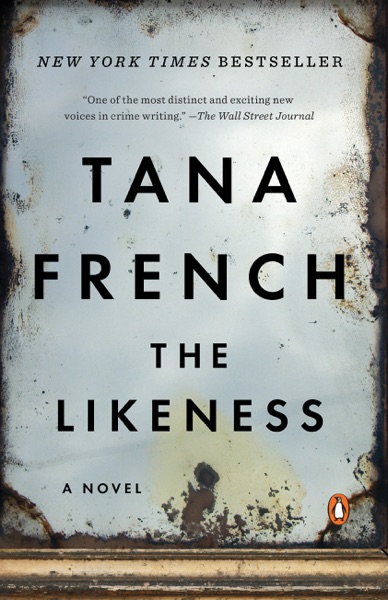
If you went on to read other Dublin Murder Squad books — The Likeness, Faithful Place, etc. — how does knowing Rob's fate change how you read characters who appear in multiple books?
Themes
Frequently asked questions
-
Does In the Woods resolve the cold case?
No. The childhood mystery — what happened to Rob's friends in the woods — is never explained. French made this a deliberate structural choice. If you need closure on every thread, this will frustrate you. Many readers consider it one of the most satisfying crime novels of the decade anyway.
-
Is In the Woods worth reading if I don't like detective fiction?
Possibly yes. French uses the procedural as scaffolding for a character study and a novel about memory and self-deception. The crime is real and the investigation is detailed, but the center of gravity is psychological rather than plot-mechanical.
-
Do I need to read the Dublin Murder Squad books in order?
Technically no — each is a standalone. But In the Woods introduces Rob and Cassie, who appear later in other novels, and reading in order means you know their histories. The series is best read in sequence.
-
Is In the Woods slow?
At nearly 450 pages it takes its time, especially in the first half. The pacing picks up in the investigation's second act. Readers who find the character work rewarding won't notice; readers who want momentum from the first page may struggle.
-
Who shouldn't read In the Woods?
Readers who want a fair-play mystery with a satisfying reveal and tidy resolution. French is interested in what crime does to people, not in the puzzle mechanics. If you want the puzzle solved at the end, look elsewhere.