Mystery · Book club
In the Woods book club questions
Here are 12 book club questions for In the Woods by Tana French, ordered to open easily and end somewhere worth arguing about. Copy them, print them, or bring them up one at a time.
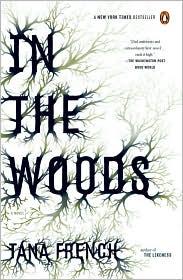
Dublin detective Rob Ryan is called to investigate a child's murder at an archaeological dig in Knocknaree — the same woods where, twenty years earlier, two of his childhood friends vanished without a trace and Rob was found clinging to a tree, bloodied and with no memory of what happened.
Tana French · 2007 · 8h 45m
Full summary and key takeaways →The 12 questions
- 1.
Rob's final act of betrayal toward Cassie — do you read it as self-destruction, cowardice, or something else? Did the novel make you understand why he did it?
- 2.
French keeps the cold case unsolved. Does that choice feel like an artistic statement, a cheat, or both? Would solving it have made the book better or worse?
- 3.
Cassie is in many ways more competent and emotionally intelligent than Rob. How does that dynamic shape your reading of his narration?
- 4.
Rob says at the novel's opening that he won't lie, then lies repeatedly. When did you first notice? What does that tell you about how French is constructing the book?
- 5.
The archaeological dig — unearthing the past, documenting what was destroyed — sits under the murder investigation the whole time. Is that parallel too neat, or does French earn it?
- 6.
What do you make of the Wicklow Mountains setting and its mythology? Does the supernatural undertone add to or distract from the psychological story?
- 7.
Rob and Cassie's relationship is never romantic but is intensely intimate. What specifically makes it so credible, and what destroys it?
- 8.
The murder victim and the cold case are both children. What does French seem to be saying about how adults carry childhood wounds forward?
- 9.
Compared to a more traditional detective novel — say, an Agatha Christie — where does In the Woods sit on the spectrum of fair-play mystery to psychological study?
- 10.
By the novel's end Rob has lost almost everything. Does he understand why? Does the reader understand better than he does?
- 11.
French's prose is lush and detailed compared to hard-boiled sparseness. Does that style serve the story, or does it slow it down?
- 12.
If you went on to read other Dublin Murder Squad books — The Likeness, Faithful Place, etc. — how does knowing Rob's fate change how you read characters who appear in multiple books?
How to run the discussion
- Pick six to eight, not all of them. An hour of real discussion covers fewer questions than anyone expects, and racing the list is what makes a book club feel like homework.
- Open with what people noticed, not what they concluded. Asking for a verdict first hardens opinions before anyone has heard each other.
- Let the disagreement run. The questions below that split a room are the ones worth the time; the ones everyone answers the same way can be skipped.
- Ask the quiet person a specific question. A direct, narrow question is far easier to answer than an open invitation to contribute.
Themes worth steering toward
If the conversation stalls, these are the threads that usually restart it.
Common questions
What are good book club questions for In the Woods?
Here are 12 book club questions for In the Woods by Tana French, ordered to open easily and end somewhere worth arguing about. The strongest openers ask what each reader noticed rather than what they concluded, and the discussion usually turns on memory and trauma, identity and self-deception, childhood and loss.
How long should a book club discussion of In the Woods last?
Most groups run 60 to 90 minutes of actual discussion. That is roughly six to eight questions, not all of them, so pick the ones that suit your group rather than working down the list in order.
What are the main themes in In the Woods?
Memory and trauma, Identity and self-deception, Childhood and loss, Partnership and trust, The unreliable narrator. Those are the threads most likely to divide a room, which makes them the useful places to steer a discussion that has gone quiet.
Picking the next one? See books like In the Woods or questions for other book club picks.
