Inside the Rise of HBO by Bill Mesce Jr. is a 2015 history book about television history, media industry, creative risk-taking. HBO's subscription model was not just a business decision — it was what made creative independence possible. Without advertiser pressure, the network could take risks that broadcast television couldn't.
Summary
Inside the Rise of HBO is Bill Mesce Jr.'s account of how Home Box Office transformed from a struggling premium cable channel in the 1970s into the creative institution that produced The Sopranos, The Wire, and Sex and the City. The story spans roughly three decades, from HBO's founding in 1972 through the late 1990s, and covers the business, legal, and creative decisions that made the network what it became. Mesce, a screenwriter and film scholar, writes with attention to both the institutional history and the individual creative choices that defined HBO's character.
The central argument is that HBO's rise required two things that rarely coexist in large media organizations: a willingness to absorb short-term losses in pursuit of long-term creative credibility, and a corporate structure that insulated creative decision-making from the quarterly pressure that governed broadcast networks. HBO was owned by Time Inc. and later Time Warner, which gave it resources that an independent cable company wouldn't have had; but the network's leadership consistently pushed against the instinct to chase ratings or pander to advertisers, which they didn't have because HBO was subscription-financed.
Mesce covers the satellite broadcasting battles of the 1970s (HBO's decision to broadcast via satellite in 1975 was an inflection point for the entire cable industry), the development of the HBO original film and series strategy, and the network's gradual investment in long-form drama that culminated in Oz in 1997 and The Sopranos in 1999. Along the way he profiles key figures including Chris Albrecht, Michael Fuchs, and Jeff Bewkes, showing how different leadership philosophies shaped the network's creative risk appetite.
The book is more rigorous than most media histories and less driven by celebrity anecdote. Readers looking for gossip about individual productions will find it elsewhere; what Mesce offers is an analysis of how an institution creates and sustains creative culture over time. As a case study in organizational design for creative industries, it holds up better than most business books in the genre.
Key takeaways
- 1.
HBO's subscription model was not just a business decision — it was what made creative independence possible. Without advertiser pressure, the network could take risks that broadcast television couldn't.
- 2.
The 1975 satellite broadcast of the Thrilla in Manila was HBO's defining strategic bet. It demonstrated that satellite could deliver premium content nationwide and reshaped the economics of cable television.
- 3.
Long-form serialized drama requires institutional patience. The investments in Oz and The Sopranos that paid off in the late 1990s were made by an organization that accepted years without a comparable hit.
- 4.
Creative leadership matters at the organizational level, not just the project level. HBO's culture of backing strong creative voices with minimal interference required consistent institutional support over decades.
- 5.
The move from film to original series was not obvious at the time. HBO's executives had to argue internally for a strategy that had no proven model in cable television.
- 6.
Incumbents (the broadcast networks) consistently underestimated cable as a creative platform because their economic models were incompatible with the kind of risk-taking cable allowed.
- 7.
The tension between creative ambition and commercial viability is not resolved at HBO so much as managed — by maintaining subscription growth as the primary success metric rather than individual show ratings.
Discussion questions
Use these on your own, with a book club, or as chat starters in Superbook. Book club version, ready to copy or print →
- 1.
HBO's subscription model protected creative decision-making from advertiser pressure. What other industries have structural features that either protect or undermine creative quality?
- 2.
The 1975 satellite broadcast decision was a bet on technology before the technology had fully proven itself. How do you evaluate a strategic bet on an unproven platform?
- 3.
Mesce argues that institutional culture explains HBO's rise as much as individual genius. Do you find that convincing, or do you think the network's success was more about specific people?
- 4.
HBO passed on many projects that became hits elsewhere, and greenlit many that failed. How should we evaluate creative decision-making given that success is hard to predict in advance?
- 5.
The broadcast networks had more money and reach than HBO for most of this period. Why were they unable to replicate what HBO created, and what does that suggest about organizational design?
- 6.
HBO's creative reputation was built over twenty years before The Sopranos. What does that timeline suggest about how long it takes to build institutional creative credibility?
- 7.
Mesce covers the leadership transitions at HBO and how different executives had different creative philosophies. How much does top leadership shape an institution's creative risk tolerance?
- 8.
The streaming era changed HBO's competitive environment fundamentally. Does the logic Mesce describes — subscription model, creative autonomy, long time horizons — still apply to streaming services?
- 9.
Think of a creative institution — a publisher, a record label, a film studio, a software company — that has maintained quality over a long period. What structural features explain it?
- 10.
HBO made some decisions in this period that seem obviously right in retrospect. Which ones, at the time, would have seemed genuinely risky or counterintuitive?
- 11.
The book stops before The Wire, Deadwood, and the later HBO peak. Given what you know about those shows, does Mesce's analysis hold up for that era too?
Themes
Frequently asked questions
-
What is Inside the Rise of HBO about?
It's a business and cultural history of HBO from its founding in 1972 through the late 1990s, arguing that the network's subscription model, corporate structure, and accumulated creative culture explain how it became the platform that produced prestige television. It focuses more on institutional history than celebrity anecdote.
-
Does the book cover The Sopranos or The Wire in depth?
The Sopranos gets some coverage as the culmination of the period Mesce examines, but neither it nor The Wire are the focus. The book is more interested in the organizational conditions that made those shows possible than in the productions themselves.
-
Is this book only for TV industry professionals?
No. As a case study in creative organizational culture — how an institution sustains risk-taking over decades — it's useful for anyone interested in how companies create and maintain high creative standards. The media industry specifics are interesting context, not a prerequisite.
-
How long is the book?
About 350 pages; most readers finish it in six to seven hours. It's more densely sourced than most popular media histories, which slows the pace somewhat but improves the credibility of the arguments.
-
Who were the key figures at HBO that Mesce profiles?
The most prominent are Michael Fuchs (who ran HBO through the 1980s and shaped its original programming strategy), Chris Albrecht (who oversaw the development of Oz and The Sopranos), and Jeff Bewkes (who later became Time Warner CEO). Each is presented with both their strategic contributions and their limitations.
Similar books
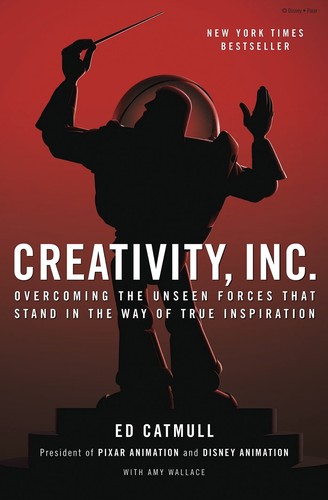
Creativity, Inc.: Overcoming the Unseen Forces That Stand in the Way of True Inspiration
Ed Catmull and Amy Wallace
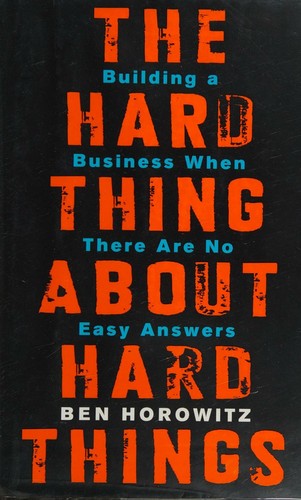
The Hard Thing About Hard Things
Ben Horowitz
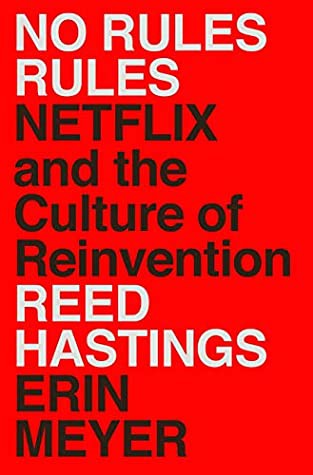
No Rules Rules: Netflix and the Culture of Reinvention
Reed Hastings and Erin Meyer
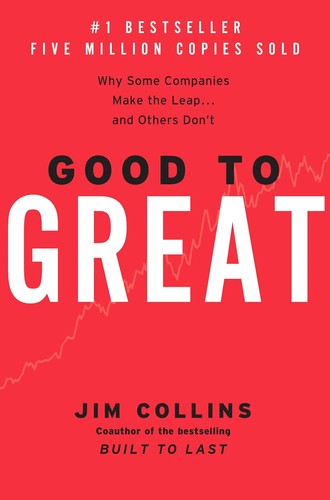
Good to Great
Jim Collins
