Short stories · Book club
Interpreter of Maladies book club questions
Here are 12 book club questions for Interpreter of Maladies by Jhumpa Lahiri, ordered to open easily and end somewhere worth arguing about. Copy them, print them, or bring them up one at a time.
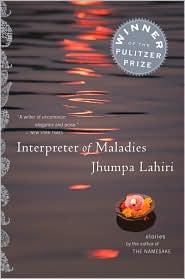
Interpreter of Maladies is Jhumpa Lahiri's debut short story collection, winner of the 1999 Pulitzer Prize for Fiction.
Jhumpa Lahiri · 1999 · 4h 0m
Full summary and key takeaways →The 12 questions
- 1.
In the title story, Mrs. Das confesses to the tour guide Mr. Kapasi something she has never told her husband. What does the story suggest about why it is easier to be honest with a stranger than with the person you have chosen to live with?
- 2.
Mr. Kapasi's fantasy about his correspondence with Mrs. Das is one of the most quietly devastating moments in the collection. What does his fantasy reveal about his own marriage and his own longing?
- 3.
In 'A Temporary Matter,' the couple's nighttime conversations are made possible by darkness and the knowledge that the power will come back on. Does the story suggest that this kind of conditional honesty is still valuable, or that it makes the subsequent silence worse?
- 4.
The child narrator of 'When Mr. Pirzada Came to Dine' understands what is happening only partially. How does Lahiri use the gap between what the child registers and what she can't yet understand?
- 5.
Lahiri has described herself as feeling neither fully American nor fully Indian. Do her characters feel that ambivalence, or is it different for each of them?
- 6.
Marriage in the collection is nearly always depicted as a site of loneliness rather than connection. Is this a dark vision of marriage specifically or a dark vision of human intimacy generally?
- 7.
Which story in the collection worked least well for you? Why? Does the collection hold together as a single work, or do the weaker stories dilute it?
- 8.
Lahiri won the Pulitzer with a debut collection at twenty-two. Some critics suggested the prize was partly recognition of the subject matter — representing an underrepresented immigrant experience — rather than purely literary. Do you think that's fair? Does it change how you read the stories?
- 9.
Compare Lahiri's restraint to another short story writer you admire. What does her approach to what is not said allow her to do that a more explicit approach wouldn't?
- 10.
The collection was published in 1999. Does it feel dated now that Indian-American experience is much more widely represented in American fiction? Or has it aged well?
- 11.
In 'The Third and Final Continent,' the narrator's relationship with his elderly landlady Mrs. Croft is one of the collection's most unexpected emotional centers. Why does this relationship feel significant, and what does it have to do with the rest of the collection's themes?
- 12.
If you could add a story to this collection, what would it be about? What does Lahiri leave unexplored that the collection seems to circle around?
How to run the discussion
- Pick six to eight, not all of them. An hour of real discussion covers fewer questions than anyone expects, and racing the list is what makes a book club feel like homework.
- Open with what people noticed, not what they concluded. Asking for a verdict first hardens opinions before anyone has heard each other.
- Let the disagreement run. The questions below that split a room are the ones worth the time; the ones everyone answers the same way can be skipped.
- Ask the quiet person a specific question. A direct, narrow question is far easier to answer than an open invitation to contribute.
Themes worth steering toward
If the conversation stalls, these are the threads that usually restart it.
Common questions
What are good book club questions for Interpreter of Maladies?
Here are 12 book club questions for Interpreter of Maladies by Jhumpa Lahiri, ordered to open easily and end somewhere worth arguing about. The strongest openers ask what each reader noticed rather than what they concluded, and the discussion usually turns on displacement and belonging, communication and its failures, marriage and loneliness.
How long should a book club discussion of Interpreter of Maladies last?
Most groups run 60 to 90 minutes of actual discussion. That is roughly six to eight questions, not all of them, so pick the ones that suit your group rather than working down the list in order.
What are the main themes in Interpreter of Maladies?
Displacement and belonging, Communication and its failures, Marriage and loneliness, Cultural inheritance, Grief and loss. Those are the threads most likely to divide a room, which makes them the useful places to steer a discussion that has gone quiet.
Picking the next one? See books like Interpreter of Maladies or questions for other book club picks.
