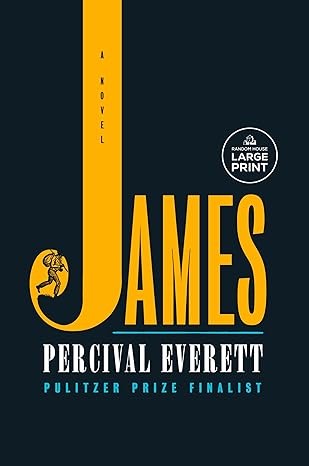
James by Percival Everett is a 2024 literary fiction book about race and power, language and freedom, identity and performance. The 'slave dialect' that white observers read as evidence of ignorance is shown to be a deliberate performance — an act of collective survival intelligence.
Summary
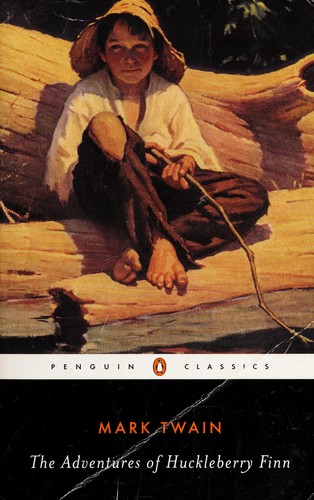
James retells Adventures of Huckleberry Finn from the perspective of Jim — renamed James here — the enslaved man who escapes down the Mississippi with Huck Finn. Percival Everett's version is not a corrective or an apologia for Twain's novel; it is something stranger and more ambitious. James is a fully interior novel that explores what it means to be intelligent, literate, and politically aware while performing ignorance as a survival strategy in antebellum America.
The novel's central conceit is immediately startling: James and other enslaved people secretly study language, philosophy, and literature, and have developed a deliberate dialect — the exaggerated "slave speak" they perform for white people — as a form of protective camouflage. Everett uses this to expose the labor of code-switching and the cost of sustained performance, while also making genuine philosophical points about the nature of language, freedom, and personhood. James reads Voltaire. James has views on the Enlightenment. James sees through Huck in ways Huck doesn't see through himself.
Everett writes with a controlled, precise intelligence. The novel is frequently darkly funny, occasionally horrifying, and consistently sharp. The violence of slavery is not softened — there are scenes that are genuinely difficult to read — but the novel never loses its commitment to James as a subject rather than an object. The plot follows the rough arc of the original novel while introducing James's own storyline, motivations, and interiority that Twain never supplied. The result is a novel that reads both as a self-contained work and as a conversation with the American literary canon.
This is not a comfortable book, nor is it trying to be. Readers who want fiction that challenges the canonical texts they absorbed in school and forces a reckoning with whose perspective was centered will find this essential. Those who prefer their historical retellings more celebratory or less formally ambitious may struggle with how much the novel asks of them.
Talk to James like its author wrote you back.
Get the ideas that fit your life — not generic summaries.
- Chat with the book
- Audiobook-style main ideas
- Adapts to your life and goals
- Helps you take action
Key takeaways
- 1.
The 'slave dialect' that white observers read as evidence of ignorance is shown to be a deliberate performance — an act of collective survival intelligence.
- 2.
James is literate, philosophical, and politically astute; concealing those facts is not just personal survival but a form of communal protection for other enslaved people.
- 3.
The novel takes Twain's novel seriously enough to argue with it — this is not a dismissal of Huckleberry Finn but a complication of who it centered and what it saw.
- 4.
Huck is neither villain nor savior in this version; he's a well-meaning child operating within a racial imagination he does not fully recognize as a limitation.
- 5.
Language is power: who is permitted to speak 'correctly,' to be believed, to be seen as capable of reason, is a political question the novel refuses to leave implicit.
- 6.
The violence of slavery is rendered in specific, grounded terms — Everett does not aestheticize suffering, but he also does not let the reader look away.
- 7.
Identity as performance — the self you present to power versus the self you protect in private — is one of the most durable American themes, and Everett renews it.
- 8.
The philosophical interludes, including James's engagement with Enlightenment thought, are not decorative; they make the irony of the Enlightenment's exclusions unavoidable.
- 9.
Freedom, the novel suggests, is not just a legal status — it is the ability to be fully legible, fully expressive, fully yourself, which James achieves only partially and at enormous cost.
Discussion questions
Use these on your own, with a book club, or as chat starters in Superbook. Book club version, ready to copy or print →
- 1.
James and the other enslaved characters maintain a double language — one for white ears, one for themselves. How does that conceit change how you read other enslaved characters in American fiction?
- 2.
Huck, in Twain's original, is a moral center — a child who chooses friendship over the rules of his society. How does Everett's version complicate or destabilize that reading?
- 3.
The novel includes scenes of genuine horror. How does Everett calibrate the violence — is it more or less than the reader needs to understand the stakes?
- 4.
James reads philosophy and debates the Enlightenment. Is that detail realist, allegorical, or both? What is Everett arguing by giving him this particular inner life?
- 5.
The novel is frequently funny, including in very dark moments. How does the humor function — is it relief, resistance, or something else?
- 6.
Who is the intended reader of this novel? Is it written for people who know Huckleberry Finn well, or can it be read without that prior knowledge?
- 7.
James's goal throughout the novel is specific and not the same as simple freedom. How does that specificity affect how you read his choices?
- 8.
The novel won the Pulitzer Prize and the Booker Prize. Does reading it as a prizewinning book change how you approach it, or does the label get in the way?
- 9.
Twain's Huckleberry Finn is frequently challenged in schools for its use of racial slurs. James doesn't avoid those words. Is Everett doing something different with the same language?
- 10.
Which scene in James stayed with you most, and what does its staying tell you about what the book is ultimately about?
- 11.
Everett doesn't sentimentalize James or make him saintly. What flaws or limitations does James have, and how do they serve the novel?
- 12.
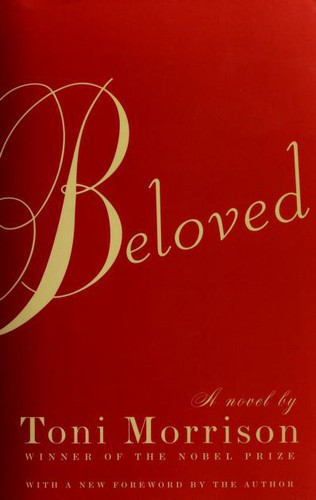
How does James compare to Beloved as a novel about the interior lives of enslaved people? Where do they overlap and where do they diverge?
- 13.
By the end of the novel, has James achieved freedom? How do you define freedom in the terms the book itself sets up?
Themes
Frequently asked questions
-
Do I need to have read Huckleberry Finn to read James?
A familiarity with Twain's novel deepens the experience considerably — Everett is in direct conversation with it — but James is fully legible as a standalone. Readers who haven't read Twain will miss the specific ironies and reversals, but the novel's central concerns stand on their own.
-
Is James hard to read?
Not syntactically — Everett writes with precision and clarity. Emotionally it is demanding. The violence of slavery is rendered specifically and without aestheticization, and some scenes are genuinely difficult. The formal ambition requires attention but rewards it.
-
What makes James different from other slavery narratives?
The emphasis on intellectual and philosophical interiority — James is not just surviving but thinking, reading, and reasoning about his condition with sophistication. The novel refuses to reduce its protagonist to his suffering or his endurance. The double-language conceit is also largely original.
-
Why did James win the Pulitzer and Booker?
It is technically accomplished, morally serious, and formally inventive in a way that makes it both a major American novel and a significant contribution to the literary tradition it's reworking. The consensus among prize juries and critics was that it earned its place on the shelf next to Twain, not just as corrective but as literature.
-
Who shouldn't read James?
Readers who find historical fiction set in antebellum America emotionally exhausting should be prepared — the novel does not soften the brutality of slavery. Those looking for a straightforward adventure narrative will find the interior register and philosophical passages disorienting.