Classics · Book club
Jane Eyre book club questions
Here are 12 book club questions for Jane Eyre by Charlotte Brontë, ordered to open easily and end somewhere worth arguing about. Copy them, print them, or bring them up one at a time.
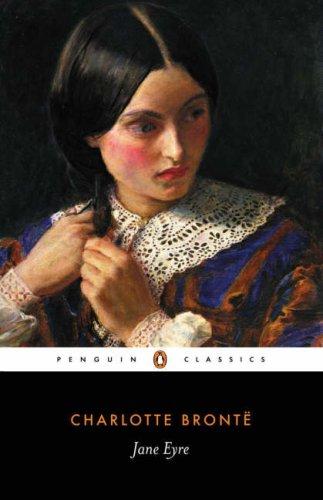
Jane Eyre is the first-person account of a woman who will not be diminished.
Charlotte Brontë · 1847 · 12h 15m
Full summary and key takeaways →The 12 questions
- 1.
Jane refuses Rochester when she discovers his deception. St. John Rivers offers her a different kind of life, equally demanding. What is the novel saying by putting these two options against each other?
- 2.
Bertha Mason is locked in an attic, periodically escaping to set fires and attack people. Rochester presents her as a monster. How should we read Bertha, given what we know about how she got there?
- 3.
The novel ends with Rochester blinded and maimed before Jane returns to him. Is that a meaningful punishment, a narrative convenience, or something more ambiguous?
- 4.
Jane consistently asserts her equal worth to those above her in class — Mrs. Reed, Brocklehurst, Rochester. Is this radicalism the novel endorses, or is it complicated by where the story takes her?
- 5.
St. John Rivers is painted as cold and driven. But he wants to devote his life to alleviating poverty overseas. Does the novel judge him fairly?
- 6.
The colonial dimension of Bertha's character — her Jamaican Creole background, her exoticization — has been central to postcolonial criticism of the novel. Does that reading change how you see Brontë's achievement?
- 7.
Jane's childhood at Lowood School is brutal and realistically rendered. How does that early experience shape the adult Jane? Is her adult resilience believable given what she survived?
- 8.
Rochester is controlling, deceptive, and frequently manipulative. Does the novel hold him fully accountable, or does it excuse him because Jane loves him?
- 9.
Compare Jane to the women around her — Blanche Ingram, Miss Temple, Bertha, St. John's sisters. What does each contrast reveal about what Brontë is arguing a woman can or should be?
- 10.
The novel was published in 1847 and was immediately controversial for its defiant heroine. What was so threatening about Jane's attitude, and to whom?
- 11.
Jane's narration is retrospective — she is writing from a position of achieved happiness. Does that framing affect how you read the novel's more desperate middle sections?
- 12.
The novel has two climaxes: the interrupted wedding and the fire at Thornfield. Which is more satisfying narratively, and which is more satisfying morally?
How to run the discussion
- Pick six to eight, not all of them. An hour of real discussion covers fewer questions than anyone expects, and racing the list is what makes a book club feel like homework.
- Open with what people noticed, not what they concluded. Asking for a verdict first hardens opinions before anyone has heard each other.
- Let the disagreement run. The questions below that split a room are the ones worth the time; the ones everyone answers the same way can be skipped.
- Ask the quiet person a specific question. A direct, narrow question is far easier to answer than an open invitation to contribute.
Themes worth steering toward
If the conversation stalls, these are the threads that usually restart it.
Common questions
What are good book club questions for Jane Eyre?
Here are 12 book club questions for Jane Eyre by Charlotte Brontë, ordered to open easily and end somewhere worth arguing about. The strongest openers ask what each reader noticed rather than what they concluded, and the discussion usually turns on independence and self-worth, class and gender, passion versus morality.
How long should a book club discussion of Jane Eyre last?
Most groups run 60 to 90 minutes of actual discussion. That is roughly six to eight questions, not all of them, so pick the ones that suit your group rather than working down the list in order.
What are the main themes in Jane Eyre?
Independence and self-worth, Class and gender, Passion versus morality, Gothic atmosphere and madness, Orphanhood and belonging. Those are the threads most likely to divide a room, which makes them the useful places to steer a discussion that has gone quiet.
Picking the next one? See books like Jane Eyre or questions for other book club picks.
